
 E-Paper



Marshals, art, tea shop and more in Parliament
The man on the Speaker’s left is the marshal. The other one is the deputy marshal. People believe they are the ones who escort unruly members out of the House if the Chair orders so and prohibit anyone from reaching the Chair during a commotion.


Who are the marshals of Parliament?
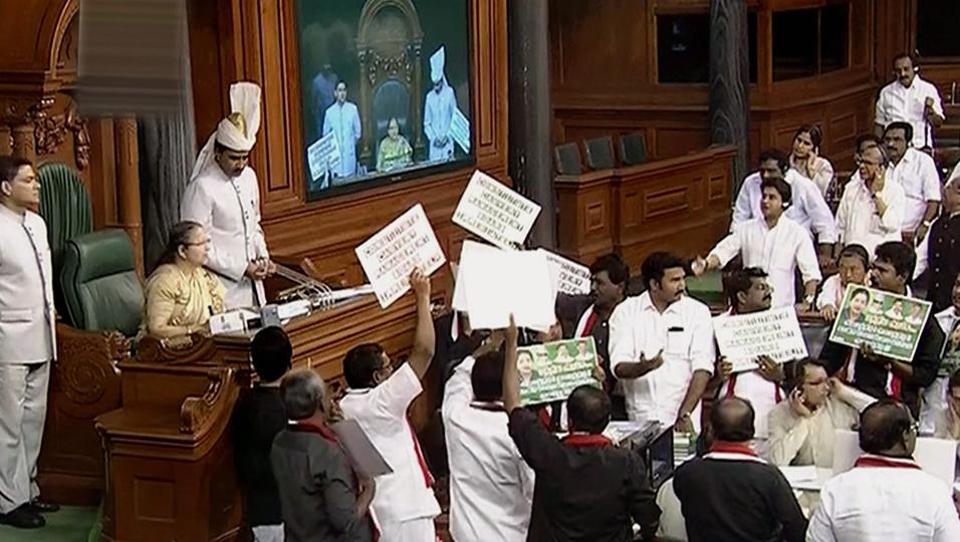
Next time you watch the Lok Sabha or Rajya Sabha proceedings, notice the two tall, well-built men who flank the Lok Sabha Speaker and Rajya Sabha chairman’s chair. The man on the Speaker’s left is the marshal. The other one is the deputy marshal. People believe they are the ones who escort unruly members out of the House if the Chair orders so and prohibit anyone from reaching the Chair during a commotion. But in reality, they play a key role in helping the Speaker run the House and are thus recruited after a rigorous process that tests their knowledge of Parliament’s rules and procedures. Their dress is a remnant of the Constituent Assembly days but during Speaker Meira Kumar’s time, the attire underwent a design change. So who actually escorts the MPs out? This task is not up to the marshals but the watch and ward officers.
The treasure trove of art
Don’t be surprised if you see a replica of Nandalal Bose painting tucked away in a corner near an elevator. For, Parliament complex boasts of a rich collection of art work—and nearly all of them are originals. Late Rajiv Gandhi’s portrait is by Bikash Bhattacharya while Chintamani Kar has sketched the portrait of Sarojini Naidu. A portrait of Mahatma Gandhi in the grand Central Hall is by Sir Oswald Birley, a friend of Winston Churchill. The complex also has Ram V Sutar’s famous statue of Mahatma Gandhi. There’s a symbolic bronze statue of Chandragupta Maurya and a mural of 54 panels along the outer corridor on the ground floor. This valued treasure is handled with great care.
When PM’s office is reduced to three small rooms
This is the mini version of the sprawling Prime Minister’s Office in the South Block atop Raisina Hills. There are just three rooms—one for the PM and the other two packed with his senior officers (We will not reveal the location of the PMO in Parliament due to security reasons). But PM is not alone, all his cabinet ministers too, have makeshift offices in the Parliament compound. These rooms are spread over different floors but senior ministers generally get rooms on the ground floor. The senior-most generally gets an additional room in the first basement. When Pranab Mukherjee was the finance minister of the UPA government, he was allotted room number 13—a lucky number for him. Once, amid hectic parleys over some legislation, Mukherjee climbed down to the basement (where his officers sat) to speak to Mayawati as his office was packed.
One of Capital’s best libraries
Access to the Parliament library is limited to the MPs, journalists, officials and research fellows, but if you can get in, the library — spread over a few floors in a separate building inside the complex — will leave you awestruck. It has record of all parliamentary debates since the Constituent Assembly, a huge collection of books on public policy, politics and other subjects, journals from different states and countries, and an efficient digital system to access them quickly. The building also has an auditorium named after late Speaker GMC Balayogi, playroom for kids and a few meeting halls and a canteen. In the run up to the poll, Congress strategist Jairam Ramesh was often seen there with his laptop, scripting the party manifesto.
Want to buy tea, coffee or butter? Head to Parliament
The British Parliament has its famous tea room and tea terrace but Indian Parliament has moved a step ahead. At a quiet corner, insiders make a queue almost every day to buy good tea packets at a cheaper price than outside. On the third floor, the Coffee Board of India manages a tiny shop with premium coffee on sale. But the biggest rush perhaps is at the shop between the Central Hall and the old library hall. People flock to it when the house is not in session to buy packets of white butter, milk and paneer.


