
 E-Paper



‘Misconception that Urdu is…’: Supreme Court allows its use in signboard at Maharashtra municipal council | Top quotes
The Supreme Court rejected a plea by former councillor of Patur town, challenging the use of Urdu on the signboard of the municipal council of Patur.

 Prefer HTon Google


The Supreme Court on Tuesday upheld the use of Urdu on the signboard of a municipal council building in Akola district of Maharashtra, saying that “language belongs to a community, to a region, to people; and not to a religion”.
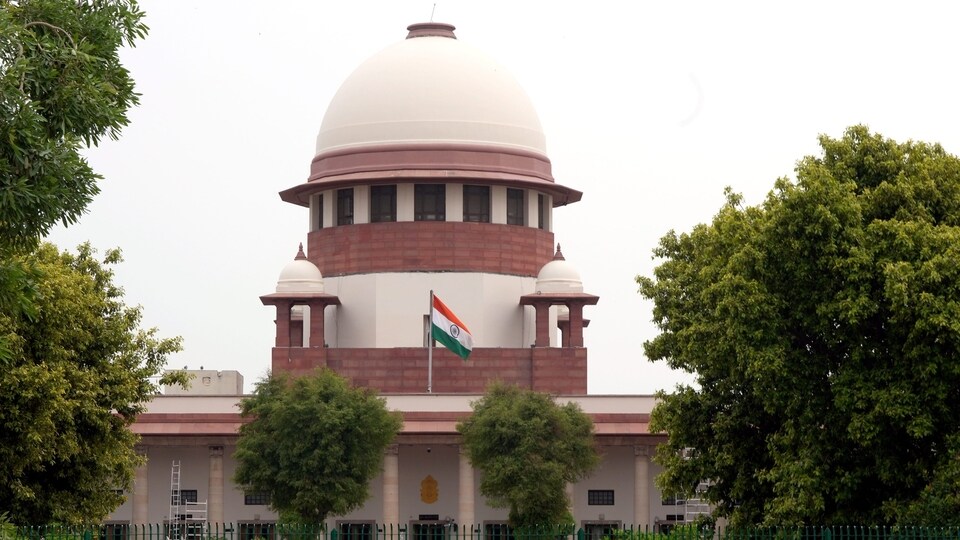
The Supreme Court also stated that Urdu “is the finest specimen of "Ganga-Jamuni tehzeeb", or the Hindustani tehzeeb”.
A bench of justices Sudhanshu Dhulia and K Vinod Chandran rejected a plea by Varshatai Sanjay Bagade, a former councillor of Patur town, challenging the use of Urdu on the signboard of the municipal council of Patur.
Also Read | Urdu Uttar Pradesh’s 2nd official language, but few takers for its proficiency exam
Here are top quotes from the Supreme Court judgment
- According to the bench, Urdu and Marathi have the same status under the Constitution, rejecting the claims that only Marathi should be used, Bar and Bench reported.
- The court also said Urdu, despite its Indian origin, came to be associated with Muslims which was far from reality, blaming colonial powers in associating Hindi with Hindus and Urdu with Muslims.
- It added that it is a “misconception that Urdu is alien to India”, stating that “it is a language which was born in this land”.
- Elaborating on the bench’s views on Urdu and languages in general. Justice Dhulia wrote, “Language is not religion. Language does not even represent religion. Language belongs to a community, to a region, to a people; and not to a religion.”
- “Language is not religion. Language does not even represent religion. Language belongs to a community, to a region, to people; and not to a religion,” the bench said.
- “So is the case of Urdu, which is the finest specimen of Ganga-Jamuni tehzeeb, or the Hindustani tehzeeb, which is the composite cultural ethos of the plains of northern and central India,” The Indian Express reported, citing the judgment.
- “Before language became a tool for learning, its earliest and primary purpose will always remain communication,” justice Dhulia said.
- “The purpose here for the use of Urdu is merely communication. All the municipal council wanted to do was to make an effective communication. This is the primary purpose of a language, which the Bombay High Court has laid emphasis on,” the court said.
- “We must respect and rejoice in our diversity, including our many languages. India has more than hundred major languages. Then there are other languages known as dialects or ‘mother tongues’ which also run into hundreds. According to the 2001 Census, India had a total of 122 major languages including the 22 scheduled languages, and a total of 234 mother tongues. Urdu was the sixth most spoken scheduled language of India. In fact, it is spoken by at least a part of the population in all States and Union Territories, except perhaps in our North-Eastern States,” it said.
What was the petition filed?
Bagade moved the the apex court claiming that use of Urdu was impermissible under the Maharashtra Local Authorities (Official Languages) Act, 2022. The court, however, disagreed, holding that there was no legal bar on using Urdu in addition to Marathi, and that the plea itself was based on a flawed understanding of language and law.
The municipal council had rejected Bagade's plea in 2020, pointing out that Urdu had been used since 1956 and was widely understood by the local population.
In 2021, the Bombay high court also dismissed her challenge following which she moved the Supreme Court.


