E-Paper



Mixed response to ‘bandh’ in Nagaland opposing assembly polls
The core committee of Naga tribal hohos and civil organisations has been demanding that the February 27 be deferred till a solution is found to the ongoing Naga peace talks.


The statewide dawn-to-dusk shutdown called on Thursday by Naga tribal bodies and civil organisations in protest against an official notification for the February 27 assembly elections evoked mixed response in the state.
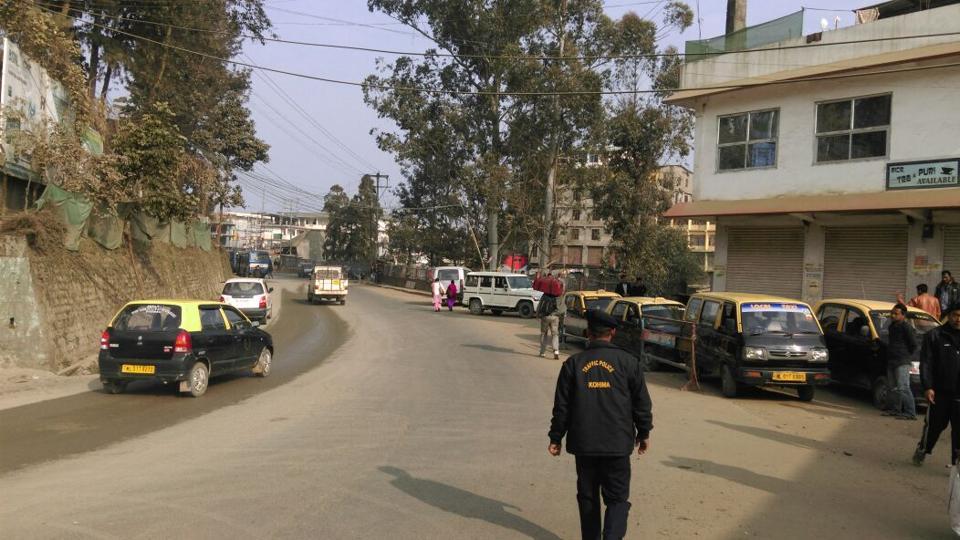
The strike was near total in the state’s commercial capital Dimapur, but in the state capital Kohima there was not much impact to the call by core committee of Naga tribal hohos and civil organisations (CCNTHCO).
The influential body which represents all major tribes and civil groups had called the ‘bandh’ after Election Commission issued the poll notification on Wednesday ignoring a general appeal to postpone the polling until the over seven-decade-old Naga political problem is solved.
“Bandh is observed only in pockets. Out of the state’s 11 districts, tribal organisations in seven had decided not to go ahead with the polls,” said a senior police officer. He said there was no report of any untoward incident.
The CCNTHCO had appealed to the Centre and the EC to defer the elections till a solution to the ongoing Naga peace talks is reached.
The Centre is holding peace parleys with the Naga militant outfit, the NSCN (IM), since 1997. The Narendra Modi government at the Centre signed a framework agreement with the outfit in 2015, raising expectations of an early solution to one of the oldest insurgency movement in Asia.
Following the appeal by the influential body, 11 political parties including ruling Naga People’s Front and its coalition partner BJP had agreed to boycott the polls on Monday.
The saffron outfit, however, backed out of the boycott call a day later. With the NPF also now saying it will file nominations if other parties do so, there is now uncertainty on what steps others, who signed the declaration, will take.
In 1998 assembly elections, then ruling Congress led by S C Jamir virtually got a walkover after other political parties abstained from the polling paying heed to a similar boycott call by the tribal bodies and civil organisations.
The ‘bandh’ call given by CCNTHCO received a setback with Angami Public Organisation, Lotha Hoho, Eastern Naga People’s Organisation and Chakesang Public Organisation announcing not to impose the shutdown in their areas.
“We leave it to the conscience of the people and not enforce the bandh forcibly. As per our reports, it is total in many areas as people have chosen not to venture out,” Theja Therieh, convenor of CCNTHCO, said.
“We are not against democratic process and election. But the momentum of the talks, which are at a crucial stage, would get lost if election is held at this juncture,” he added.
Apart from tribal bodies and civil groups, six rebel outfits including National Socialist Council of Nagaland (Isak-Muivah), which is engaged in talks with Centre, have also appealed for a boycott of the polls.
The working committee of the six outfits—Naga National Political Groups (NNPGs)—said anyone who defies the wishes of the people and file nominations would be held accountable and branded anti-Naga.
Meanwhile, Union minister of state for home Kiren Rijiju on Thursday urged the people, tribal bodies, civil groups and political parties in the state to participate in the upcoming polls.
“The union government is sensitive to the popular sentiment of Naga people and is committed to an early solution to their issue,” the minister, who is also BJP’s election in-charge for Nagaland, said in a statement.
No candidate has filed nomination as yet, a day after the EC issued the poll notification.
“We have reports that lot of nomination papers were being collected from offices of returning officers across the state. But no one has filed nomination papers in any of the 60 seats yet,” said Nagaland chief electoral officer Abhijit Sinha.