E-Paper



Mizoram schools to admit Myanmar refugee children
The order did not specifically mention children of Myanmar refugees, but Mizoram minister for school education Lalchhandama Ralte told HT that the directions were largely meant for the children of Myanmar nationals who entered Mizoram following the military coup earlier this year.


The Mizoram government has requested all district education officers to admit the children of Myanmar refugees in state-run schools on humanitarian grounds, months after hundreds of families fleeing a military coup in the neighbouring nation entered India.
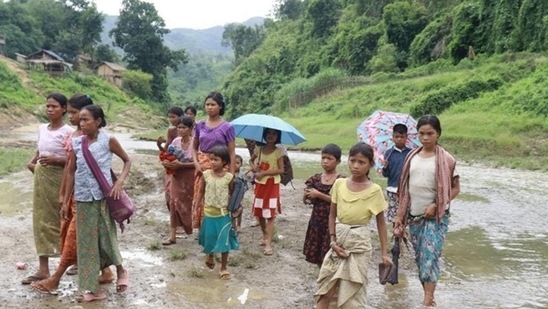
Mizoram shares a 400-km border with Myanmar, where the military junta in February this year toppled the elected Aung San Suu Kyi-led government and put several political leaders under house arrest.
“I am to state that Chapter 2(4) of the Right of Children to Free and Compulsory Education Act 2009 (RTE Act-2009) mentioned that children aged between 6 and 14 years belonging to disadvantaged communities have the right to be admitted to school in a class appropriate to his or her age for completing elementary education,” the state’s director of school education James Lalrinchhanda said in an August 31 letter to education officers in districts and sub-districts.
“I, therefore request you to take necessary action on admission to migrant/refugee children in your jurisdiction to school so that they can continue their schooling,” he said.
The order did not specifically mention children of Myanmar refugees, but Mizoram minister for school education Lalchhandama Ralte told HT that the directions were largely meant for the children of Myanmar nationals who entered Mizoram following the military coup earlier this year.
“The decision was taken by the department on compassionate and humanitarian grounds. Even the RTE Act mentions the right of children to receive education,” he said over the telephone from Aizawl.
“There are nearly 400 children of Myanmar refugees who fall in the age group of six to 14 years. Most of them are in Champhai and Aizawl districts. They will be admitted to government schools from September itself,” Lalchhandama added.
Since March this year, thousands of Myanmar nationals -- including politicians, parliamentarians, government officials, policemen and their families -- have crossed over to Mizoram.
Most of these refugees, who came from the Chin province of Myanmar are currently based in the bordering Champhai district in Mizoram. Over a thousand others are believed to be in Aizawl.
Mizoram Police’s criminal investigation department said in June that 9,247 refugees had entered the state from Myanmar and were spread out in 10 districts with over 4,000 in Champhai and over 1,600 in Aizawl, according to a Press Trust of India report.
Earlier in March, the central government directed four states that share a land border with Myanmar — Mizoram, Nagaland, Arunachal Pradesh and Manipur — to stop illegal migrants and deport them back to Myanmar.
Following that directive, Mizoram chief minister Zoramthanga wrote to Prime Minister Narendra Modi on March 18 and said the order was “not acceptable” to the state.
“I understand that there are certain foreign policy issues where India needs to proceed cautiously. However, we can’t ignore this humanitarian crisis,” the CM, who also pointed out the ethnic ties between the Chin people and the Mizos, had said.
“Mizoram cannot just remain indifferent to their sufferings. India cannot turn a blind eye to this humanitarian crisis unfolding right in front of us in our own backyard,” Zoramthanga had written.