
 E-Paper



Modi lays out nine-point civic agenda during Mandya visit
PM Modi unveiled a nine-point agenda in Karnataka focused on water conservation, environmental protection, agriculture, health, and economic self-reliance.


Prime Minister Narendra Modi on Wednesday used a religious gathering in Karnataka’s Mandya to lay out a nine-point programme centred on water conservation, environmental protection, agriculture, public health and economic self-reliance.
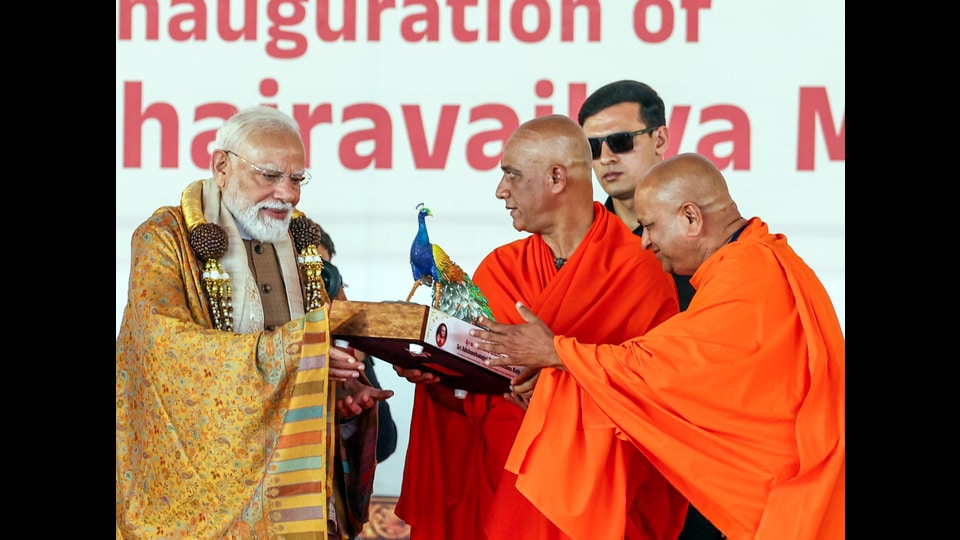
Addressing the inauguration ceremony of the Sri Guru Bhairavaikya Mandira at Sri Kshetra Adichunchanagiri, Modi framed the initiative as part of a broader vision of development rooted in social responsibility and traditional values. He linked the agenda to the principles followed by Sri Adichunchanagiri Mahasamsthana Math.
Beginning with water conservation, Modi highlighted the dependence of the Mandya region on the Cauvery river system and called for immediate action to improve resource management. “This region of Mandya understands the importance of water. It has flourished under the blessings of Mother Kaveri. My first request is that we resolve to save every drop of water and ensure better water management,” he said.
On environmental protection, he connected local participation with a national campaign aimed at increasing tree cover. “Under the ‘Ek Ped Maa Ke Naam’ campaign, millions have planted trees. Let us also plant trees in honour of our mothers and resolve to protect Mother Earth,” he said.
Sanitation formed the third pillar of his address, with Modi stressing the need for uniform standards across different spaces. “Whether it is a religious site, a public place, a village, or a city—maintaining cleanliness is our collective responsibility and duty,” he said, placing accountability on citizens rather than institutions alone.
Economic self-reliance was another key focus area, with the Prime Minister urging support for domestic industries. “Let us adopt Indian products and strengthen our local manufacturers. Let us live by the mantra of ‘Vocal for Local’,” he said, linking consumer choices to national economic growth.
He also called for increased domestic tourism, presenting it as a means of strengthening both the economy and national integration. “Let us know our country first. Explore different corners of India and promote domestic tourism,” he said, encouraging citizens to travel within the country.
In the agriculture sector, Modi emphasised the need to transition towards sustainable farming methods. “I urge the hardworking farmers of Mandya to move towards chemical-free, natural farming,” he said, advocating practices that reduce dependency on chemical fertilisers and improve long-term soil health.
On nutrition and lifestyle, the Prime Minister pointed to rising health concerns, particularly obesity, and suggested dietary changes. “Respected Deve Gowda Ji is here; he is a great proponent of ‘Ragi Mudde’ (a traditional millet-based dish). The youth should include millets in their diet. To fight obesity, we should also try to reduce oil consumption by 10%,” he said, highlighting the role of traditional foods in addressing modern health challenges.
Concluding the nine-point agenda, he stressed the importance of social service and community engagement. “Finally, continue to serve others with the same dedication that you have consistently shown through your works,” he said, aligning the message with the service-oriented ethos of the Adichunchanagiri institution.


