E-Paper



Modi-Xi summit may focus on recalibrating bilateral positions
Neither India nor China has officially announced the dates and venue of the summit, which is expected to be held in Mamallapuram.

 Prefer HTon Google


The second India-China informal summit to be held in Mamallapuram, Tamil Nadu, next week comes at a time when bilateral relations have been tested by recent developments and is unlikely to be a “result-oriented” meeting, people familiar with the developments said on Thursday.
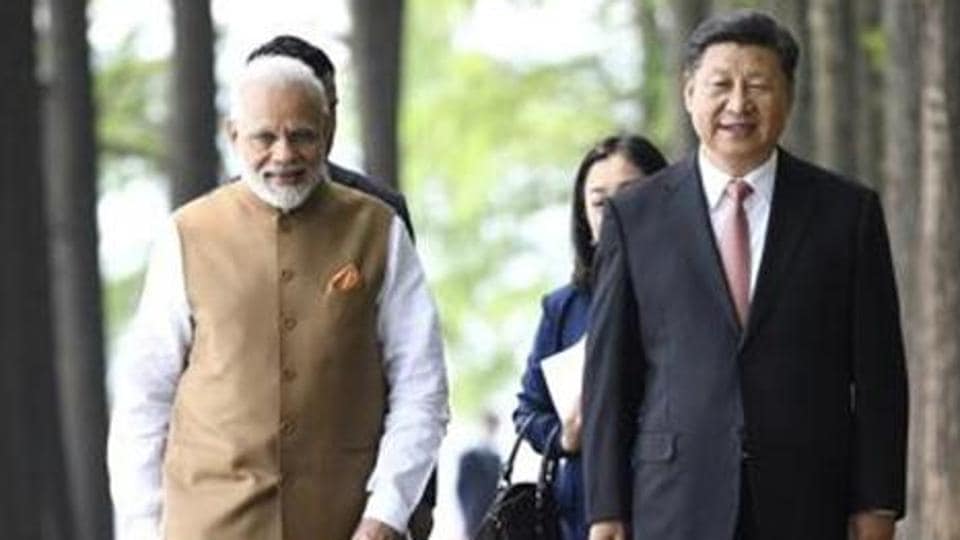
Both sides were hoping to build on the positive momentum created by the first informal summit between Prime Minister Narendra Modi and President Xi Jinping at Wuhan in April last year but it is now likely that the upcoming meeting will be more about recalibrating positions to address the concerns of the two countries, the people familiar with planning for the event said.
Neither India nor China has officially announced the dates and venue of the summit, which is expected to be held in Mamallapuram, a 7th century heritage site located 56 km from Tamil Nadu’s capital, Chennai, during October 11-13. It is expected that the details will be formally made public just days ahead of the summit.
Both countries are engaged in extensive negotiations to ensure the summit passes off smoothly following a period marked by new irritants, including China’s strong reaction to India’s move to revoke Jammu and Kashmir’s special status in August. Luo Zhaohui, vice minister in China’s foreign ministry and former envoy to India, met foreign secretary, Vijay Gokhale, in New Delhi to discuss preparations for the summit.
“The summit is going to be held when the bilateral relationship is passing through testing times, including over the proactive role played by China on the Kashmir issue at the UN General Assembly and UN Security Council on behalf of Pakistan,” said a person who declined to be identified so he could speak freely on the issue.
“It’s clear that both sides won’t give up their longstanding positions on core issues, and the summit will be about carefully calibrating positions to satisfy the other partner and to take care of each other’s sensitivities,” the person said.
“In that sense, it won’t be a result-oriented meeting but it will be more useful than some of the other meetings we hold at such a level,” he added.
The first summit, held after the 73-day stand-off between Indian and Chinese troops at Doklamin 2017, helped put the relationship back on an even keel. Modi and Xi had issued “strategic guidance” to their militaries to strengthen communication to build trust and understanding.
However, China’s strong support for Pakistan after India’s August 5 decision to strip Jammu and Kashmir of its special status and reorganise the state into two union territories put considerable strain on bilateral relations. China opposed the creation of a new union territory of Ladakh despite India’s contention that the changes had no implications for the country’s external borders.
China’s support for Pakistan’s efforts to raise Kashmir at the UN Security Council in August and Chinese foreign minister Wang Yi’s reference to the issue during his address at the UN General Assembly last month also irked India. During his speech, Wang reiterated that there should be no unilateral actions to change the status quo in Kashmir, prompting India to say that other countries shouldn’t change the status quo through the “illegal” China-Pakistan Economic Corridor.
People familiar with the thinking in Beijing referred to other issues that they said have affected bilateral ties, including the Indian side’s recent comments on the situation in the South China Sea, remarks by the Indian leadership during Modi’s recent visit to the US that were perceived as an “attack” on China and recent military exercises in Ladakh and Arunachal Pradesh.
The frostiness in ties was reflected by India’s representation at the reception held by the Chinese embassy on September 26 to mark the 70th anniversary of the founding of the country — the event was attended by a secretary and not a minister — and the development created a flutter in the diplomatic fraternity.
Indian officials, who declined to be named, said the holding of the summit reflected the maturity of the leadership of the two countries. “It is important to meet at the leadership level as it sends a message down the line to get along well even if there are outstanding issues,” said one official.
Leading strategic affairs analyst, Brahma Chellaney, said it was unusual that both countries had made no announcement regarding the summit and this reflected that the “relationship wasn’t exactly smooth”.
“It’s also interesting why this summit is being held now because the timing isn’t opportune for both sides. China is engaged in a trade war with the US and handling the protests in Hong Kong, while India has its hands full with other things. To sum it up, the summit will yield promises and hype but it will be lacklustre in terms of results,” he added.