
 E-Paper



More officials to be deployed in Kashmir due to ground situation during Darbar move
At least 5,000 employees of the civil secretariat and 33 government departments form part of the Darbar move but this time fewer will people will be sent to Jammu , an official familiar with the matter said on condition of anonymity.

 Prefer HTon Google


More officials will be deployed in the Kashmir Valley to oversee and execute administrative functions as the biannual Darbar move takes place at the end of October, shifting the government of Jammu and Kashmir from Srinagar to the winter capital Jammu, officials aware of the matter said.
At least 5,000 employees of the civil secretariat and 33 government departments form part of the Darbar move but this time fewer will people will be sent to Jammu , an official familiar with the matter said on condition of anonymity.
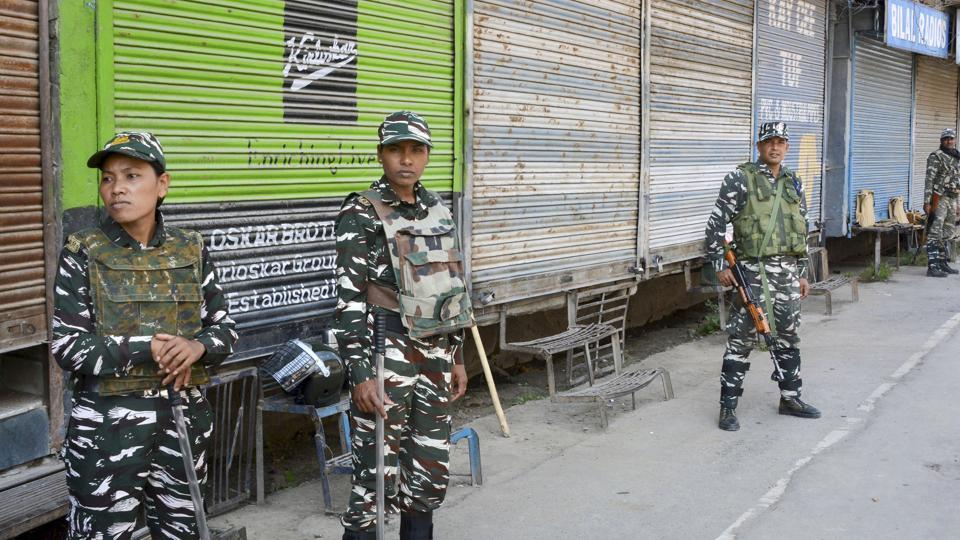
According to an official in Srinagar, this year, once the seat of administration moves to Jammu; more officials will be deployed in the Valley to ensure smooth functioning of services in the wake of communication restrictions that have been imposed since August 5, when the reorganisation of the state was announced in Parliament, together with the stripping of its special status under Article 370 of the Constitution.
“We usually have a special secretary in Srinagar when the Darbar moves to Jammu; but this year owing to the ground situation we will ensure there are more officials in the Valley compared to the previous years,” said the official.
According to the official quoted above, the modalities of how the work is allocated will bel be finalised in the coming week.
Given the restrictions on communication, there is a sense that the administrative functions in the Valley should not be hampered in the long winter months ahead. Landlines work intermittently in some areas and the government has announced that it will open mobile communication lines in some areas such as North Kashmir’s Kupwara.
Speculation that the Darbar move-- introduced in 1872 by the then Dogra king Maharaja Ranbir Singh-- in the erstwhile princely state will be suspended after Jammu and Kashmir and Ladakh get designated as UTs has also been put to rest.
A government circular issued by the estates department confirmed that the shift to Jammu for the next six months will take place in November. The department has sought to know the requirement for residential accommodation in Jammu for officials who will move to the winter capital from November to April.
In the circular, the director, estates, requested all the financial commissioners, principal secretaries, commissioner secretaries and heads of various government departments to furnish information on officials likely to move to Jammu. The estates department has set September 10 as the last date for receiving the information in the prescribed format.
“The circular is self-explanatory -- that the practice of biannual Darbar Move will continue but this time around it may be a limited exercise and that is why the department has sought information of officials who are likely to move to Jammu in November 2019,” said another official, requesting anonymity.
Though successive governments in Jammu and Kashmir downplayed the expenditure incurred on the practice, the cash-strapped state spends close to ₹150 crore every year on facilitating the Darbar move, officials aware of the details said.
Every six months, a fleet of buses and trucks ferry officials, staff and records to Srinagar and Jammu.
All government departments ensure that records are packed in boxes after office hours on the last working day in Srinagar and at the same time ensure that their keys reach the advance parties at Jammu well in time.
“Every six months the state road transport corporation has to provide around 150 trucks and nearly 50 buses for the purpose,” said the second official quoted above.
Jammu and Kashmir Pradesh Congress Committee chief and former MLC, Ravinder Sharma said, “Though the estates department has issued circular seeking details of officials likely to move to Jammu, we are getting reports from officials that this time around it would be a limited Darbar move. There will be certain modifications. Some changes are being made and it may not be a full-scale Darbar move.”
In 1987, the then chief minister Farooq Abdullah tried to keep Darbar move offices in Srinagar to check spending but he had to rescind his decision following opposition in Jammu.
Abdullah had also constituted a panel to find a way out of the archaic practice. The panel’s suggestion didn’t work out. It had suggested that departments relevant to Kashmir should be kept in Srinagar and vice versa.
“The administrative secretaries of development departments will be asked to remain available in Kashmir. Financial and administrative support for availability of supplies in winter for works such as snow clearance, providing power etc. will be made,” the first official cited above said.


