E-Paper



MP government allows desilting, excavation of sand from four dams
In the Cabinet meeting held on Tuesday, the state government decided to issue tenders for desilting and excavation of sand from Bansagar in Shahdol, Tawa in Itarsi, Bargi in Jabalpur, and Indira Sagar Dam in Khandwa, said home minister Narottam Mishra

 Prefer HTon Google


The Madhya Pradesh government has allowed desilting and excavation of sand from four major dams in the state to increase their capacity, said an official on Tuesday.
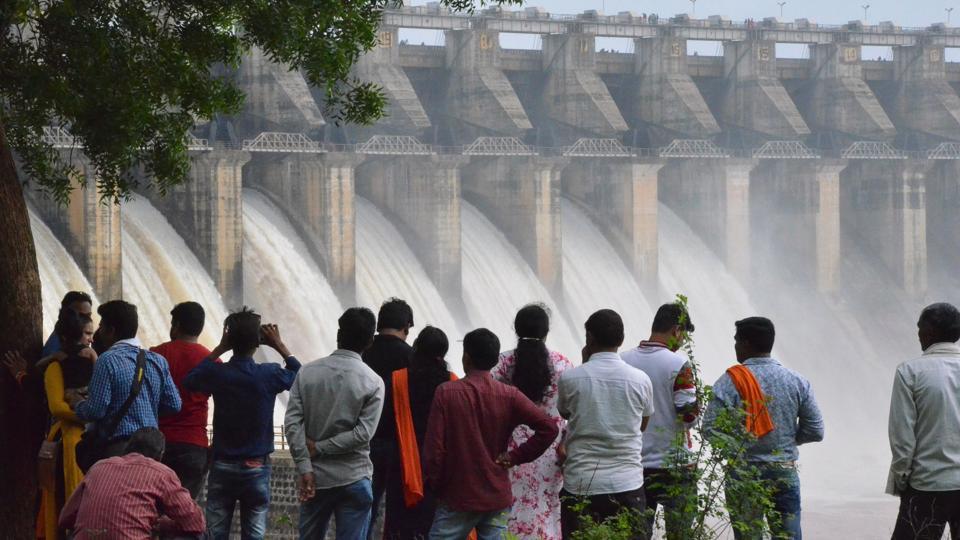
After Kerala and Maharashtra, MP is third states to start desilting of dams in India.
In the Cabinet meeting held on Tuesday, the state government decided to issue tenders for desilting and excavation of sand from Bansagar in Shahdol, Tawa in Itarsi, Bargi in Jabalpur, and Indira Sagar Dam in Khandwa, said home minister Narottam Mishra.
Mishra said, “This process will increase the irrigation capacity by 500,000 hectares of land as the dam’s water storage capacity would increase. The state government will provide the silt free of cost to farmers.”
Currently, the state can irrigate 4 million hectares of land. “The government wants to increase the capacity to 6 million hectares through medium and small projects. This desilting project is one of those,” said SN Mishra, additional chief secretary, water resource department.
However, experts feel that desilting is an economically unviable process and in the absence of proper guidelines, it could damage the structure of dams.
PK Jain, professor, civil engineering department at Maulana Azad National Institute of Technology, said, “Desilting is a process for increasing the capacity of dams after rains but it should be done in proper proportion so that it doesn’t affect the structure of the dam. The state government should release proper guidelines for that after reviewing the condition of every dam because a general rule can’t work on all the dams.”
Experts also ask how thousands of tonnes of silt will be transported to different places as the state government aims to provide it to farmers for free.
Himanshu Thakkar, coordinator, South Asia Network on Dams, Rivers and People (SANDRP), a social organisation, said, “Desilting is not a new process but it was not adopted widely as it not economically viable. Even, farmers have to use it in a scientific way to make the land fertile so they may have to bear the extra cost.”
He added, “Desilting will increase the capacity of the dam but excavation of sand can damage the structure of dam too. In recent years, we saw that unsustainable sand mining damaged the aqueduct of Orsang river, a tributary of Narmada, in Gujarat. A similar, incident was reported from Maharashtra where a bridge collapsed due to sand mining. In MP, we know that illegal sand mining is so rampant.”
The state government earned more than ₹500 crore in revenue from the sand mining in 2020.