
 E-Paper



Muslim women entitled to seek alimony, says SC
Supreme Court rules divorced Muslim women can seek maintenance under Section 125 of CrPC, rejecting discrimination and upholding gender equality.

 Prefer HTon Google


The Supreme Court on Wednesday ruled that a divorced Muslim woman is entitled to seek maintenance from her husband under Section 125 of the Criminal Procedure Code (CrPC), asserting that any discrimination against Muslim women in matters of alimony under the secular laws of the country would be regressive and against gender justice, equality.
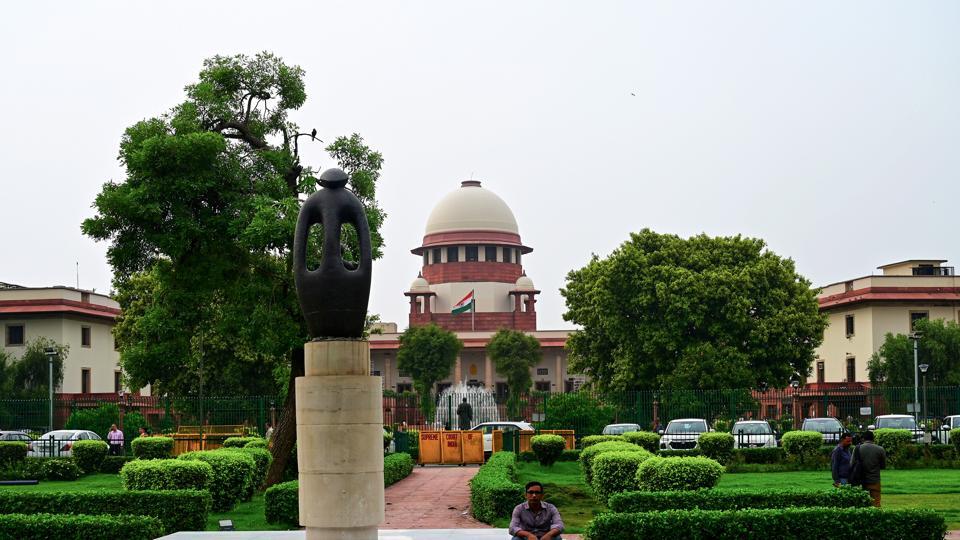
A bench, comprising justices BV Nagarathna and AG Masih, decisively rejected the argument that the provisions of Section 125 of the CrPC do not apply in view of there being a personal law for Muslims, and that the Muslim Women (Protection of Rights on Divorce) Act, 1986, will prevail over the secular law.
“There cannot be disparity in receiving maintenance on the basis of the law under which a woman is married or divorced. The same cannot be a basis for discriminating a divorced woman entitled to maintenance as per the conditions stipulated under Section 125 of the CrPC or any personal or other law such as the 1986 Act. I, therefore, hold that Section 125 of the CrPC cannot be excluded from its application to a divorced Muslim woman irrespective of the law under which she is divorced,” said justice Nagarathna in her judgment. Both the judges on the bench wrote separate but concurring judgments.
To be sure, the Bharatiya Nagarik Suraksha Sanhita, 2023 , the new law that replaces the CrPC and has become operational since July 1, has retained the older provision on alimony under Section 144.
In a robust defense of Muslim women’s rights, the judgment held: “Maintenance is a facet of gender parity and enabler of equality, not charity. A destitute Muslim woman has the right to seek maintenance under Section 125 of the CrPC despite the enactment of the 1986 Act.”
The court underscored that the rights granted to a Muslim woman under the 1986 Act to receive a reasonable and fair provision and maintenance from her former husband during the ‘iddat’ (grieving period) are in addition to, not in derogation of, those under Section 125 of the CrPC.
“Therefore, if a divorced Muslim woman approaches the magistrate for enforcement of her rights under Section 125 of the CrPC, she cannot be turned away to seek relief only under Sections 3 and 4 of the 1986 Act, as is sought to be contended by the appellant herein. In other words, such a divorced Muslim woman is entitled to seek recourse to either or both the provisions. The option lies with such a woman,” it held.
The court also stressed that Section 125 of the CrPC is a more beneficial provision for a Muslim divorced woman as compared to the provisions of the 1986 Act. “This Court would not countenance unjust or Faustian bargains being imposed on women. The emphasis is on sufficient maintenance, not a minimal amount. After all, maintenance is a facet of gender parity and enabler of equality, not charity. It follows that a destitute Muslim woman has the right to seek maintenance under Section 125 of the CrPC despite the enactment of the 1986 Act,” it noted.
By affirming that Muslim women can seek maintenance under Section 125 of the CrPC, the top court has ensured that they are not subjected to discriminatory practices based on their religion and that they have the same legal recourse available to women of other faiths, thereby reinforcing the principle of equality enshrined in the Indian Constitution.
The judgment unequivocally held that the 1986 Act does not bar Muslim women from seeking maintenance under the CrPC, thereby expanding their legal avenues and fortifying their right to justice and financial security post-divorce.
Moreover, the ruling challenges regressive and patriarchal interpretations of the law that have historically limited the rights of Muslim women. By rejecting the notion that the 1986 Act supersedes the CrPC in matters of maintenance, the court has affirmed a progressive and inclusive interpretation of the law.
The court also held that a Muslim woman who has been subjected to the outlawed practice of instant triple talaq, can opt for maintenance under Section 125 of the CrPC even though the Muslim Women (Protection of Rights on Marriage) Act, 2019 provides for sustenance allowance. “The provisions of the 2019 Act provide remedy in addition to and not in derogation of Section 125 of the CrPC,” it held.
The court was hearing a Muslim man’s petition, questioning a Telangana high court direction to pay ₹10,000 interim maintenance to his former wife. The appeal stated that a divorced Muslim woman cannot seek maintenance under Section 125 of the CrPC because the 1986 Act will prevail over it.
Senior advocate Gaurav Aggarwal assisted the court as amicus curiae, and submitted that the remedy under a secular statutory provision of Section 125 cannot be foreclosed for a divorced Muslim woman by virtue of enactment of a personal law remedy under the 1986 Act.
The judgment on Wednesday delved into the historical context of Muslim women’s rights, citing the landmark Shah Bano case of 1985. In that case, the Supreme Court had ruled that Muslim women were entitled to maintenance under Section 125 of the CrPC -- a decision that was later countered by the enactment of the 1986 Act by the Rajiv Gandhi government. The new law restricted maintenance for a woman to ‘Iddat’ period and alimony for the child till two years from divorce.
But the philosophy laid down in the Shah Bano verdict lived through times, noted the bench, as it cited the subsequent decision in Daniel Latifi Vs Union of India (2001), in which another constitution bench relied extensively on the 1985 judgment and interpreted the 1986 Act to ensure it did not deprive Muslim women of the protection afforded under Section 125 of the CrPC. While upholding the constitutional validity of the 1986 Act, the apex court held that a Muslim husband is responsible for paying maintenance to his divorced wife may extend beyond the Iddat period, as well as for making reasonable and fair provisions for his divorced wife’s future.
On Wednesday, the Supreme Court held that the 1986 Act continues to operate within the same juridical compass as the judgments in Shah Bano and the reasons for upholding the constitutionality of the law in the Danial Latifi case cannot be lost sight of. “The crux of the reasoning in Danial Latifi is that the 1986 Act is a social welfare legislation that seeks to provide an additional right and thereby, an additional remedy. Therefore, the 1986 Act does not take away rights that divorced Muslim women have either under personal law or under Section 125 of the CrPC,” it noted.
The judgment further emphasised that a restrictive interpretation of Section 3 of the 1986 Act would be a step backward for gender justice. “To make a Muslim woman run from pillar to post in search of her relatives one after the other and ultimately to knock at the doors of the Wakf Board could not be reasonable and a fair substitute for the provisions of Section 125 of the CrPC,” the court observed.



