E-Paper



China, Bhutan hold boundary talks with focus on ‘three-step road map’
The development comes at a time when India and China are locked in a military standoff on the Line of Actual Control (LAC) that is into its fourth year. China’s claims on Bhutanese territory, including in the strategic Doklam region, have strategic implications for India’s northeastern region

 Prefer HTon Google


A new joint technical team set up by Bhutan and China for delimitation of the disputed border between the two countries held its first meeting in Beijing this week, reflecting a sudden speeding up of efforts to resolve the issue.
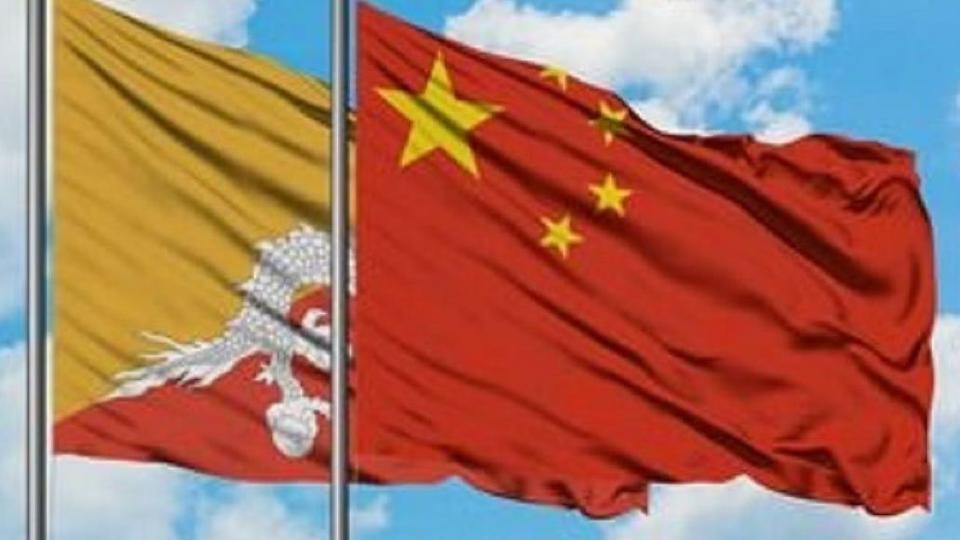
The establishment of the joint technical team was one of the outcomes of the 13th Expert Group Meeting (EGM) on Bhutan-China boundary issues in Beijing during August 21-24, according to a joint statement issued by the two countries on Thursday. The team held its first meeting on the sidelines of the EGM, the statement said.
The development comes at a time when India and China are locked in a military standoff on the Line of Actual Control (LAC) that is into its fourth year. China’s claims on Bhutanese territory, including in the strategic Doklam region, have strategic implications for India’s northeastern region.
During the EGM in Beijing, Bhutan and China had “candid, friendly and constructive discussions” on implementing a memorandum of understanding (MoU) on the so-called “three-step road map” for expediting boundary negotiations, the joint statement said. This road map has so far not been made public.
“Both sides agreed to expedite and take simultaneous steps to implement the ‘three-step road map’. One of the important outcomes of the 13th EGM is the establishment of the Joint Technical Team on the delimitation of China-Bhutan boundary, which held its first meeting on the sidelines of the 13th EGM,” the joint statement said.
The two sides also agreed on “keeping the positive momentum of frequent Expert Group Meetings” and on holding the 14th EGM as soon as possible. They further agreed to maintain communications on holding the 25th round of Bhutan-China boundary talks.
The 13th EGM was co-chaired by Hong Liang, director general of boundary and ocean affairs department of China’s foreign ministry, and Letho Tobdhen Tangbi, Bhutan’s secretary of international boundaries. Bhutan’s ambassador to India, Maj Gen Vetsop Namgyel, also participated in the meeting.
Bhutan and China don’t have formal diplomatic ties and often maintain contacts through the Bhutanese embassy in New Delhi and periodic visits by officials.
Boundary talks between Bhutan and China began in 1984, and the two sides held 24 rounds of discussions up to 2016. Following the 73-day Doklam standoff in 2017, when India deployed troops to prevent Chinese forces constructing a road in an area claimed by Bhutan, Beijing and Thimphu intensified their efforts to settle the disputed border. China claims about 764 sq km in Bhutan.
Bhutan and China signed the MoU on the three-step road map in October 2021, giving a fillip to these efforts. In April this year, Bhutan Prime Minister Lotay Tshering triggered a storm in India by saying in an interview that Bhutan hopes to settle the boundary dispute with China after one or two meetings, and that there are no Chinese intrusions into territory claimed by Bhutan.