E-Paper



NGT asks Odisha government to notify 14 elephant corridors, ecologists cheer
NGT was told by the petitioner that the elephant corridors, being a part of the elephant ecology, needed to be notified as ecological sensitive zones for multiple reasons including preventing man-elephant conflicts

 Prefer HTon Google


The National Green Tribunal on Tuesday asked the Odisha government to notify 14 elephant corridors in the state within next two months, realising a long-standing demand of elephant conservationists.
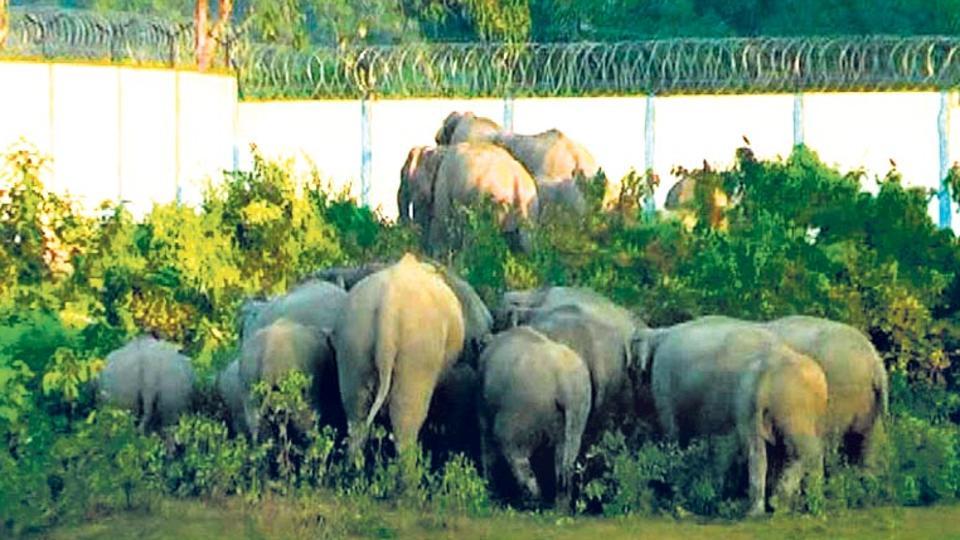
In an order passed by the Eastern Zonal bench of NGT, judicial member B Amit Sthalekar and expert member Saibal Dasgupta asked for notification of the 14 corridors identified by Asian Nature Conservation Foundation, a non-profit trust involved in conservation of Asian elephants in 13 of the 30 districts within two months.
Wildlife conservationist Biswajit Mohanty, through his NGO Wildlife Society of Odisha, had moved the NGT alleging that though the principal chief conservator of forests (Wildlife) had submitted details of elephant corridors in Odisha to the forest and environment department in the state in 2012 for identification of 14 corridors with a total area of 870.61 sq. kms, no action was taken for their formal notification under the Environment (Protection) Act, 1986. He further stated that the state had spent ₹20 crores in improving the corridors, but it did not issue a formal notification to secure them legally.
Mohanty submitted to the NGT that the elephant corridors, being a part of the elephant ecology, needed to be notified as ecological sensitive zones under Section 3 of the Environment (Protection) Act, 1986, which empowers the government to keep industries out of a notified restricted area.
Mohanty’s lawyer Sankar Pani said the NGT order will give legal sanctity to the elephant corridors, making their movement from one habitat to another safe. An elephant corridor also helps them intermingle and breed with elephants outside their gene pool. These corridors also reduce the scope of human-animal conflicts. However, such corridors face threats from poaching, agricultural activity, mining, vehicular traffic, development of resorts, electrical fencing, etc, an environmentalist said.
The NGT order comes in the wake of rising elephant deaths in Odisha since 2001. As against 33 elephant deaths per year on an average between 1990 and 2000, 46 yearly deaths were reported on an average between 2001 and 2010, which further increased to 76 elephant deaths since 2010.
The elephant landscape too has changed dramatically in the last two decades with Keonjhar district, which had 112 elephants in 2002, left with only 40 now due to large scale mining, and Dhenkanal district, which had 81 elephants in 2002, now has 169, due to green area fed by Rengali irrigation canals. Similarly, 70 odd elephants from the Chandaka sanctuary migrated to Ganjam, Nayagarh and Cuttack districts, and many of them were killed by trains and electrocution in Ganjam.
Mining activities for coal, Iron Ore, Bauxite, Manganese etc in Keonjhar, Sundargarh, Jharsuguda and Angul have left little space for elephants, while illegal stone and morrum quarries too have disturbed the elephant habitats and movement paths.