
 E-Paper



NGT can’t ‘short shrift’ health hazards posed by plastic bottles: Supreme Court
NGO Him Jagriti Uttaranchal Welfare Society told Supreme Court that NGT abdicated its duty by failing to adjudicate the issue after holding hearings for seven years. The SC agreed, saying the NGT had to deal with the cause raised.


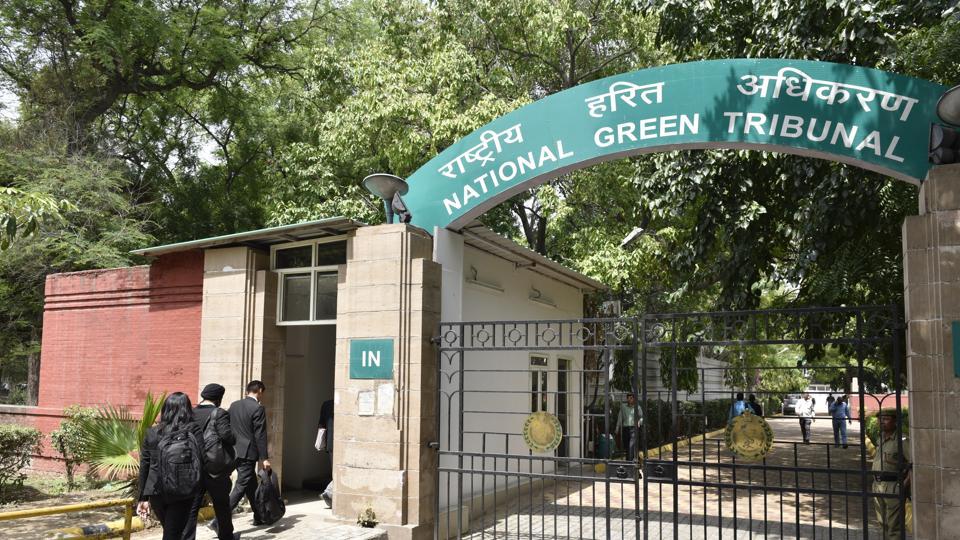
NEW DELHI: The National Green Tribunal (NGT) came in for criticism in the Supreme Court on Friday for failing to pass any effective orders on a serious issue pertaining to health hazards posed by plastic bottles and multi-layered plastic packages despite dealing with the matter for seven years.
The issue was brought to the tribunal in 2014 by NGO Him Jagriti Uttaranchal Welfare Society which demanded a ban on plastic packaging of carbonated soft drink and liquor immediately and gradual phasing out of plastic packaging for all other non-essential items, in view of its adverse consequences to environment and human health.
The NGO complained that despite evidence against possible contamination of chemicals “leaching” from plastic bottles into food or fluids, the NGT disposed of the matter on January 8 by asking the authorities concerned in the government to take necessary steps.
Dealing with the NGO’s appeal against the said order, the top court felt that the tribunal made light of its obligation to remedy the situation brought to its notice.
“This is a serious issue. The tribunal (NGT) cannot short shift the concern brought before them. Ultimately, when they dispose of the matter, they have said to an extent the issue has been resolved,” said a bench of justices DY Chandrachud and MR Shah.
The court issued notice to the Union government, Central Pollution Control Board, Directorate General of Health Services, and Food Safety and Standards Authority of India to file their responses within six weeks. In addition, the other parties who have been asked to respond are All India Plastic Manufacturing Association, Tetra Pak India (P) Limited, Bureau of Indian Standards, and Pet Containers Manufacturing Association.
Appearing for the NGO, advocate Ritwick Dutta submitted that the NGT abdicated its duty by failing to adjudicate the issue and left it to the authorities, whose inaction over seven years was demonstrated during the seven-year long proceedings, to take action.
The bench agreed with this view.“This was not a writ petition. It was an original application that was part of the tribunal’s original jurisdiction. They had to deal with the cause raised.”
The petition said the presence of heavy metals like antimony, lead, chromium, cadmium and plasticizers like di(2-ethylhexyl) phthalates (“DEHP”) in plastic beyond the prescribed limit, is detrimental to human health as the chemicals leach into the edible contents and cause damage to the endocrine and neurological system.
The NGT even constituted an expert committee that submitted a report in August 2019 much in line with what the NGO pointed out. This report accepted that excessive use of plastic, especially in the packaging of non-essential products is a matter of concern.
The ministry of chemicals and fertilizers has also been added as a party to the proceedings as the petition made reference to the decision passed by Drugs and Technical Advisory Board in May 2016 recommending a ban on the use of PET/ plastic in the liquid oral formulations for primary packaging of drug formulations for paediatric use, geriatric use and for use of pregnant women and women of reproductive age group, as a precautionary measure.
Dutta pointed out that even expert bodies such as the Indian Council of Medical Research (ICMR), All India Institute of Hygiene and Public Health (AIIHPH) recommended for ban of plastic packaging for oral formulations for paediatric, geriatric and use by pregnant women and women of reproductive age.
“The tribunal’s failure to adjudicate on the matter, which was pending before it since 2014, has caused further delay, only exacerbating the harmful effects on the health of consumers,” the petition added.


