
 E-Paper



No business as usual in relations with China till military standoff in Ladakh resolved: India
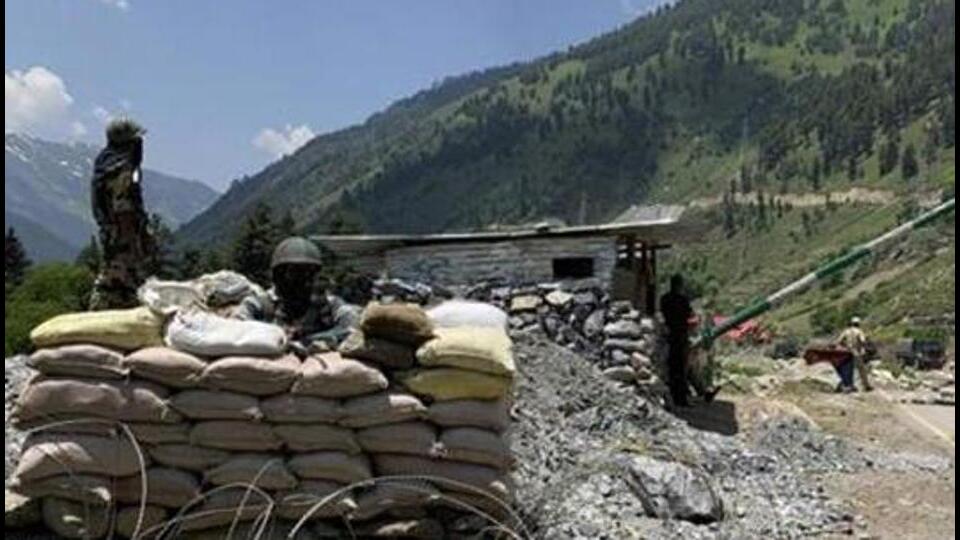
The standoff, which began in May 2020, and a brutal clash in Galwan Valley that killed 20 Indian soldiers and at least four Chinese troops, has taken bilateral relations to an all-time low. The Indian side has said that China is yet to explain why it violated several agreements and protocols on border management by massing troops on the LAC and making unilateral attempts to alter the status quo.


India on Saturday said it could not be “business as usual” in relations with China until the dragging military standoff in Ladakh sector of the Line of Actual Control (LAC) is resolved and peace and tranquillity is restored in the border areas.
The Indian side’s position on the standoff on the LAC was conveyed to the Japanese side during the annual summit between Prime Minister Narendra Modi and his Japanese counterpart Fumio Kishida, foreign secretary Harsh Shringla told a media briefing.
Shringla was responding to questions from journalists on whether China was discussed by the two prime ministers. “The issue of China did come up. Both countries did inform each other of their perspectives,” he said.
The Indian side informed the Japanese side “about the situation in Ladakh...the attempts at massing of troops, the attempts at multiple transgressions, and also the fact that we were holding talks with China on the border-related issues and the recent issues in Ladakh”, he said.
“We also made it clear that until and unless we had a resolution of the issues involved [and] there was peace and tranquillity in the border areas, we could not consider the relationship to be business as usual,” Shringla said.
“Normalcy in the relationship would depend on progress on the issues that we are discussing,” he added.
The standoff, which began in May 2020, and a brutal clash in Galwan Valley that killed 20 Indian soldiers and at least four Chinese troops, has taken bilateral relations to an all-time low. The Indian side has said that China is yet to explain why it violated several agreements and protocols on border management by massing troops on the LAC and making unilateral attempts to alter the status quo.
Despite several rounds of diplomatic and military talks, India and China have been able to agree on disengagement of frontline troops only on the north and south banks of Pangong Lake and at Gogra. Troops from both sides remain at several other friction points in Ladakh sector, and India has rejected China’s repeated calls for the standoff to be delinked from taking forward ties in other areas such as trade.
A joint statement issued after the India-Japan Summit said the two countries, as leading powers in the Indo-Pacific, had a shared interest in safety and security of the maritime domain, freedom of navigation and overflight, unimpeded lawful commerce and “peaceful resolution of disputes with full respect for legal and diplomatic processes in accordance with international law”.
The two prime ministers will continue prioritising international law, particularly the United Nations Convention on the Law of the Sea (UNCLOS), and “facilitate collaboration, including in maritime security, to meet challenges against the rules-based maritime order in the East and South China Seas”.
Without naming China, the joint statement called for “full and effective implementation of the Declaration on the Conduct of Parties in the South China Sea and the early conclusion of a substantive and effective Code of Conduct in the South China Sea” in line with international law and UNCLOS.
The joint statement condemned terror attacks in India, including the Mumbai and Pathankot attacks, and called on Pakistan to take “resolute and irreversible action against terrorist networks operating out of its territory and comply fully with international commitments including to FATF”.
The two sides also called on all countries to root out terrorist safe havens and infrastructure, disrupt terror networks and their financing channels, and halt cross-border movement of terrorists. They further called on all countries to “ensure that territory under their control is not used to launch terror attacks [and] to expeditiously bring to justice the perpetrators of such attacks”.


