
 E-Paper



No conflict between government, governor: Home minister amid row over Bills
Parameshwara emphasised that the governor often seeks clarifications on various legislative matters, a process that does not necessarily lead to disputes


Home minister G Parameshwara on Sunday dismissed concerns of discord between the Karnataka government and governor Thaawar Chand Gehlot, asserting that disagreements over certain bills are routine and do not indicate a conflict.
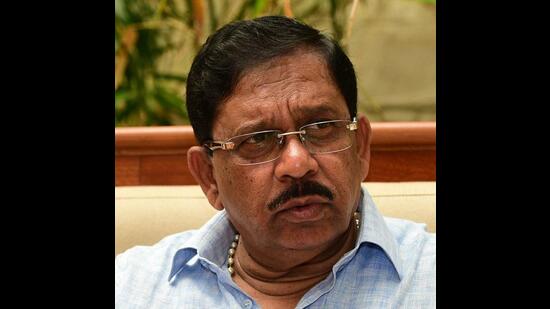
Speaking to reporters on Sunday, Parameshwara emphasised that the governor often seeks clarifications on various legislative matters, a process that does not necessarily lead to disputes. “He may not always be satisfied with what we send. However, in the case of many bills, he does not question our decisions and has approved them without any objections,” he said.
Addressing concerns regarding Karnataka State Rural Development and Panchayat Raj University (Amendment) Bill, 2024, the minister stated that the governor had initially raised doubts about an earlier bill but approved the bill after receiving necessary clarifications. “Even in the case of the Microfinance Ordinance Bill, he had some doubts. After we provided the necessary clarifications, he approved it. Hence, there is no conflict between the government and the governor,” he said.
However, a fresh confrontation has emerged after the governor returned the Karnataka State Rural Development and Panchayat Raj University (Amendment) Bill, 2024, recommending its withdrawal. The bill, which was passed during the winter session in Belagavi in December 2024, aims to replace the governor with the chief minister as the chancellor of the university. According to officials familiar with the matter, the government is considering similar amendments for other state-run universities.
In a note sent along with the returned bill, the governor strongly objected to the move, cautioning the government against attempting to strip him of his constitutional responsibilities. “In the guise of bringing in changes, the attempt to take away powers, responsibilities, and functions of the governor will lead to unnecessary conflict and friction. I advise the government to refrain from such ventures and take proactive and cordial steps to foster goodwill and gentlemanliness. Hope the government will withdraw this bill aimed to curtail the powers of the Governor,” he wrote.
Gehlot also criticised the justification provided by the government, calling it misleading. “The observations and justifications for the amendment in the submission note are summarily misleading and seem more like an attempt to usurp power,” he stated. Citing Article 254 of the Constitution and Supreme Court judgments, he maintained that UGC regulations take precedence over state legislation regarding university governance, rendering the amendment unconstitutional.
He also urged the government to proceed with the appointment of a vice-chancellor, which he claimed was unnecessarily delayed. “The state, by having specialized universities, has specific Acts for the same. But according to my observations of these specialized universities, they have become orphans and the state government has paid little attention to their development all these years,” he wrote, pointing out that the RDPR University has not had a permanent faculty since its inception.
This was not the first time the governor has intervened in legislative matters. On February 7, he returned the Karnataka Micro Loan and Small Loan (Prevention of Coercive Actions) Ordinance, raising concerns over its potential impact on legal loan recovery processes. While the bill aimed to regulate unlicensed and unregistered microfinance institutions, the governor warned that it could also infringe on the rights of legitimate lenders. He also flagged potential violations of Articles 19 and 32 of the Constitution, which safeguard an individual’s access to legal remedies. However, after further review, he approved the bill on February 12.


