The Union finance ministry on Wednesday clarified that no foreign influence was behind the decision to impose a 0.4% Merchant Discount Rate (MDR) on UPI transactions above ₹2,000 amid mounting political controversy over the decision.
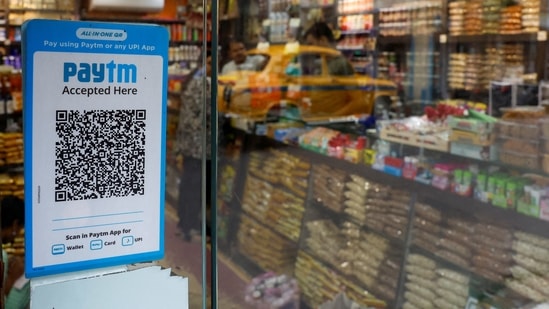
The clarification came in response to allegations by Congress leader Rahul Gandhi and other opposition leaders who said that the government succumbed to US pressure in making the decision. HT learnt that the changes to the UPI regime were also mentioned in the Cabinet meeting on Wednesday.
“Some claims suggest the change is due to foreign influence. This is false. India’s UPI policy decisions are made independently, with the clear goal of building a self-sustaining, inclusive, and affordable digital payments ecosystem,” the finance ministry said in a post on X.
Also Read | 'This is false': Govt rejects 'foreign influence' charge in UPI merchant fee row
{{/usCountry}}Also Read | 'This is false': Govt rejects 'foreign influence' charge in UPI merchant fee row
{{/usCountry}}Since its launch in 2016, UPI has grown into the world’s largest real-time interoperable payment system entirely on India’s own terms, it said.
UPI processed 24.5 billion transactions in August 2026 alone. To keep this system self-sustainable, secure and innovative, a small fee on high-value merchant transactions helped fund better infrastructure, cybersecurity and support for small merchants in Tier III–VI towns, the post said.
Separately a senior official also told PTI, “When a decision has been taken, the question of its rollback doesn’t arise.”
The controversy broke out after the finance ministry on Tuesday announced that a 0.4% MDR will apply to person-to-merchant (P2M) UPI transactions above ₹2,000, while person-to-person (P2P) transactions will remain free irrespective of their value. For transactions of ₹75,000 and above, the MDR will be capped at ₹300 per transaction, the ministry said in a statement.
The announcement brought to a close months of discussions over charges for higher-value UPI transactions. It also ended a six-year zero-MDR regime that sought to promote digital payments but was criticised by banks as unviable.
The new framework followed the government’s notification on Monday keeping UPI transactions of up to ₹2,000 and RuPay debit card payments free of MDR, with banks and payment system providers barred from imposing direct or indirect charges on such transactions. The notification followed an amendment to section 10A of the Payment and Settlement Systems Act, 2007, which provided a framework for imposing an MDR on notified electronic payment modes. The amendment bill was passed by Parliament during the monsoon session.
Only 4% of merchant transactions will be affected by the introduction of MDR, according to the statement, as most transactions either fall below the ₹2,000 threshold or qualify for zero MDR under the P2PM framework for small merchants.
The ministry also clarified that no transaction fee, platform fee or other charge can be imposed on individuals sending or receiving money through UPI. Small merchants, including street vendors and neighbourhood shops, receiving up to ₹1 lakh a month through UPI QR codes under the person-to-person-merchant (P2PM) category will be covered by the zero-MDR framework.
Further, auto-debit recurring payments like utility bills or mutual fund subscriptions, known as UPI Mandates or AutoPay, will not carry the prescribed MDR transaction charges.
The new MDR framework and threshold structure will come into effect from 15 October, giving acquiring banks, payment aggregators, fintech applications and corporate accounting platforms time to update their software engines and billing systems, according to the statement. India’s UPI platform processed 241.6 billion transactions worth ₹314.2 lakh crore in FY26, up 30% from a year earlier in volume and 21% in value. UPI had more than 55 crore users as of August 2026, according to NPCI data.
In an explainer, the finance ministry reiterated that UPI remained free for consumers. “UPI continues to be free for customers. Sending money to friends, paying at shops, or scanning a QR code — all remain without charges,” the ministry said, and pointed out that no charges were levied on P2P transfers.
Also Read | ₹2,000">UPI MDR: Plea in SC challenges 0.4% fee on payments of above ₹2,000
Union communications minister Jyotiraditya M Scindia reassured consumers, making it clear that any attempt by merchants to impose the costs of MDR on transactions done through UPI to customers would violate the law and constitute a criminal offence. “There is no recommendation to levy this on the customer. Doing so would violate the law and amount to a criminal offence,” the minister told ANI.
But the Opposition wasn’t impressed.
In a video message posted on X, Gandhi said, “Indira ji was once asked whether she leans left or right, and her response was, ‘I don’t lean left, I don’t lean right, I stand straight.’ Modi ji has a completely different concept. He’s neither left nor right; he has decided to lie down straight and prostrate himself in front of Donald Trump. He’s put a tax on every single Indian person by taxing UPI and giving a huge amount of money to the United States. Modi ji, please stop lying down in front of the United States. Have a spine, stand up and take back the UPI tax.”
Trinamool Congress Rajya Sabha floor leader Derek O’Brien said “Nothing new. Say one thing in Parliament, then do another outside. It’s a pattern.”
HT learnt on Wednesday, after defence minister Rajnath Singh briefed the Cabinet about the recently concluded Brics summit, Union commerce minister Piyush Goyal touched upon the UPI issue, saying that it was important for structural reasons, and for improving public infrastructure.
In a meeting of the finance standing committee of Parliament on Wednesday, some lawmakers – including Revolutionary Socialist Party’s NK Premachandran – flagged the changes. Panel chairman Bhartruhari Mahtab pointed out that the proposed MDR will not affect 95% of UPI transactions and that P2P transactions were not covered under the fee. Later Mahtab told the media, “It was not taken up in the proceedings today, but concerns were expressed, and after the new committee comes into existence in the month of October. I believe that committee will be taking it up.”
NITI Aayog vice-chairman Ashok Kumar Lahiri defended the changes. “Costs are incurred in UPI; who will pay that? This is the user pay principle...This is not NITI Aayog’s official position but my personal view that users should pay up in all business transactions. Please do not think that the government would provide grants or subsidies for everything. How will the business run otherwise? Take less, take from business and take only that much which results in growth,” he said.
Congress general secretary KC Venugopal called it a “New Modi Tax” and alleged that it was announced “because of the surrendering attitude of PM Modi to the US. Every day they are giving punishment to the people of this country. Every day, common people are in great distress”.