
 E-Paper



No metro, 20 people in weddings: Delhi to see stricter lockdown till May 17
In a revamped and stricter lockdown, marriages in Delhi will be held at home or in courts with not more than 20 people, according to an order issued by the Delhi Disaster Management Authority (DDMA).

 Prefer HTon Google


Amping up its efforts to bring deadly spread of Covid-19 under control, Delhi is set to witness a stricter lockdown starting Monday. Unlike previous lockdown, imposed since April this year, this lockdown will be enforced to tackle Covid-19 fiercely and bring the cases down further.
Delhi chief minister Arvind Kejriwal on Sunday singled out extra measures the government will take in the next phase of lockdown and said that this will be a stricter lockdown with suspension of Metro train services and prohibition of wedding ceremonies at public places.
Stating that even though Covid-19 cases and positivity rate have come down in the last few days, Kejriwal said any leniency at this stage would squander the gains achieved so far in the current wave of the pandemic.
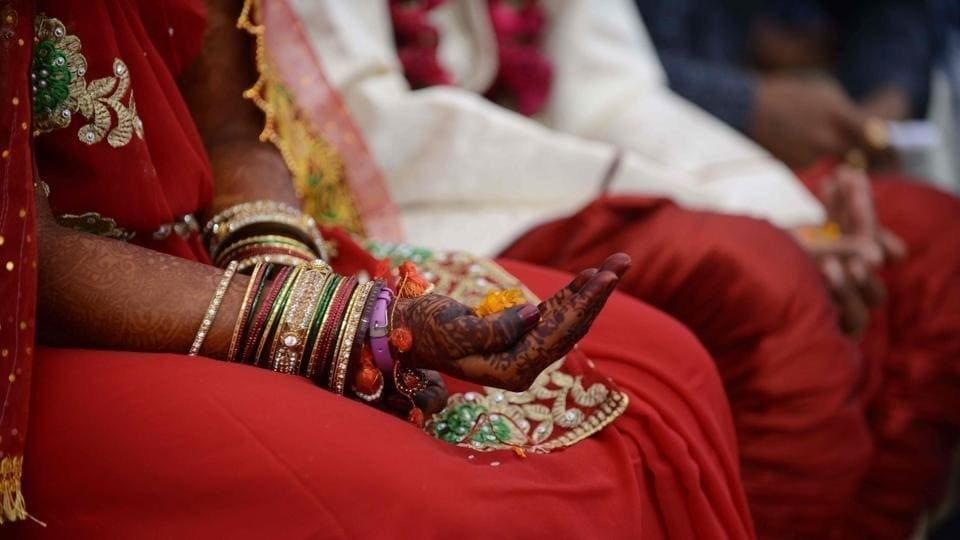
In a revamped and stricter lockdown, marriages in Delhi will be held at home or in courts with not more than 20 people, according to an order issued by the Delhi Disaster Management Authority (DDMA).
The government has ordered a complete prohibition on marriage ceremonies at public places, banquet halls, hotels and similar places during the period.
Service providers or owners of hotels, banquets, marriage halls, sound system, DJ, catering will have to return the advance payments for marriages during the lockdown or will have to mutually agree on a later date for the ceremonies, the order by the Delhi government said.
The Delhi government had been forced to impose lockdown amid a steep rise in Covid-19 cases on April 19. Although the cases have come down and positivity rate has reduced from the high of 35 per cent on April 26 to 21.67 per cent now, but strictness is needed, Kejriwal said.
Authorities including local administration, police, civic bodies and Mandis will be responsible for ensuring Covid-19-appropriate behaviour at inter-state bus terminals, railway stations, wholesale vegetable and fruit markets and shops providing essential goods, it said.
In order to break the chain further and reducing footfall in public spaces, the services of Delhi Metro will also be suspended during the lockdown. The Metro trains were so far operating with 50 per cent seating capacity and ban on standing commuters.
"The restrictions need to be upheld for some time more. Otherwise, we will lose whatever we have achieved till now. As I have mentioned earlier, this is an extremely difficult period, the second wave is quite deadly, with many losing lives. First and foremost, we have to save lives.”
The lockdown scheduled to end at 5 am on Monday will now be extended up to May 17 morning.
Movement on the roads will also be closely monitored during the lockdown.
Police authorities will ensure effective checking of persons and vehicles on the roads by putting adequate number of pickets with the objective to prevent unnecessary movement of people on roads during curfew, the DDMA said.
"Delhi Police will also ensure that movement of individuals and vehicles should be allowed strictly as per the guidelines/ protocols prescribed in the curfew order."
Kejriwal cited feedback from many stakeholders and said that the opinion was in favour of extending lockdown for another week.
"We must remember Jaan Hai Toh, Jahan Hai...this time, the lockdown will be stricter and the Delhi Metro will not ply from tomorrow," he said in an online briefing.
Lockdown was imposed on April 20 amid rise in Covid-19 cases. Positivity rate touched 35 per cent but with cooperation of the people, it now stands at around 21 per cent, he said.
Delhi on Sunday recorded 13,336 fresh cases of coronavirus disease, pushing the cumulative tally to 1,323,567. The national capital's daily death count also fell below 300 on Sunday after 273 fatalities were recorded, the health bulletin showed. A total of 19,344 people have succumbed to the viral disease so far, the bulletin stated.
The positivity rate - the proportion of samples that turn positive among all tests conducted - also dipped to 21.67 per cent on Sunday, a sharp decline from 35 per cent recorded last month, indicating reduced spread of the disease among people in Delhi. The national capital's positivity rate rose to its highest at over 35% two weeks back on April 26 but has gradually come down afterward.


