E-Paper



‘Technical issue’: Taliban minister on absence of women journalists in Delhi presser
Taliban face strong criticism from India’s opposition parties and journalist bodies over the exclusion of women atAmir Khan Muttaqi’s news conference on Friday

 Prefer HTon Google


New Delhi: More than a dozen women journalists on Sunday attended a news conference by Taliban foreign minister Amir Khan Muttaqi, who said their absence at another interaction two days ago wasn’t by design.
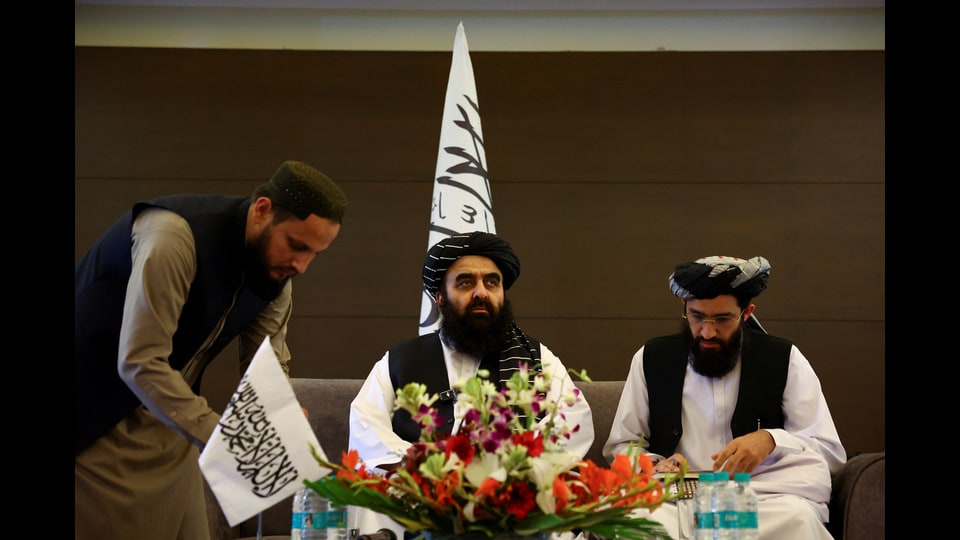
Taliban authorities face strong criticism from India’s opposition political parties and journalist bodies over the exclusion of women at Muttaqi’s first news conference on Friday. He is the first senior Taliban functionary to travel to India.
The first question at Sunday’s event from a foreign journalist related to the absence of women journalists at the news conference on Friday, and Muttaqi replied: “With regards to the press conference, it was organised at short notice. A small list of journalists was finalised. It was more of a technical issue.”
He added, “Our colleagues had decided to send invitations to specific journalists and there was no other intention.”
Several opposition leaders had described the absence of women journalists at Friday’s event as unacceptable and an “insult to women”. A number of media bodies criticised the Afghan foreign minister, while the external affairs ministry said it had no involvement in organising Friday’s media interaction.
Muttaqi faced several questions from the women journalists about the erosion of the rights of Afghan women and girls, including their exclusion from education and professional opportunities.
“Afghanistan has an Islamic government and under Islam, everybody’s rights are protected. Whether it is men or women or people coming from outside for business or our own people, their rights are protected under the laws,” he said.
“No one could control Afghanistan in the past. If we have controlled it, it means our policy is successful.”
A large black-and-white flag of the Islamic Emirate, as the Taliban refers to itself, was placed behind Muttaqi in the room at the Afghan embassy where the news conference was held. Outside however, the flag of the erstwhile Afghan republic continued to fly.
Muttaqi responded to questions about the Taliban flag and the lack of formal recognition of the regime in Kabul by New Delhi by saying: “We fought a jihad and achieved success under this flag and we have raised this flag.”
“This is our flag. This is 100 percent our embassy. All those working here are with us,” he said. “This embassy is 100% in our control. Those who worked for the previous government are now working with us.”
On Friday, an Afghan youth at the embassy had blocked attempts to put the flag of the Islamic Emirate at the venue of the media interaction, saying India is yet to recognise the Taliban government.
Muttaqi, who is on a six-day visit to India, said the two sides had slowly built up their relations in the four years since the Taliban assumed power in August 2021. “External affairs minister S Jaishankar has said India’s technical mission in Kabul will be upgraded to an embassy and it has been agreed we will send diplomats here. The relations will be upgraded slowly and ultimately, the relationship should reach a normal level,” he said.