
 E-Paper



Nobel for writer who blends memory, reflection
French President Emmanuel Macron, paying fulsome tribute to Ernaux, described her as “the voice for the freedom of women and those forgotten by the 20th century”.

 Prefer HTon Google


With her obviously dyed chestnut-blonde hair, tailored black dresses, and deeply etched facial creases, Annie Ernoux might, at first glance, pass off for a chic Parisian grandmother. Until she opens her mouth, that is.
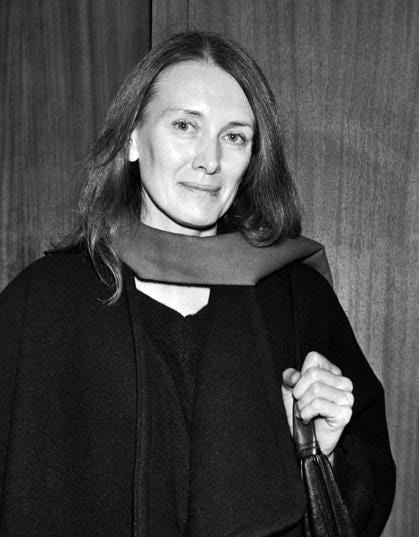
The 82-year-old French writer, who has just won the Nobel Prize in literature for the “courage and clinical acuity with which she uncovers the roots, estrangements and collective restraints of personal memory” is a committed political activist and feminist who makes no bones about where her sympathies lie – squarely to the Left.
“It’s a duty to take a political position,” she said firmly, referring to her unstinting support for France’s far-Left candidate Jean-Luc Melanchon in last April’s presidential election.
“I consider the Prize to be a great honour, but also a great responsibility. It means bearing witness. A form of ‘rightness’, of justice, vis a vis the world,” she said.
French President Emmanuel Macron, paying fulsome tribute to Ernaux, described her as “the voice for the freedom of women and those forgotten by the 20th century”.
Although her books are essentially autobiographical in that she and her life’s experiences are the subject matter, they can in no way be described as confessional or auto fiction. Nor can they be described as essays or memoirs. The word used by French publishers is “récits” or a retelling, a reliving through narration. Her prose is shorn of adornment or writerly flourishes of any sort. Ernaux calls it “flat writing”.
In “ A Man’s Place”, the 1984 book that first earned her widespread recognition, (it won the prestigious Renaudot Prize in France and was shortlisted for the International Booker Prize), she dealt with her relationship with her father. It is an almost deadpan, factual rendering, made all the more powerful by its plain-speaking, everyday tone. “No lyrical reminiscences, no triumphant displays of irony. This neutral writing style comes to me naturally,” she said in an interview.
Ernaux, who began writing when still in her early twenties, chronicles French society and, more particularly, the difficulties and dilemmas faced by French women since the mid-1950s. “If there is a single book that transformed my life it was Simone de Beauvoir’s ‘The Second Sex’. I was eighteen when I read it and it was almost a mystical experience that completely changed my outlook,” she said.
“Annie Ernaux is possessed – by literature. Her writing is sociological in that it deals with questions of class, origins, gender, abortion, death and other societal issues, without being sociology. In that sense, she comes very close to the great French sociologist Pierre Bourdieu,” writer and publisher Olivier Betourné said. “Her books can be described as paradoxical - they are literary without using “literary” language, device or artifice and they recount everyday experiences that told by a lesser writer could be banal or mundane. Her récits are essentially French. And yet, it is in this very bald, spare, depouillé retelling of everyday events, that she touches something very universal, something sublime,” he told Hindustan Times.
Born in 1940 to a modest working-class family, she grew up in the “dirty, ugly, tacky and repugnant” café cum shop run by her family in the northern industrial town of Yvetot. She managed to evade the sorry future predicted by her origins by dint of hard work and literary scholarship.
Ernaux began by writing barely disguised autobiographical novels. “Cleaned Out”, her very first novel, written in 1974, described the clandestine abortion she underwent while still a student. The book described a student’s fears that an unwanted pregnancy would condemn her to the life of a poor peasant. Abortion was still illegal in the 1960s, when the novel is set, and some right-wing critics called it obscene because of the graphic descriptions it contained.
Her later memoir “Happening” also dealt with the subject of unwanted pregnancy and what abortion meant to women forced to take recourse to clandestine methods. It is reflection on her conflicted feelings about transitioning from working class to a bourgeois life. She has called herself “a class defector” speaking fearlessly about the chasm that grew between her and her parents after she entered a world of university-educated intellectuals.
“The Years”, first published in 2008, is considered by many to be her masterpiece. It also brought her greater attention internationally with a hugely successful English translation as well as translations in 37 other languages. Ernaux has consistently used her life story as a way of mapping the wider postwar generation in France, though the Algerian War, sexual liberation, protests and pop culture of the second half of the 20th century.
Of the fact that autobiography and her life’s experiences are the primary elements and building blocks of her books, Ernaux famously said: “Yes, it the retelling of my life but also the lives of thousands of women who are all on a quest for freedom and emancipation.”
Her support for the Me Too movement has been unequivocal, and Ernaux has emerged over the last two decades as someone who gives voice to countless women unable to articulate their hopes and fears, their big and small quotidian struggles against sexism and patriarchy.
(Vaiju Naravane is professor of media studies at Ashoka University and a former journalist and publisher based in Paris. The views expressed are personal.)


