
 E-Paper



Not all pvt property can be acquired by State: SC
In practical terms, the ruling means that not all private assets are open to State acquisition for public distribution

 Prefer HTon Google


A Supreme Court Constitution bench, by an 8-1 majority, on Tuesday set limits on the government’s power to take over privately owned resources for public distribution, ruling that only certain private resources that meet specific criteria as “material resources of the community” can be considered for state acquisition.
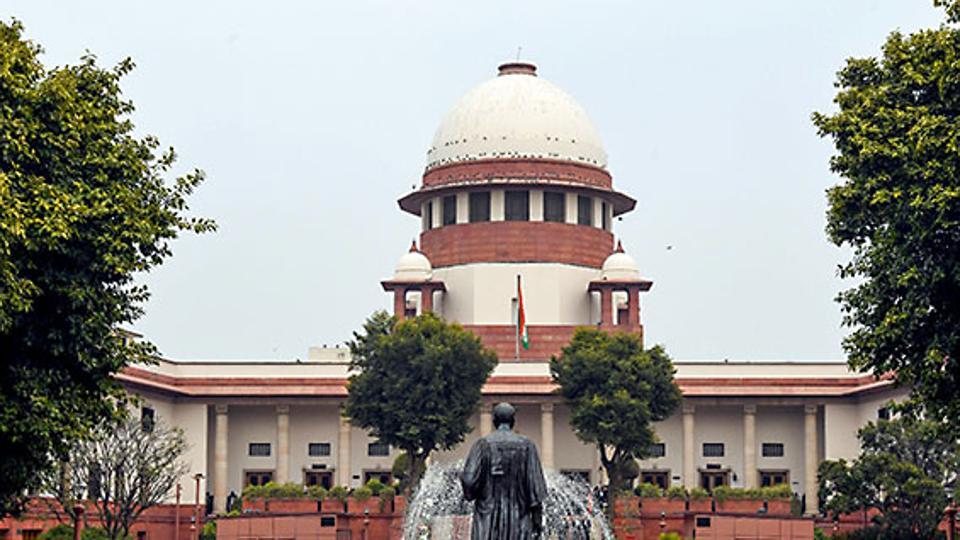
The majority ruling, delivered by Chief Justice of India (CJI) Dhananjaya Y Chandrachud, delineated boundaries of the State’s power to acquire resources under Article 39(b) of the Constitution. This directive principle encourages the State to manage resources in a way that benefits the general public. The bench, however, clarified, that the provision does not automatically allow the government to acquire or nationalise all private property for the public’s benefit.
The decision brought clarity to decades of judicial interpretation on Article 39(b), which has historically seen varying perspectives on the balance between private property rights and public interest. Article 39(b) states that the “State shall direct its policy towards securing that the ownership and control of the material resources of the community are so distributed as best to subserve the common good”. Previously, different court rulings had both expanded and restricted the State’s power, sometimes taking divergent economic views on the matter.
In practical terms, the ruling means that not all private assets are open to State acquisition for public distribution. Instead, each acquisition will depend on factors like the resource’s nature, its scarcity, its impact on community welfare, and whether it serves public interests better in private or public hands.
In deciding this matter, the bench overruled previous judgments that had taken a more expansive view of State power in acquiring private resources. The court highlighted the Constitution’s commitment to “economic democracy” rather than a rigid adherence to socialist or capitalist principles, acknowledging that while redistribution for public benefit is essential, it must be balanced against individual property rights.
The majority view also overturned a 1982 ruling in the Sanjeev Coke case, which had leaned on justice VR Krishna Iyer’s interpretation in the 1977 Ranganath Reddy case. Justice Iyer had argued that all private property could be considered “material resources of the community” for redistribution. However, the majority view stated that justice Iyer’s view was influenced by a specific economic ideology. It reiterated that India’s constitutional framework supports “economic democracy”, which does not favour any one economic system.
As CJI Chandrachud stated in the judgment that he authored for himself and six other judges – justices Hrishikesh Roy, JB Pardiwala, Manoj Misra, Rajesh Bindal, Satish Chandra Sharma and Augustine George Masih -- the Constitution does not mandate a single economic theory but seeks to establish a balance that respects both public welfare and private rights.
In its interpretation of Article 39(b), the majority opinion acknowledged that privately owned resources could theoretically be “material resources of the community,” but emphasised that not all such resources meet this criterion. The court laid down two key tests: a resource must be both “material” and “of the community.” This nuanced interpretation means that resources must serve the community in a way that justifies state intervention.
Expounding on this approach, CJI Chandrachud noted that the significance of a resource would be judged case by case, depending on factors like the resource’s nature, its availability, and the impact of its concentration in private hands. For example, resources that are scarce or vital to community well-being might more easily qualify for state intervention. He also pointed out that the “public trust doctrine,” where the state holds certain resources in trust for the public, might guide this determination. It added that the materiality of a privately owned resource and whether it has a community element cannot be determined in a vacuum and must be identified on a case-by-case basis.
The court further clarified that Article 39(b) must be interpreted in harmony with Article 300A, which, though no longer providing a fundamental right to property, still protects property rights under the Constitution. The ruling warned against interpreting Article 39(b) as a carte blanche for the state to acquire any private property, as such an interpretation would disregard the Constitutional guarantee of property rights under Article 300A.
Justice BV Nagarathna, while agreeing with the majority on some points, offered a distinct perspective. She critiqued the majority view for its dismissive view of justice Iyer’s earlier interpretation, warning against undermining past judicial wisdom. “Merely because of the paradigm shift in economic policies... cannot result in branding the judges of this Court of the yesteryear as doing a disservice to the Constitution,” she wrote. Justice Nagarathna emphasised that justice Iyer’s judgments were a product of their historical context, reflecting a period when the state prioritized public welfare over private ownership, especially in the post-Independence era when socialist ideals were prevalent.
Justice Nagarathna also pointed out that resources classified as “material resources of the community” could be distributed by the State only if they met specific criteria. She clarified that personal belongings such as household items, clothing, and jewellery do not qualify for redistribution under Article 39(b), even though they are privately owned. According to her, resources become “material resources of the community” only if they are nationalised or acquired by the state or if their owners willingly dedicate them for public benefit.
The lone dissent was scripted by justice Sudhanshu Dhulia who agreed with the view taken by justices Iyer in Sanjeev Coke. He said: “What and when do the ‘privately owned resources’ come within the definition of ‘material resources’ is not for this court to declare. This is not required.”
The key factor, according to him, is whether such resources would subserve common good. “Clearly the acquisition, ownership or even control of every privately owned resource will not subserve common good. Yet at this stage we cannot come out with a catalogue of do’s and don’ts. We must leave this exercise to the wisdom of the legislatures.”
This ruling was prompted by a dispute involving the Maharashtra Housing and Area Development Authority (MHADA), which had acquired old, deteriorating buildings in Mumbai for redevelopment under a state policy aimed at improving housing. Property owners challenged this acquisition, arguing that the law infringed on their rights to equality and freedom, as enshrined in Articles 14 and 19. In response, MHADA and the Maharashtra government cited Article 31C of the Constitution, which protects laws that implement Article 39(b) from being challenged on the grounds of fundamental rights.
The nine judges were unanimous on whether laws furthering Article 39(b) enjoy protection under Article 31C of the Constitution. Article 31C provides immunity from constitutional challenges to laws made by the state to ensure that “ownership and control of the material resources of the community” serve the common good. Originally introduced in the 1971 constitutional amendments and amended by the 42nd Amendment in 1976, Article 31C’s protections were curtailed by the Supreme Court in the Minerva Mills case (1980), which struck down parts of it that barred judicial review of such laws. However, the unamended core of Article 31C -- its “safe harbour” provision for laws aimed at achieving the goals of Article 39(b) and (c) -- remains in force and continues to shield qualifying laws from being invalidated under Articles 14 (equality) and 19 (fundamental freedoms).
In the ruling, the bench said that the unamended Article 31C is still operative and has been legally functional for over four decades, making its practical and legal significance well-established. This interpretation provides clarity for laws that align with Article 39(b) and (c), ensuring that such laws enjoy immunity if they genuinely aim to further the constitutional objectives of resource distribution for public welfare. However, the court stressed that this protection does not extend indiscriminately to any state action, as each law invoking Article 31C must still satisfy the substantive requirements of Article 39(b) and (c).


