
 E-Paper



3 NTA experts named in CBI's NEET paper leak probe chargesheet, may face life term if proven guilty
The chargesheet names Manisha Gurunath Mandhare, Prahalad Kulkarni and Manisha Sanjay Havaldar.

 Prefer HTon Google


The Central Bureau of Investigation (CBI) has chargesheeted three National Testing Agency (NTA) subject experts engaged in setting the NEET UG 2026 examination paper, alleging criminal breach of trust as public servants and other offences in connection with the alleged paper leak case.
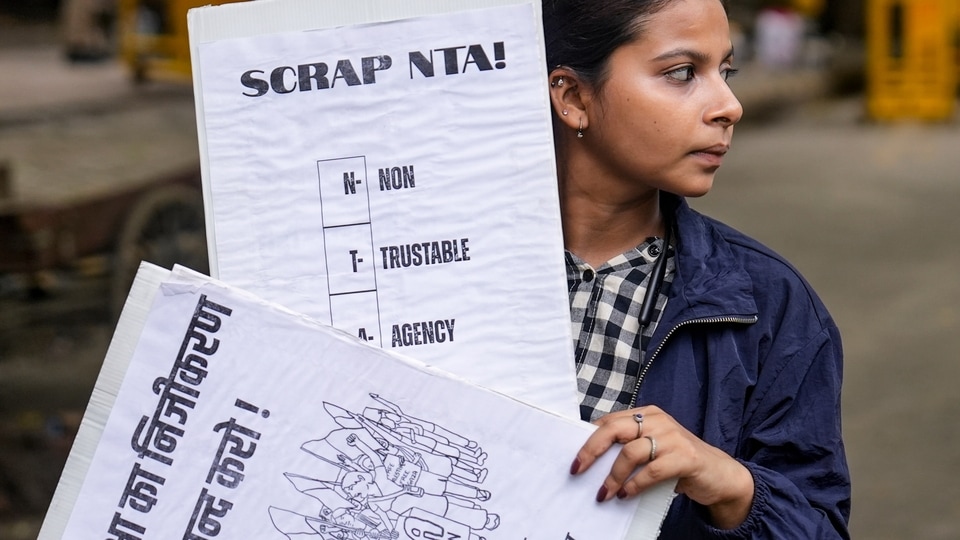
The chargesheet names Manisha Gurunath Mandhare, Prahalad Kulkarni and Manisha Sanjay Havaldar. The agency has invoked Section 316(5) of the Bharatiya Nyaya Sanhita (BNS), 2023, relating to criminal breach of trust by a public servant, provisions of the Public Examinations (Prevention of Unfair Means) Act, 2024, the Prevention of Corruption Act, 1988, and other provisions of the BNS.
According to the CBI, conviction under Section 316(5) of the BNS carries punishment of life imprisonment or imprisonment up to 10 years along with a fine.
Deep Dive

The agency further stated that offences under Section 11 of the Public Examinations (Prevention of Unfair Means) Act, 2024 carry punishment of seven to 10 years' imprisonment and a minimum fine of ₹10 crore, if proved.
The CBI has charge-sheeted Manisha Gurunath Mandhare, under Section 316(5) of BNS, 2023, alleging that as a public servant/subject expert for NEET UG 2026, she committed criminal breach of trust by removing NTA's proprietary confidential material from its premises. The confidential question material entrusted to her constituted property of NTA.
Further, under Section 317(2) of BNS, 2023 for dishonestly received leaked physics questions from co-accused Manisha Sanjay Havaldar, knowing that it was property obtained through criminal breach of trust from NTA, and retained them.
According to the chargesheet, Mandhare has also been booked under Section 13(2) read with Section 13(1)(a) of the Prevention of Corruption Act for allegedly dishonestly misappropriating confidential NTA question papers for monetary gain.
The CBI has further invoked Section 10 read with Sections 3, 4 and 5 of the Public Examinations (Prevention of Unfair Means) Act, 2024, alleging that she leaked confidential questions, colluded with others and provided leaked material and unauthorised tutoring to candidates before the examination.
Section 11 of the Act has also been invoked for her alleged involvement in organised criminal activity relating to the public examination.
Prahalad Kulkarni has been chargesheeted under Section 238 of the BNS, with the CBI alleging that he intentionally destroyed original question notes supplied to candidates after becoming aware of the offence. He has also been booked under Section 316(5) of the BNS on allegations that he removed confidential NTA question material entrusted to him as a subject expert.
The agency further alleged that Kulkarni dishonestly misappropriated confidential question papers for monetary gain.
CBI has further invoked Section 10 read with Sections 3, 4 and 5, as well as Section 11 of the Public Examinations (Prevention of Unfair Means) Act, alleging that he leaked questions, colluded with others, facilitated unauthorised tutoring and participated in organised criminal activity.
The third subject expert, Manisha Sanjay Havaldar, has also been chargesheeted under Section 238 of the BNS on allegations that she intentionally destroyed original question notes shared with co-accused persons and candidates after becoming aware of the offence.
The CBI has further booked Havaldar under Section 316(5) of the BNS, alleging that she removed confidential NTA question material from official custody, thereby committing criminal breach of trust as a public servant.
She has also been chargesheeted under Section 13(2) read with Section 13(1)(a) of the Prevention of Corruption Act for allegedly dishonestly misappropriating confidential NTA question papers for monetary benefit.
The agency has additionally invoked Section 10 read with Sections 3, 4 and 5, along with Section 11 of the Public Examinations (Prevention of Unfair Means) Act, alleging that Havaldar leaked questions for monetary gain, colluded with others, provided leaked material and unauthorised tutoring to candidates prior to the examination, and participated in organised criminal activity.


