
 E-Paper



November woes begin: Delhi AQI enters red zone, climbing
The air quality index (AQI) was 303, according to the 4pm bulletin, breaching the threshold from poor to very poor for the first time this season. Over the next couple of days, wind directions are likely to change in a way that they bring in smoke from farm fires that have recently been raging in parts of Punjab and Haryana.

 Prefer HTon Google


Pollution levels in the Capital entered the red zone on Tuesday and weather experts warned it will only get worse, potentially deteriorating to the “severe” category from “very poor” if the ban on use of firecrackers is flouted.
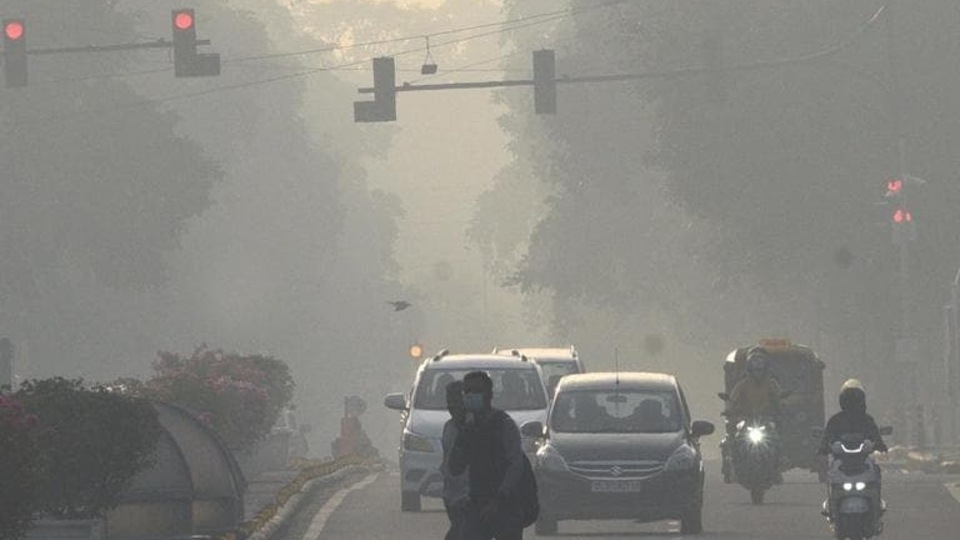
The air quality index (AQI) was 303, according to the 4pm bulletin, breaching the threshold from poor to very poor for the first time this season. Over the next couple of days, wind directions are likely to change in a way that they bring in smoke from farm fires that have recently been raging in parts of Punjab and Haryana.
An analysis by a government forecasting body on Wednesday said these two factors alone are enough to keep pollution levels in the upper “very poor” range – the AQI is likely to be in the high 300s in that case – as long as people do not burst any firecrackers during Diwali on Thursday.
But if people burn even half the amount of firecrackers they collectively did in 2019, the AQI will slip into the severe category, the forecast by System of Air Quality and Weather Forecasting and Research (SAFAR) said.
“We have identified three factors which could play a role around Diwali – stubble burning, which could touch a peak of around 4,000 fires and a share load of 40% on November 5, calm local winds over Delhi, and the third is how many firecrackers are burst. If no firecrackers are burst, Delhi’s air will be very poor, but even if some firecrackers are added, the air could be pushed to the ‘severe’ range,” said Gufran Beig, founder and project director at SAFAR.
The analysis added that the “AQI is predicted to enter into the severe category from the night of November 4 (Thursday) onwards and will remain severe until November 5. It is predicted to improve slightly in November but will fluctuate between higher end of very poor to the severe range”.
Environment minister Gopal Rai said the Delhi government has given directions to increase vigilance across the city to check the sale, purchase and burning of firecrackers. Rai said till Tuesday, 12,957-kg of firecrackers had been seized by the Delhi Police and 32 people have been booked since October 27.
“A special vigilance campaign would be run in the border area of Delhi so that illegally, there is no purchase, sale, movement, and storage of firecrackers anywhere. In this context, instructions have been issued to Delhi Police and SDM on behalf of DPCC today,” said Rai.
The last time Delhi’s AQI slipped into the “very poor” zone was on June 9, when the AQI was 305 following the onset of strong, dust-carrying winds blowing into Delhi from the desert in Rajasthan.
But winter pollution is a more stubborn problem due to a perfect storm of factors: the typical meteorological conditions characterised by low temperatures and calm winds prevent local pollutants from dust, smoke and tailpipe emissions to be dispersed and farm fires in Punjab and Haryana bring in ultra-fine particles that originated as smoke.
The first half of November is particularly bad every year — in 2020, the month had nine days of severe category air pollution, of which six days were at a stretch between November 5 and 11.
Sharing satellite images from the National Aeronautics and Space Administration (Nasa), Pawan Gupta, a research scientist at the Goddard Earth Sciences Technology and Research (GESTAR), Universities Space Research Association, said a thick layer of smoke and dust was seen in Delhi and parts of north India on Tuesday morning.
Ashim Mitra from the satellite division of the India Meteorological Department also said that dense haze was captured via satellite images on Tuesday morning. He said that forecasts suggest that the air quality in Delhi, Punjab, and parts of Uttar Pradesh is likely to deteriorate further between November 5 and November 6.
A SAFAR analysis of the day’s pollution suggested Tuesday’s deterioration was primarily due to local pollution sources and weather conditions in Delhi. The share of pollutants from farm fires was 6% but it would shoot up to 20-40% between November 4 and 6.
Indian Institute of Tropical Meteorology (IITM) Pune’s Decision Support System, too, indicated that the share of stubble fire in Delhi’s pollution is expected to peak to around 55% by November 6.
But there may also be some silver lining. Mahesh Palawat, vice-president (meteorology and climate change), said that an increase in wind speed is forecast from November 5. “While there might not be a major impact but it will still help the city from entering the severe AQI zone,” he said.


