E-Paper



NSA Doval: Afghanistan needs inclusive government
Since the Taliban takeover in Kabul in August 2021, India has consistently called for the formation of an inclusive government in Afghanistan. It has also maintained that Afghan soil cannot be allowed to be used by terror groups to train cadres or plan attacks on other countries.


India on Friday called for the formation of an inclusive government in Afghanistan and strengthening of the war-torn country’s capability to counter terrorism and terror groups that pose a threat to regional peace and security.
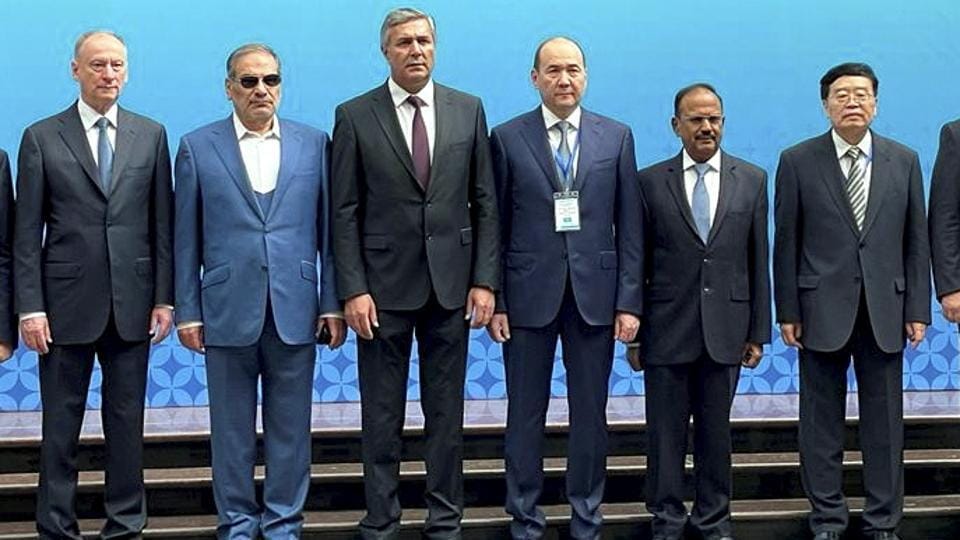
New Delhi’s position was outlined by national security advisor Ajit Doval at the fourth Regional Security Dialogue on Afghanistan that was attended by counterparts from China, Russia, Iran, Kazakhstan, Kyrgyzstan, Tajikistan and Uzbekistan. India had hosted the third edition of the dialogue last November. This year’s meeting was held in Dushanbe, Tajikistan.
The senior security officials discussed the situation in Afghanistan and the region and highlighted the need to find constructive ways to ensure peace and stability in the war-torn country and combating the risks of terrorism emanating from the region, people familiar with developments said.
Doval highlighted the need for representation to all sections of Afghan society, including women and minorities, so that the “collective energies of the largest possible proportion of the Afghan population feel motivated to contribute to nation-building”, said one of the people mentioned above.
Doval called on all countries present at the dialogue to work to “enhance the capability of Afghanistan to counter terrorism and terrorist groups which pose a threat to regional peace and security”, said this person.
Since the Taliban takeover in Kabul in August 2021, India has consistently called for the formation of an inclusive government in Afghanistan. It has also maintained that Afghan soil cannot be allowed to be used by terror groups to train cadres or plan attacks on other countries.
According to UN reports, tens of thousands of foreign terrorist fighters, including Pakistani nationals, are still present in Afghanistan. There is also no evidence that the Taliban regime has snapped its ties with al-Qaeda and other foreign terror groups, the reports have said.
During Friday’s meeting, Doval made it clear that India “was and is an important stakeholder in Afghanistan” and the country’s special relationship with the Afghan people over centuries will guide its approach to the situation and “nothing can change this”.
India has historical and civilisational ties with Afghanistan, and has always stood by the Afghan people, and these factors will continue to guide New Delhi’s approach, he said.
At a time when the Taliban have stepped up restrictions on women and shown no signs of allowing girls to return to educational institutions, Doval said women and youth are critical for the future of any society, and providing education to girls and employment to women and youngsters will ensure productivity and spur growth.
Such measures will also have a positive social impact, including discouraging radical ideologies among youth, he said.
The foremost priority should be the right to life and dignified living, as well as the protection of human rights of all, Doval said. Humanitarian assistance should be accessible to all, and respect for all obligations under international humanitarian law should be ensured, he added.
In this context, he also highlighted the humanitarian aid provided by India to Afghanistan, both before and after the withdrawal of Western forces. India has focused on infrastructure, connectivity and humanitarian aid over the decades, he noted. After the change of government last August, India has provided 17,000 tonnes of wheat out of a total commitment of 50,000 tonnes, 500,000 doses of Covaxin Covid-19 vaccines, 13 tonnes of life saving medicines and winter clothing and 60 million doses of polio vaccine.
Doval also held separate meetings with his counterparts from Iran, Tajikistan, Russia and other partners on the margins of the dialogue.
At the third Regional Security Dialogue on Afghanistan, the countries had adopted the Delhi Declaration that said Afghan territory should not be used for sheltering, training, planning or financing any terror acts. It also stressed the need to form an open and truly inclusive government that represents the will of all the people of Afghanistan.