E-Paper



‘Were trees using 300 mobiles?’: Rajnath to Congress on Balakot strike
Rajnath Singh said the NTRO reported presence of around 300 mobile phones in the Jaish terror camp on the night of IAF strike.

 Prefer HTon Google


Union Home minister Rajnath Singh on Tuesday lashed out at opposition parties including the Congress for seeking clarification on the number of deaths of terrorists in the Indian Air Force strike at Jaish-e-Mohammed’s terror camp in Pakistan. Singh said those raising the question should go to Pakistan and count the bodies.
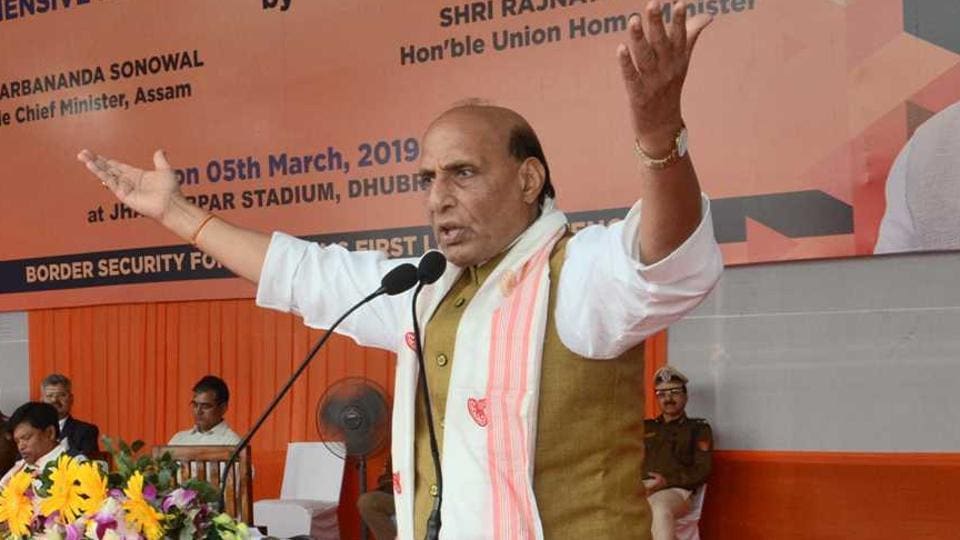
“Should our IAF pilots have visited the sites of the strikes and counted those killed? What kind of drama is this? If our friends in Congress want numbers, I would ask them to go to Pakistan and count. Ask people there how many people were killed by our IAF pilots,” said Singh while addressing a public meeting in Assam’s Dhubri.
The Union home minister’s comment comes amid growing chorus from the opposition following reports in international media suggesting that the IAF strike might not have caused great damage to terror infrastructure at Balakot in Khyber Pakhtunkhwa province of Pakistan. The IAF carried out a strike at Jaish terror camp in Pakistan on February 26 in the aftermath of Pulwama attack. Forty CRPF jawans were killed in the terror attack in Jammu and Kashmir.
Singh claimed that the National Technical Research Organisation (NTRO) system had informed about presence of around 300 active mobile phones at the site before the air strike by India.
“Some leaders of the other political parties are asking how many terrorists were killed in the IAF strike. Today or tomorrow, it will be known. Pakistan and their leaders’ heart know how many were killed,” news agency PTI quoted Singh as saying.
Also read | ‘Chowkidar chor nahi, pure hai’: Rajnath Singh’s comeback to Rahul Gandhi
The home minister was on a visit to the Indo-Bangla border where he inaugurated a ‘smart fencing’ project. “If needed we will go to ‘paataal’ (underneath the Earth), search them (terror bases) there and take them to task,” Singh said amid cheers from the public.
While no information on the number of JeM terrorists killed in the strikes by 12 IAF Mirage 2000 jets have been released by the government, the figure of 250-300 deaths has been cited.
“Why are you asking us? NTRO, which is an authentic Indian surveillance system, has stated that when IAF jets struck the area with bombs, there were 300 mobile phones active there prior to the attacks,” Singh said.
“Were these phones being used by trees in that area? Or will you now say that we don’t believe in the NTRO either,” Singh said.