E-Paper



Number Theory: India’s political economy story of the last decade – I
This is the first of a two-part series on India’s political economy story in the last decade

 Prefer HTon Google


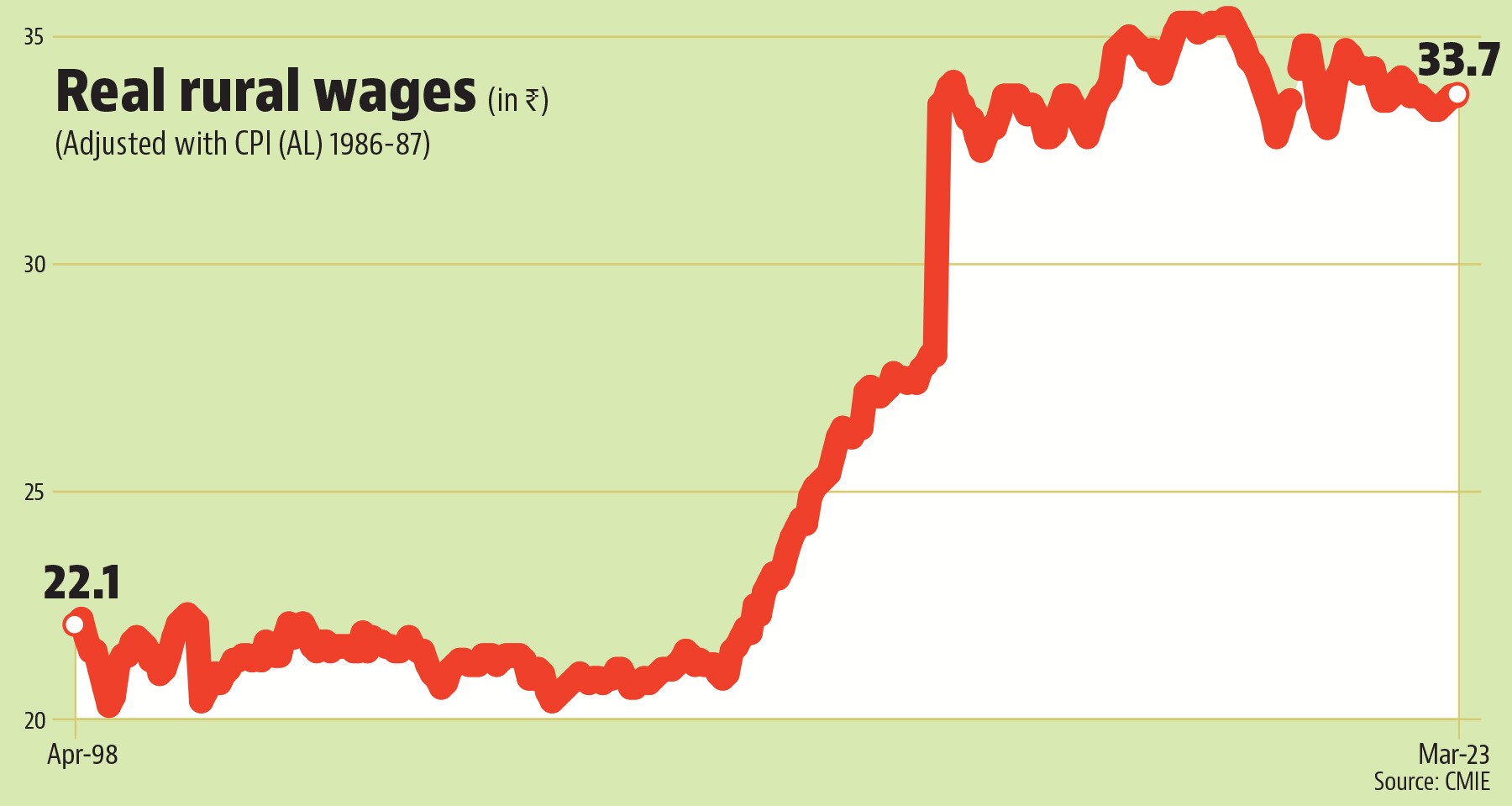
 The curious case of sudden spike in rural wages during UPA IIFlat real rural wages in the recent period are often taken as a sign of lack of dynamism in India’s rural economy. However, a long-term examination of real rural wages shows that their being flat is not a recent phenomenon. The Centre for Monitoring Indian Economy (CMIE) database has monthly rural wage data since April 1998. A look at the trend in real rural wages since then shows that they were pretty flat until 2010 and have largely stabilized once again from 2014 onwards. What really happened during the 2010 to 2014 period? We will come back to this question later. See Chart 1: Real rural wage
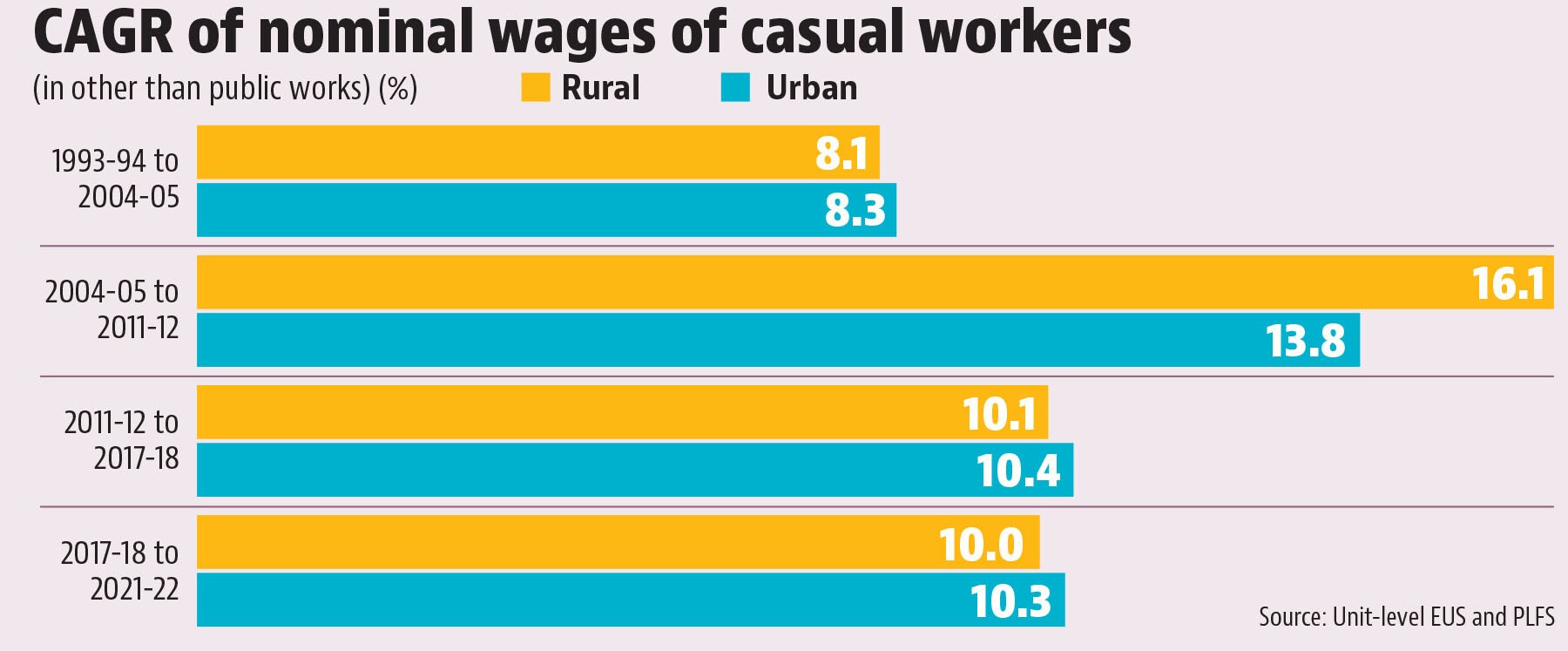
- Why do rural wages matter?To cut a long story short, they are the best proxy for blue-collared wages in both rural and urban India. That a large part of India’s blue collared workforce comprises migrants and that the extent of this migration could be much larger than what official sources such as the census suggests have been acknowledged even in official documents such as the 2016-17 Economic Survey which was published when Arvind Subramanian was the Chief Economic Advisor. A long-term analysis of wages for casual workers – they are most likely to be doing manual/blue-collar work – from the early 1990s shows that wages for rural and urban casual workers move together. See Chart 2: CAGR of rural and urban casual workers’ wages
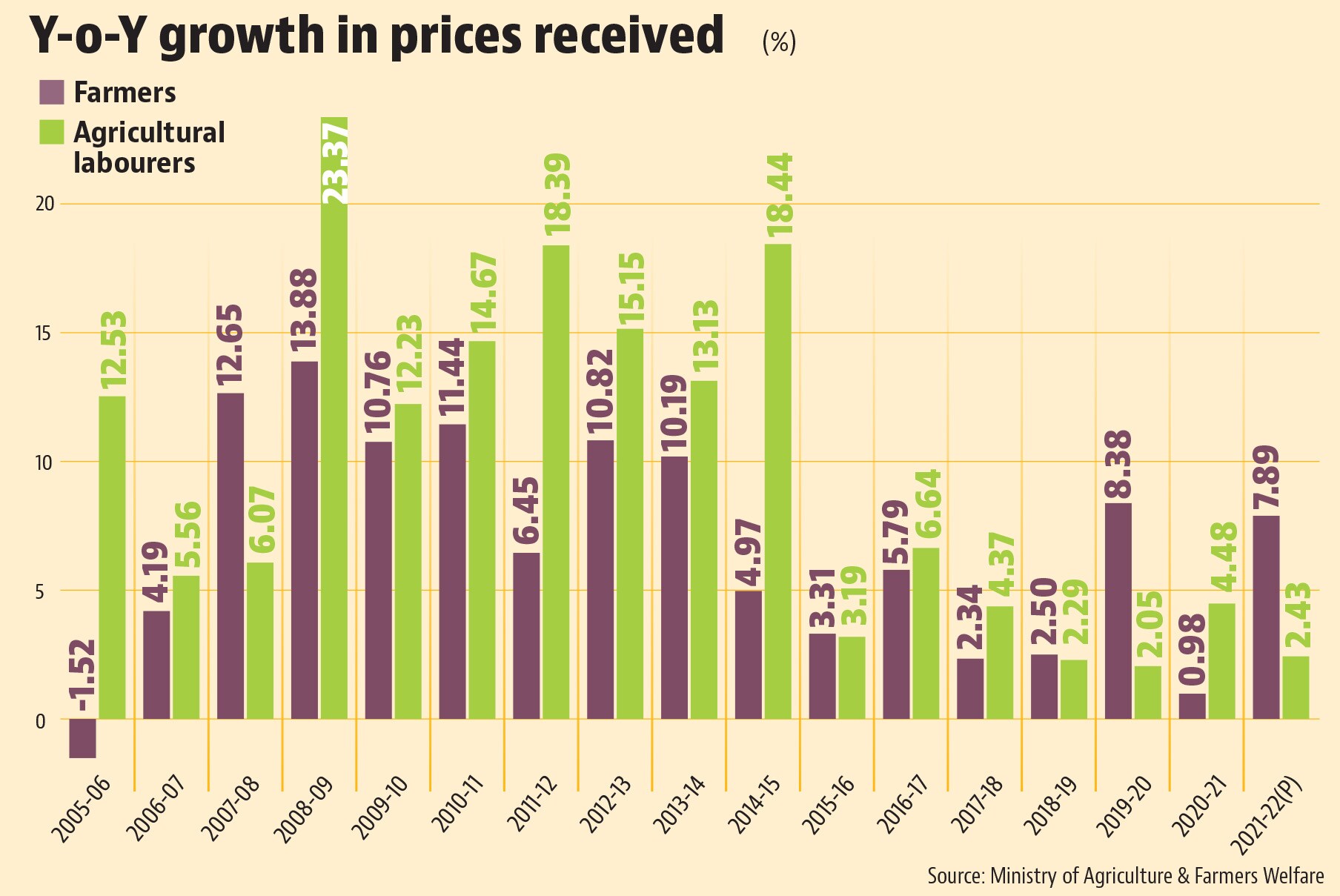
- The political economy of rise in rural wagesIn economics, a rise in real wages can be attributed to two factors: an increase in overall or factor-specific productivity or a decline in the share of another factor of production in overall incomes. Intuitively speaking, there is very little to suggest that India’s blue-collar rural workforce suddenly became more productive within the span of a few years beginning 2010 and this productivity increase suddenly stopped around 2014. That way, the long-term trend of flat real rural wages is a more believable story. On the other hand, terms of trade data published by the ministry of agriculture shows that prices received by agricultural labour (which would be wages) were increasing at a faster rate than prices received by farmers from the period between 2008-09 to 2014-15. This is bound to have put pressure on farmers’ margins. It is not very unreasonable to assume that small entrepreneurs employing urban blue-collar workers would have seen a similar squeeze on account of rising wage costs. See Chart 3: YoY growth in prices received for agricultural labour and farmers
It is a widely accepted fact that in India, high inflation is far more damaging to a government’s re-election prospects than low growth. Most objective political economy observers will agree that a prolonged spell of double-digit inflation during the second United Progressive Alliance (UPA) government was the last nail in the coffin of the Congress party. Consumer Price Index for Industrial Workers or CPI IW – we do not have data before 2012-13 under the new CPI series – grew at 12.4%, 10.5%, 8.4%, 10.4% and 9.7% in 2009-10, 2010-11, 2011-12, 2012-13 and 2013-14 respectively. These numbers were 3.3%, 4.4%, 6.7%, 6.2% and 9.1% between 2004-05 and 2008-09.
Why has there not been a similar increase in inflation under the current government? While one can argue that the commodity price cycle peak was bigger during the second UPA government, the post-Ukraine war inflationary spike continues to haunt many advanced economies. This two-part series will try to build an argument that one of the biggest reasons for India’s relative resilience vis-à-vis inflation is the result of a stabilizing policy which has prevented the eruption of a wage-price spiral for India’s blue-collar workforce . To be sure, making such an argument with absolute certainty will require establishing a causal relationship using econometric analysis, which is beyond the scope of journalistic work. However, the data does provide compelling evidence for such an argument.
The first part of the series will look at the broad trends in blue-collar wages in the economy and the second part will look at the role of crucial policy intervention which has helped in prevention of a wage-price spiral.