E-Paper



Number Theory: Making sense of October inflation numbers
What is the inflation picture beyond these the Consumer Price Index (CPI) and Wholesale Price Index (WPI)?
Published on: Nov 23, 2023, 16:55:14 IST


Share via


Copy link

Headline inflation numbers for October show 4.9% inflation and 0.5% disinflation for the Consumer Price Index (CPI) and Wholesale Price Index (WPI), respectively. What is the inflation picture beyond these two numbers? Here are five charts which answer this question.

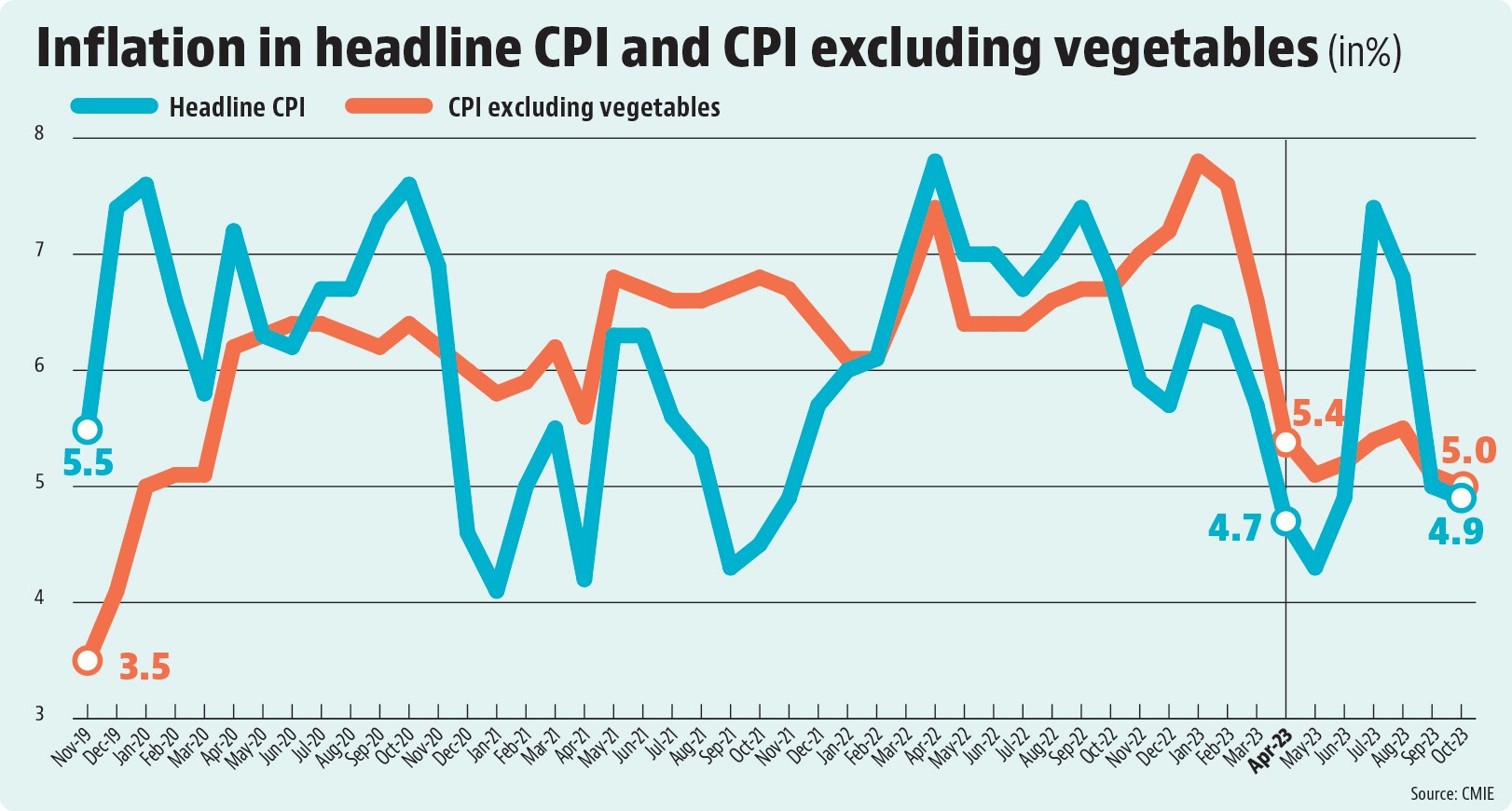
 Post-July fluctuation in retail inflation is largely on account of vegetablesAt 4.87% , the print for headline CPI in October is what it was in June . The number saw a huge jump to 7.4% in July and has fallen every month since. What explains this sharp rise and fall in the headline inflation number in the past four months? The one-word answer is vegetables. This becomes crystal clear if one compares the trajectories of headline CPI and CPI excluding vegetables during this period. The latter increased from 5.24% in June to just 5.41% in July and has been stable compared to the headline CPI number. More than anything, it shows that India’s inflation environment, once adjusted for seasonal shocks to vegetable production and prices -- vegetables have a share of just 6% of the CPI basket -- has not changed much over the past few months.
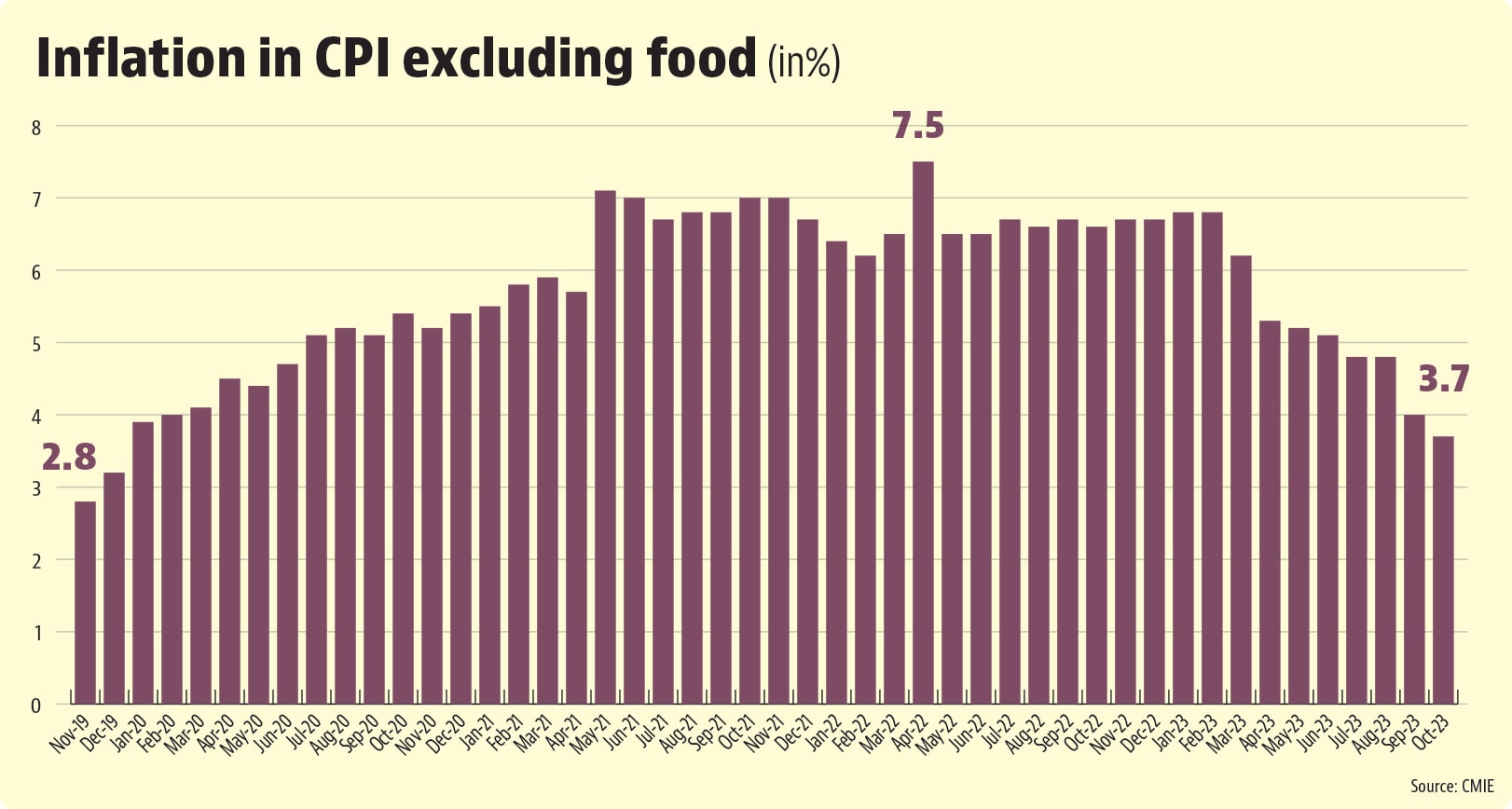
- Inflation excluding food is at a 46-month lowFood as whole has a share of 39% in the CPI basket. If one were to exclude the entire food basket from CPI, retail inflation would be just 3.7% in October 2023. This is the lowest this number has been since December 2019 when it was 3.2%. Unlike in the case of CPI excluding just vegetables -- 5.2% and 5% in June and October -- CPI excluding food as a whole has fallen significantly from 5.1% to 3.7% during this period.
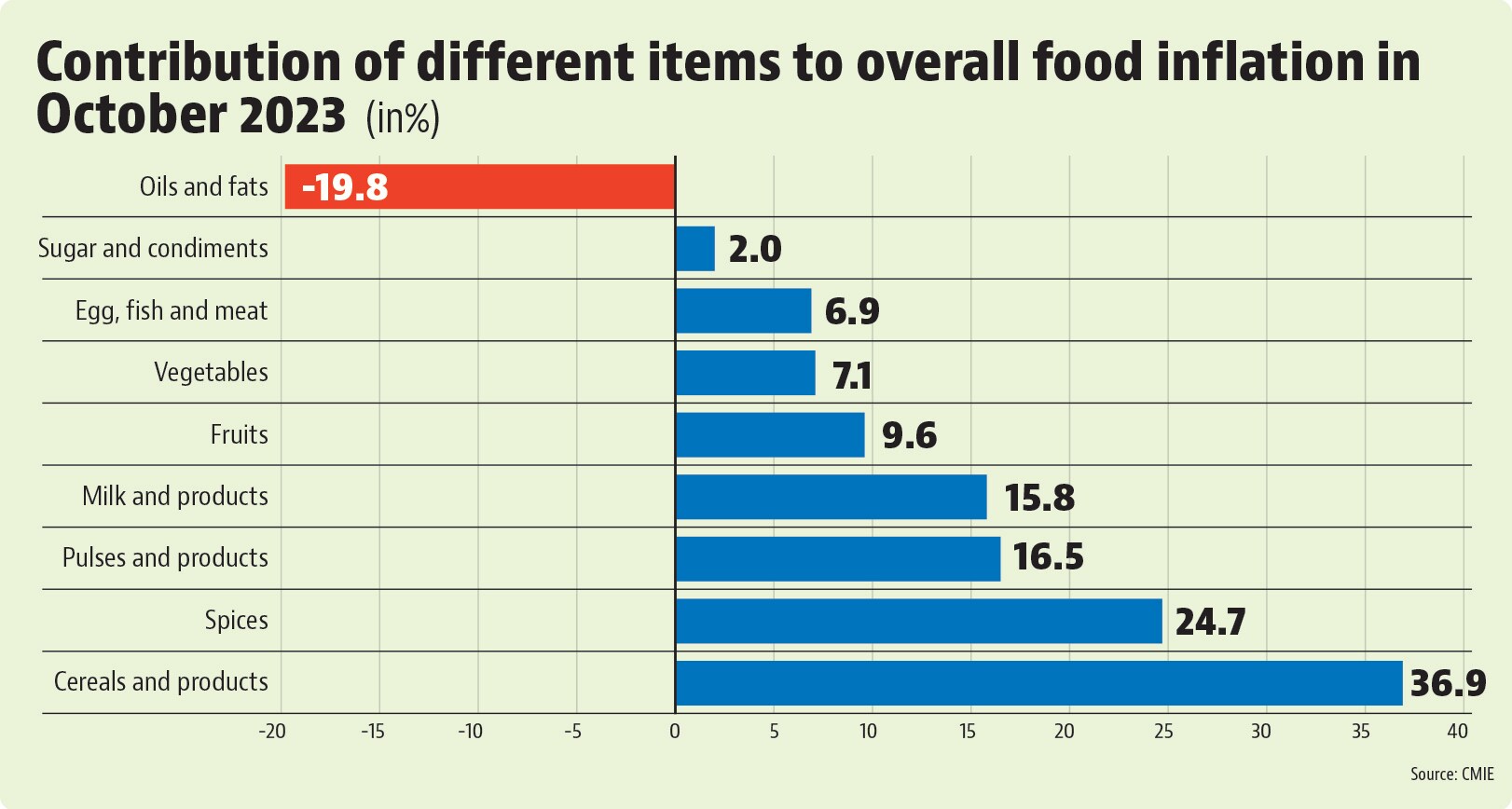
- But food inflation is still high and broad basedWhile it has come down from the 39-month high of 11.5% in July 2023, food inflation was still uncomfortably high at 6.6% in both September and October CPI data. What makes the situation trickier is that food inflation pressures are spread across categories rather than just one particular group. While double digit inflation in cereals has been grabbing the headlines, it contributed just 37% to the overall food inflation in October. This also means that it will take more than a cooling of just a few commodities for the food inflation problem to subside.
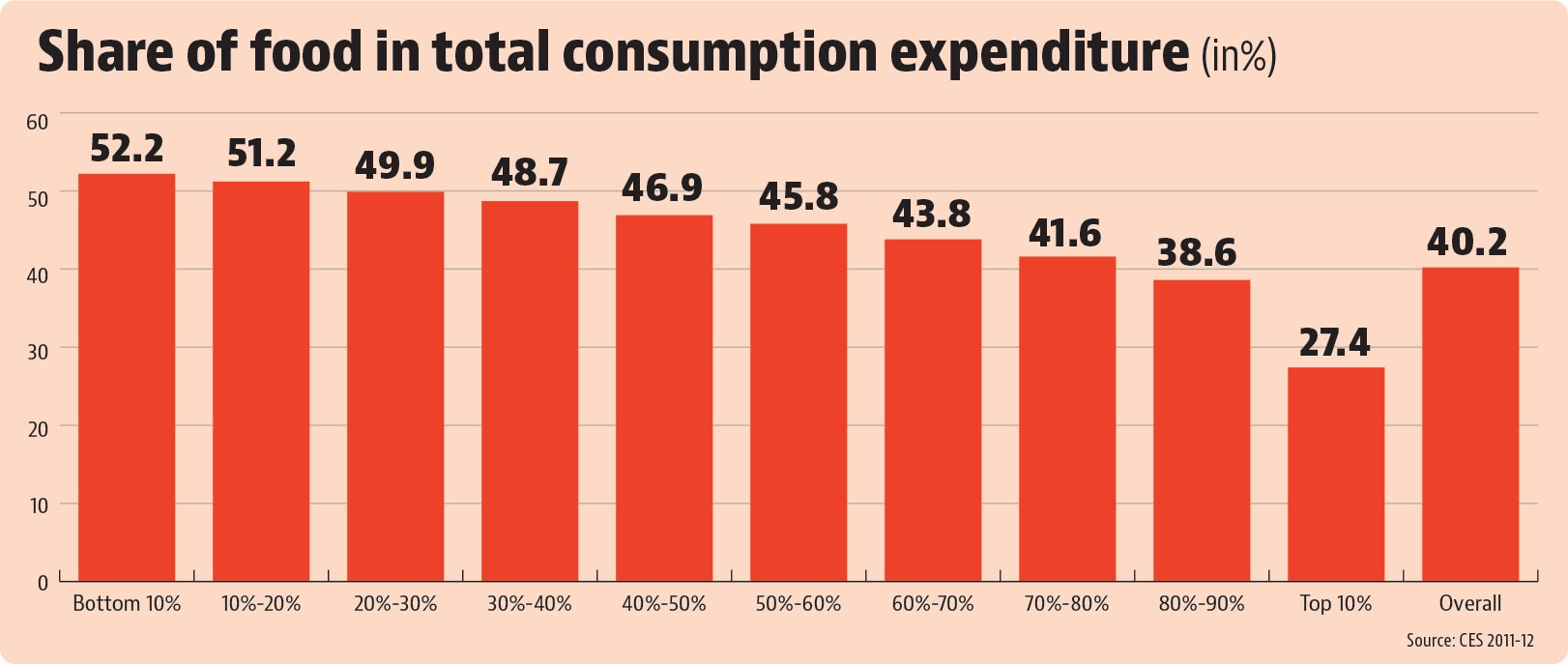
- A higher food inflation means a disproportionate burden on the poorThis is the most important political economy takeaway from the inflation numbers. While we do not have recent data on a class-wise composition of household budgets, the 2011-12 Consumption Expenditure Survey (CES) shows that food items have a much larger share in the consumption baskets of the poor in India. For the bottom 25% and 50% of the households, food spending was 51% and 49% of their overall spending. For the top 25% and 10% this number was just 33% and 27%. While there is good reason to believe that share of food spending would have come down in the last decade, the fact that food inflation hurts the poor more will remain. Sure, the government can intervene aggressively in the food market to control prices a bit, but this will put a squeeze on the poor by compressing farmers’ incomes.
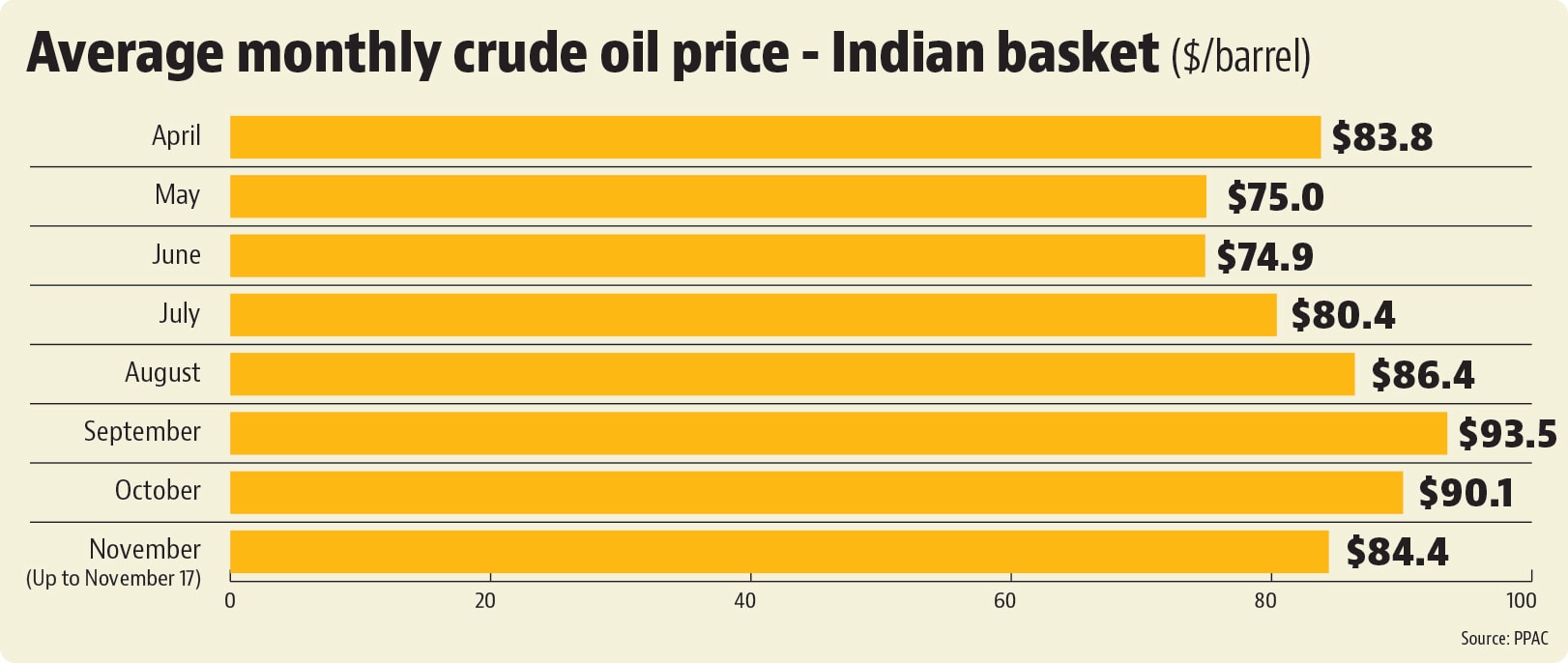
- To be sure, things could have been worse had crude oil prices seen a big jump due to the situation in West AsiaOn October 7, Hamas launched a big attack on Israel which was followed by a massive counter offensive by Israel on Gaza. The geopolitical ripples of this escalation of conflict still have the potential of leading to a major spike in the global prices of crude oil. If this does happen, there will be significant tailwinds for inflation in India as well. So far, this has not been a problem. The price of India’s crude oil basket (COB), as per data from the ministry of petroleum, has fallen, not increased, in October and thus far in November. While India’s COB was priced at $93.5 per barrel in September, this number has come down to $90.1 in October and $84.4 (data on November 17). Unless this trend reverses, the inflation situation is unlikely to worsen significantly in at least the near future.