
 E-Paper



Odisha artist, tribal educator, Santhali composer, weaver among Padma awardees
Sarat Kumar Patra, who wove the Geet Govinda with illustrations over seven years, has been credited for keeping an ancient craft alive

 Prefer HTon Google


A folk artist, an educationist, a Santhali music composer, and a weaver, who wove the Geet Govinda in Odia script on a 52-metre silk scroll, from Odisha, are among 54 nominees for the country’s fourth-highest civilian award, Padma Shri.
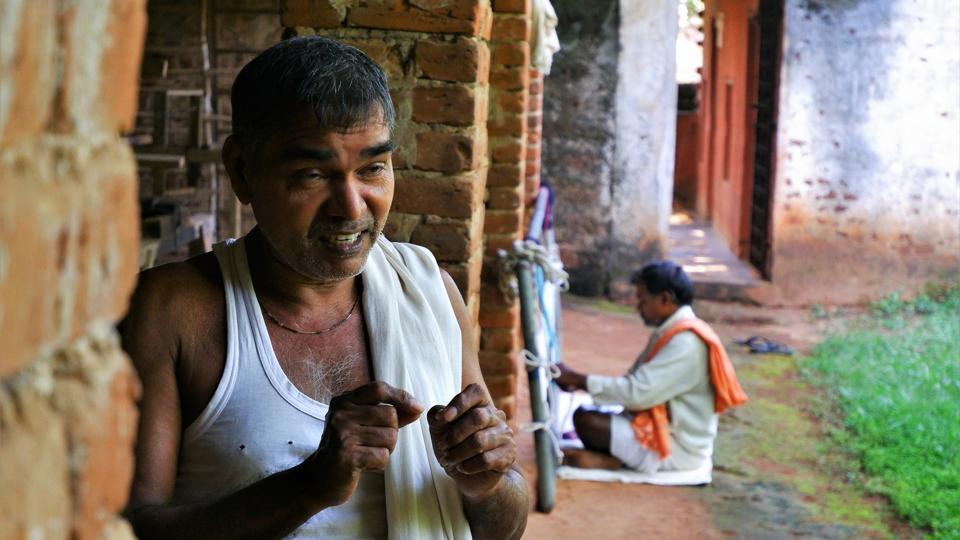
Simanchal Patro (Ganjam), Mahendra Mishra (Bhubaneswar), and Charan Hembram (Mayurbhanj) were chosen for their contributions to folk theatre, tribal education, and Santhali tribal culture. Sarat Kumar Patra, the fourth awardee from Odisha, who wove the Geet Govinda with illustrations over seven years, has been credited for keeping an ancient craft alive in the handloom cluster of Maniabandh Nuapatna in the Cuttack district for 60 years.
Born into a traditional weaver family in Tigiria, Patra developed over 50 shades of natural dyes, reviving processes that had all but vanished. His cotton and silk sarees, dress materials, dhotis, and scarves are sought after across the country. They have been draped as offerings during festivals in Puri’s Lord Jagannath Temple.
Patra has trained over a hundred weavers, many from underprivileged backgrounds, passing on skills. In 1993, he received the National Award for handloom weaving. He got the Sant Kabir Award, one of the highest honours in the field, in 2015. Patra is also a recipient of the President’s Award.
Patro is an artist of Prahlad Nataka, an operatic folk theatre of Ganjam, depicting Hiranyakashipu, the demon-king who tortures his devout son Prahlada for worshipping Lord Vishnu. Conceived in the late 19th century by Raja Ramakrishna Chhotaraya, a feudatory ruler of Odisha, its performances stretch 12 hours each over seven nights.
Patro has performed over 300 songs across 35-plus ragas, blending music with dramatic dance and vigorous acrobatics. He sold a portion of his property to fund Prahlad Nataka’s survival. In 2024, Patro received the Guru Gangadhar Smruti Samman.
Folklorist Mishra has worked for decades to preserve 21 tribal languages in Odisha. As a multilingual education coordinator in the Odisha government, he identified a critical gap in non-tribal teachers struggling to connect with students. He suggested a training module rooted in children’s folklore that helped teachers bridge this linguistic divide. Mishra initiated the Multilingual Education Programme for classes 1-4 in all 21 indigenous languages of Odisha, recognising that forcing young tribal children into Hindi or English classrooms amounted to cultural erasure. This allowed tribal students to receive education in their mother tongue, preserving their linguistic heritage and building a foundation for learning additional languages.
Mishra, who has over 25 published works of folklore research, children’s literature, and translations, was awarded UNESCO’s International Mother Language Award in 2023.
Charan Hembram, an author and composer in Mayurbhanj’s Rairangpur, is often described as a sentinel of the Santhali language. He has worked for over 30 years to promote tribal art and literature. Hembram founded institutions for cultural education for tribal youth. He has been a key figure in propagating indigenous dance traditions among women to protect their cultural identity.



