E-Paper



Odisha inducts airconditioned buses in Malkangiri, once hotbed of Maoist violence
In the first phase, 33 buses including 6 AC buses will link all the 111 gram panchayats of Malkangiri district

 Prefer HTon Google


BHUBANESWAR: The Odisha government on Thursday inducted 33 buses, six of them airconditioned, that will be operated in Malkangiri district that had been the hub of Maoist violence for decades.
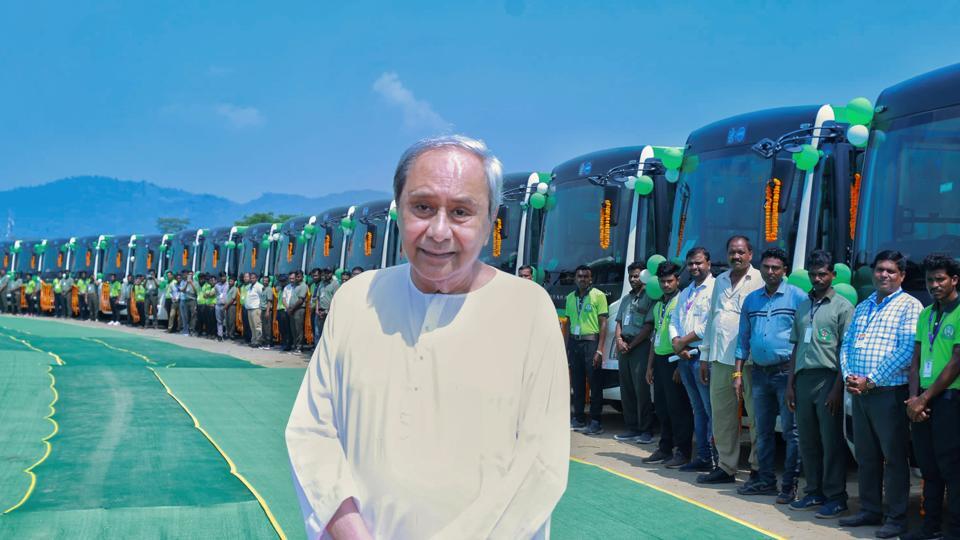
Chief minister Naveen Patnaik, who travelled for three kilometres in one of the airconditioned buses in Malkangiri on Thursday, said the bus service will connect far flung parts of the state and the district under the Location Accessible Multimodal Initiative (LAccMI) transport system.
“Communication is the basis of development and that Laccmi yojana will connect everyone with development. The Gurpriya Setuwas a big milestone in the development of Malkangiri. Through this bridge, the light of development has come to the Swabhiman Anchal. Now under the LAccMI scheme, buses will come near your house and children will be connected with their schools and colleges. They will also connect the farmers with their markets and take the patients to hospitals. Mothers can conveniently go to different places for their work,” Patnaik said in his speech at the function.
In the first phase, 33 buses including 6 AC buses will link all the 111 gram panchayats of the district. This will be the first time that buses will reach 80 of these gram panchayats.
The non-AC buses will connect the grampanchayats to block headquarters while the AC buses will connect the the block headquarters to district headquarters.
The Malkangiri district administration has provisioned autorickshaws to connect the villages with grampanchayat headquarters under the scheme.
Officials said the bus service would also be rolled out in five other Maoist-affected districts of Rayagada, Kalahandi, Nabarangpur, Koraput and Gajapati districts. More than 1,000 buses will run across the state under this scheme over next 10 years. The tickets in these buses would be at lest 20% cheaper than the private buses.
Mangulu Sisa of Malkangiri’s Gomphakunda grampanchayat said it was a dream come true. “Ten years ago, many of us had to walk long distance to get a rickety bus. I never dreamt that we can get such new buses in Malkangiri and travel in them, paying less than the rickety private buses,” Sisa said.
Internal security experts said plying new buses in Malkangiri was big on optics too.
“Not too long ago playing a bus in the Maoist hotbed was unthinkable as it was more likely to be blown up. On another level, the plying of such buses would endear the government to the people as the Maoist propaganda of govt not caring enough for the people would die a swift death. This would reduce the governance deficit,” said Dipak Kumar Nayak, a research associate at the Delhi-headquartered Institute for Conflict Management.
Fakir Mohan Pradhan, another expert on Maoist issues, said the presence of spanking new buses on Malkangiri roads as rest of Maoist-affected districts was a powerful symbol of governance. “The Naveen Patnaik government has seen the worst days of Maoist violence. It must be gratifying for the government to put the terrible days behind it,” said Pradhan.
The government plan to operate buses in the interiors had earlier prompted protests by private operators. The government, however, convinced them to put off their the protest to October 31 following an assurance that the government will look into their demands, which included procurement of their buses for the new transport network programme.