E-Paper



One-horned rhinos increase by 200 at Kaziranga: Census
As per the census conducted between March 25 and March 28, the count at KNPTR, which is the world’s largest habitat for the endangered one-horned rhinos, stood at 2,613. In the last census, carried out in 2018, the national park recorded a rhino population of 2,413.

 Prefer HTon Google


The population of one-horned rhinos in Assam’s Kaziranga National Park and Tiger Reserve (KNPTR) has increased by 200 in the past four years, results of the latest census released on Tuesday revealed, highlighting the success in combating poaching of the mammals whose horns are used in Chinese medicine.
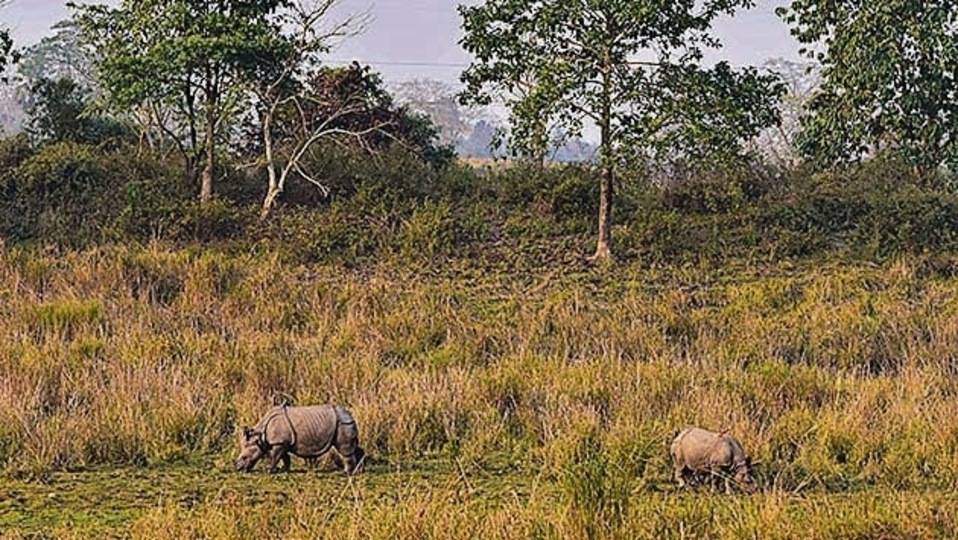
As per the census conducted between March 25 and March 28, the count at KNPTR, which is the world’s largest habitat for the endangered one-horned rhinos, stood at 2,613. In the last census, carried out in 2018, the national park recorded a rhino population of 2,413.
According to the latest survey results, there are 750 adult male rhinos, 903 adult females and 170 others whose sex couldn’t be determined. It also recorded 116 sub-adult males, 146 sub-adult females and 103, undetermined. The census also found 279 juveniles (1 to 3 years) and 146 calves (0 to 1 ).
“The census revealed that Kaziranga has a healthy population of rhinos despite casualties due to natural deaths, floods and in-fighting. Reduction in poaching has also benefitted the species,” KNPTR director Jatindra Sarma, said.
“At present, KNPTR has a population density of one rhino per 0.2 square kilometre area. The census was special as this was the first time we used drones to survey the animals in three compartments of the park,” he added.
A total of 50 elephants, 64 enumerators, 12 independent observers, 49 media observers and 252 front line forest personnel were involved in the exercise, carried out in 84 compartments of the national park.
Due to the increase in conservation efforts in KNPTR in past few years, cases of poaching of the endangered animal have reduced considerably. In 2021, the park witnessed just one death due to poaching -- the lowest casualty number in 21 years. In January this year, one rhino was killed by poachers in the park.
According to official figures, in both 2013 and 2014, Assam registered 27 cases of poaching. The number dropped to 17 cases in 2015 and the following year, 18 cases were reported. The numbers dropped to single digits in 2017 (6) and 2018 (7). From 2019, the cases dropped continuously -- 3 cases in 2019, 2 cases in 2020 and 1 in 2021.
Earlier this month, rhino censuses were carried out in other national parks and wildlife sanctuaries in the state. Orang national park recorded an increase of 24 rhinos from 101 in 2018 to 125 now while in Pobitora wildlife sanctuary, the figure went up by 5 -- from 102 in 2018 to 107 in 2022. A census of rhinos in Manas national park will begin on April 1.
“Our BJP government has succeeded in protecting the pride of Assam, the one-horned rhinos. The latest census data shows the impressive increase in the number of rhinos in Kaziranga. We shall continue to carry forward this legacy more firmly under the guidance of Chief Minister Himanta Biswa Sarma in the coming days,” Assam forest minister Parimal Suklabaidya tweeted.
“The latest figures are definitely an encouraging sign for conservation of rhinos in Kaziranga. This time, the census was more detailed than the previous ones, and therefore the numbers are more detailed. The figures reflect the efforts put in Kaziranga not just in past few years but work done in the previous 30-40 years,” said Rathin Barman, joint director, Wildlife Trust of India (WTI), who has taken part in seven rhino censuses in Kaziranga till date.