E-Paper



Padma Shri 2026: Dharmiklal Pandya honoured for 73 years of Maanbhatt folk storytelling
For over 73 years, Dharmiklal Chunilal Pandya has dedicated his life to keeping the Maanbhatt tradition alive


Ahmedabad: At 94, Dharmiklal Chunilal Pandya has spent a lifetime turning devotion into music, rhythm and storytelling. On Sunday, the Government of India honoured the Vadodara-based folk artist with the Padma Shri for 2026, recognising his more than seven decades of work in preserving Maanbhatt — an ancient Gujarati storytelling tradition now on the brink of extinction.
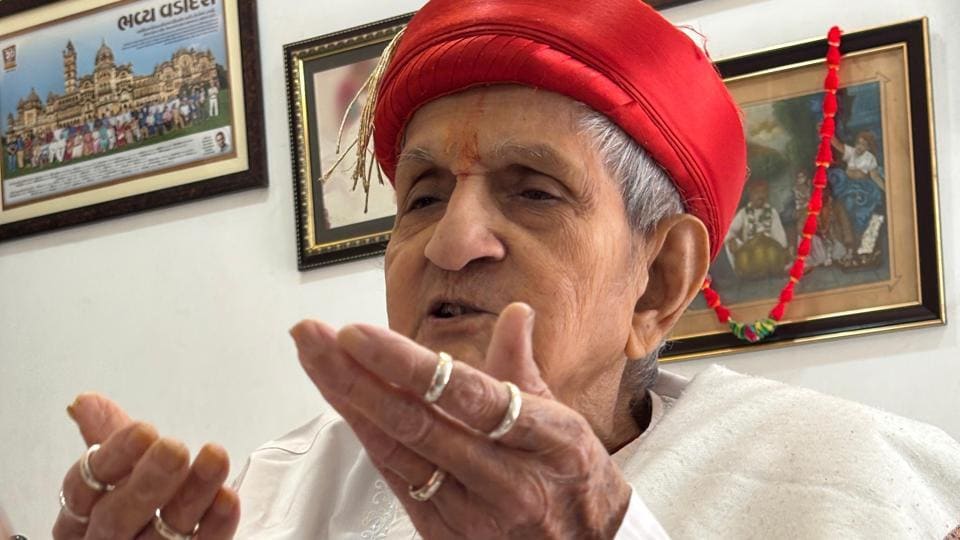
For over 73 years, Pandya has dedicated his life to keeping the Maanbhatt tradition alive. Maanbhatt is a unique Gujarati folk storytelling art in which a single performer — traditionally a Brahmin — narrates devotional stories from epics such as the Ramayana, Mahabharata and the Puranas in poetic song form.
Accompanying himself on a large copper or brass pot (called maan) filled with water, the artist taps the rim with his fingers to create rhythmic beats, claps his hands, and uses expressive singing and acting to bring the tales to life.
The history of Akhyan art can be traced back to the 12th century, with references found in Hemchandracharya’s Kavyanushasan. This rare art form, which reached its golden age between the 15th and 17th centuries with masters like Premanand Bhatt, is now on the verge of extinction.
Dharmiklal has performed over 2,500 Akhyans across India and abroad, including 28 episodes of Shri Harivansh Puran on All India Radio. He has authored two books on the subject and continues to train young artists at Shri Mann Akhyan Kala Shikshan Kendra.
His most famous Akhyans include Shri Harivansh Puran, Shri Shiv Mam Puran and Shri Sangeet Shrimad Bhagavat. Through Akhyans based on the Ramayana and Mahabharata, he has promoted Gujarati language and culture internationally in countries such as the United States, the United Kingdom and Canada. To connect the younger generation with this art, his son and grandsons have learned it and are training many students while preparing the next generation.
“This honour belongs to my Guru Shri Premanand, my father Shri Chunilal, and Gujarati art,” he said, appealing for the inclusion of this fading tradition in school curricula to save it for future generations.