
 E-Paper



Pak politician's ‘water bomb’ and ‘famine’ warning to his govt over suspension of Indus Waters Treaty
‘If we don’t solve our water issues, we may face famine,’ Senator Ali Zafar of the Pakistan Tehreek-e-Insaf (PTI) party told the Senate.

 Prefer HTon Google


A Pakistani opposition politician on Friday reportedly referred to India's suspension of the Indus Waters Treaty following the Pahalgam attack as a “water bomb” and urged his country's government to “defuse” it to avoid famine in the country.
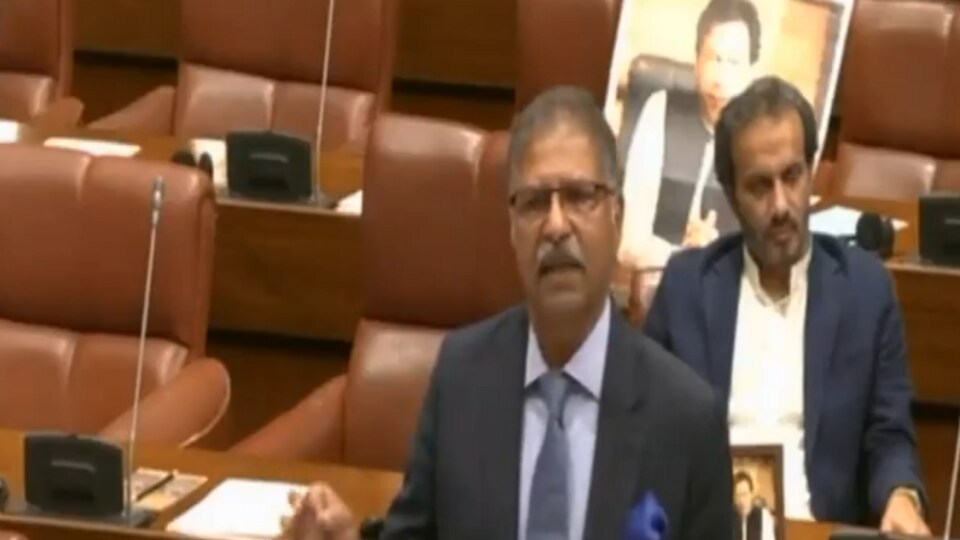
“Water scarcity is a war being imposed on us. Predictions about 21st-century wars being fought over water are proving true,” PTI news agency quoted senator Ali Zafar of the Pakistan Tehreek-e-Insaf (PTI) party as saying.
“If we don’t solve our water issues, we may face famine. The Indus is our lifeline – it’s essentially a water bomb hanging over us that we must defuse,” he told the senate, according to the news agency.
Zafar claimed that the Indus Water Treaty "explicitly bars India from stopping Pakistan’s water share and claimed that it cannot be unilaterally suspended.
Also Read | Pakistan minister calls for ‘dialogue’ with India, warns over Indus Waters Treaty: ‘Act of war…’
“If India wants to terminate the agreement, both countries must negotiate a new one. They (Indians) cannot simply nullify it – they would have to dismantle their dams first,” he said.
Zafar also claimed that under international law, force can be used in self-defence if the water flow is stopped, according to PTI.
Suspension of the Indus Waters Treaty
A day after the April 22 terrorist attack in Baisaran near Jammu and Kashmir's Pahalgam, India took major punitive actions against Pakistan, including the decision to keep the Indus Waters Treaty in abeyance.
Brokered by the World Bank, the 1960 treaty defines a mechanism for water sharing and information exchange between the two nuclear-armed neighbour nations for the use of the Indus River water and its five tributaries Sutlej, Beas, Ravi, Jhelum, and Chenab.
Also Read | India's 5 big moves against Pakistan: One month since Pahalgam terror attack
Pakistan has called on India to reconsider its decision to suspend the Indus Waters Treaty, describing it as unilateral and a violation of the pact's terms.
Questions over the treaty were also raised after India and Pakistan reached a ceasefire understanding on May 10, following intense cross-border fighting after Operation Sindoor.
Also Read | India to rebuild canals, dig new ones to tap into Indus
However, external affairs minister S Jaishankar made it clear that New Delhi is willing to hold talks with Islamabad only on the issue of terror. He asserted that the Indus Waters Treaty will remain in abeyance until cross-border terrorism by Pakistan is "irrevocably stopped".
On Thursday, Prime Minister Narendra Modi reaffirmed that Pakistan will not get water from India's rivers, reiterating the continued suspension of the Indus Waters Treaty.
"Pakistan will not get a single drop of water that belongs to India. Playing with the blood of Indians will cost Pakistan dearly. This is India's resolve and no one in the world can deter us from this commitment," he said.


