
 E-Paper



Pakistan deploys more troops along LoC, Indian Army keeps watch
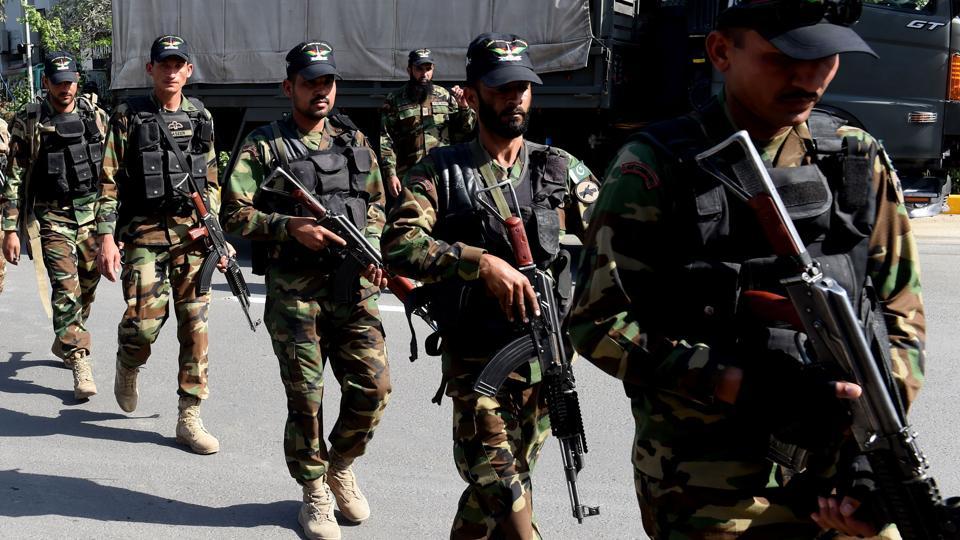
The Pakistan army has now moved troops from Kotli, Mirpur and even Rawalpindi to match Indian deployment on the LoC , Indian army officers said on condition of anonymity.

 Prefer HTon Google


The robust posture adopted by the Narendra Modi government towards Pakistani attacks from across the Line of Control (LoC) in Jammu and Kashmir has forced Pakistan to reinforce troop deployment along the LoC and international borders to deter a possible Indian army offensive.
Indian army commanders are in no mood to let any assault from Pakistan to go unanswered .They want to raise the cost of any Pakistani belligerence either on the de facto border in J & K or its hinterland.
The Pakistan army has now moved troops from Kotli, Mirpur and even Rawalpindi to match Indian deployment on the LoC ,Indian army officers said on condition of anonymity, adding that the troops are receiving constant alerts from their superiors in headquarters.
“Since the November 26, 2003 ceasefire, the Pakistan army’s headcount was half for the same area as the Indian Army. While the Pakistan Army was under no stress or pressure, the Indian Army was facing the brunt on the LoC as it was being targeted by infiltrators as well as border action teams of terrorist groups,” said an army commander. “With Indian Army now responding to each and every firing from the other side, the Pakistan army also cannot afford to relax anymore as there is always a fear of September 29, 2016,” he said, referring to the surgical strike conducted by the Indian army on terrorist camps across the LoC.
In the first two months of 2018, the number of ceasefire violations along the LoC were 633, compared to a total of 860 violations in all of 2017.
It is still not clear whether Indian retaliation has worked towards preventing Pakistan from sending armed infiltrators across the LoC to the Indian side.
The Indian army is unfazed by firing from across the LoC. It has now decided to revive and upgrade bunkers in disuse and disrepair due to the 2003 ceasefire all along the de facto border in J&K and international borders. “Instructions to rebuild bunkers have been issued to civilian administration as well as beefing up defences of civilian population close to the border,” said the commander cited above.
That Indian retaliatory firing is hurting Pakistan is evident from the fact that defence attaches from six nations were taken by Islamabad to the LoC last month to demonstrate purported ceasefire violations by India. “We will continue our tough posture both on the border as well on the counter-insurgency grid in J and K hinterland and ensure that neither Pakistan nor its supporters in the valley hold the levers of violence in the state,” said the army officer.


