
 E-Paper



Pakistan’s letters won’t change India’s stand on Indus Waters Treaty: Jal Shakti minister
India had put the 1960 agreement in abeyance soon after the April 22 terrorist attack in Pahalgam that killed 26 people.

 Prefer HTon Google


Jal Shakti minister CR Paatil on Thursday rejected Pakistan’s repeated letters asking India to lift the suspension of the Indus Waters Treaty, calling them just a formality that will not change India’s stand.
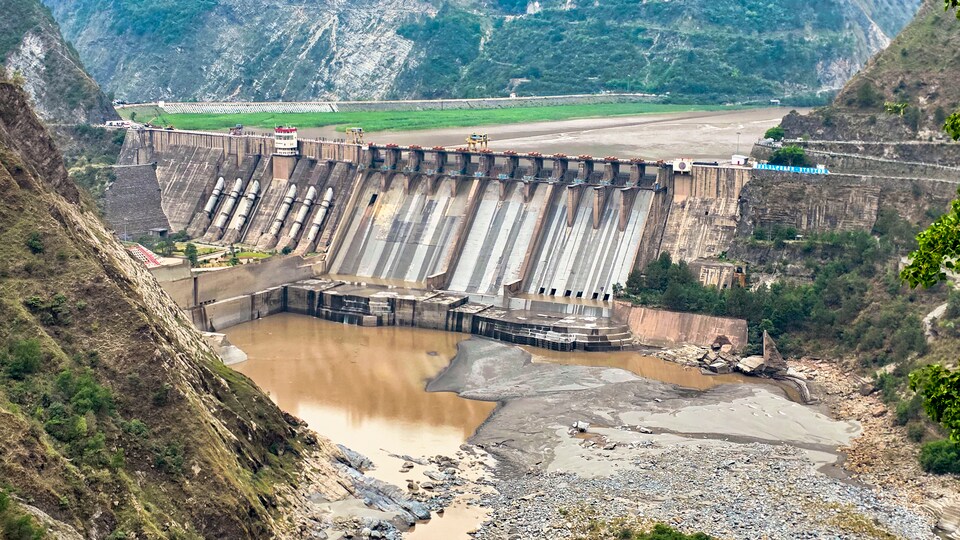
He said India has no plans to review its decision despite several requests from Pakistan. “The water under the Indus Waters Treaty is not going anywhere,” Paatil said at a press conference.
Responding to Pakistani leader Bilawal Bhutto’s recent comments threatening India over the treaty, Paatil said Bhutto often makes such statements for political reasons.
“He also spoke of blood and water flowing, but we are not scared of such empty threats,” he said.
Bilawal on Monday had said his country would go to war if India denies it its rightful share of water under the Indus Waters Treaty (IWT).
India had put the 1960 agreement in abeyance soon after the April 22 terrorist attack in Pahalgam that killed 26 people. Last week, Union home minister Amit Shah announced that the historic treaty would not be restored.
Bilawal’s comments came two days after Pakistan’s foreign ministry criticised Shah’s statement as a “brazen disregard” for international agreements.
Speaking in parliament, Bilawal rejected India's move to suspend the treaty and warned of retaliation. “India has two options: share water fairly, or we will deliver water to us from all six rivers,” he said, referring to the Indus basin.
Bilawal threatens war: ‘If India goes ahead, we will have to wage war again’
Bilawal, who leads the Pakistan Peoples Party (PPP), also threatened, “If India decides to go ahead with this, we will have to wage war again.”
Despite the rhetoric, he underlined the need for dialogue and cooperation on terrorism. “If India and Pakistan refuse to talk, and there is no coordination on terrorism, violence will only rise in both countries,” he said.
He also accused India of “weaponising terrorism for political purposes” and claimed that during his foreign visits, it was clear India had lobbied hard to undo Pakistan’s progress on the Financial Action Task Force (FATF) front.
Following the April 22 attack, India responded by suspending the IWT, halting trade with Pakistan, and launching Operation Sindoor on May 7 against terrorist camps in Pakistan-controlled territory.
The operation triggered four days of cross-border clashes, which ended on May 10 after both sides agreed to stop military action.
Meanwhile, India has formally requested a pause in proceedings related to disputes over the Kishanganga and Ratle hydropower projects, as it looks to take full control of its western river systems under the Indus Waters Treaty, officials said on Tuesday.
In a letter to World Bank-appointed neutral expert Michel Lino, the government has called for suspension of the agreed work programme, which includes Pakistan’s written submissions due in August and joint discussions planned for November.
India had put the Indus Waters Treaty in abeyance following the April 22 terror attack in Pahalgam. The World Bank has not yet responded to India’s request.
With PTI inputs


