
 E-Paper



Pahalgam attack: How Indus Waters Treaty suspension by India will impact Pakistan
The Indus system comprises the main river, Indus, and five left bank tributaries, i.e Ravi, Beas, Sutlej, Jhelum, and Chenab.

 Prefer HTon Google


India on Wednesday suspended the Indus Waters Treaty with Pakistan, day after 26 people including tourists were gunned down in a terrorist attack in Jammu and Kashmir's Pahalgam.
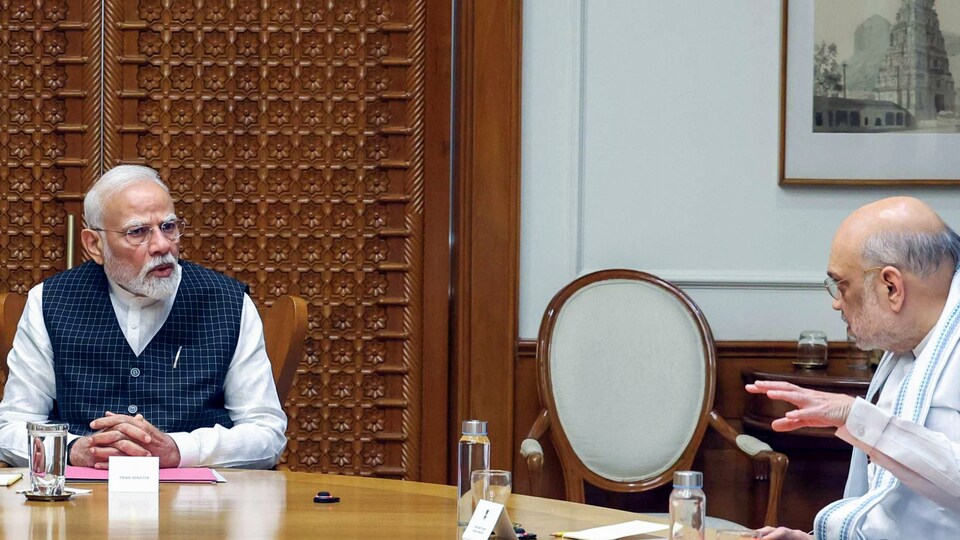
The move is among the five big punitive moves taken by New Delhi against Islamabad in the wake of the terror attacks.
But what could be the impact of this move?
The Indus system comprises the main river, Indus, and five left bank tributaries, i.e Ravi, Beas, Sutlej, Jhelum, and Chenab. Kabul, the right bank tributary, does not flow through India.
The Ravi, the Beas, and the Sutlej are together called Eastern rivers while the Chenab, the Jhelum and the Indus are called Western Rivers. Its waters are critical to both India and Pakistan.
Pradeep Kumar Saxena, who served as India's Indus Water Commissioner for over six years, told PTI," India, as an upper riparian country, has multiple options. This could be the first step towards the abrogation of the Treaty, if the Government so decides."
"Although there is no explicit provision in the Treaty for its abrogation, Article 62 of the Vienna Convention on Law of the Treaties provides sufficient room under which the treaty can be repudiated in view of the fundamental change of circumstances which has occurred with regard to those existing at the time of conclusion of the Treaty," he added.
What steps India can take?
Last year, India in a formal notice to Pakistan, sought the “review and modification” of the treaty.
According to Saxena, India is under “no obligation” to follow the restrictions on the "reservoir flushing" of the Kishanganga reservoir and other projects on Western rivers in Jammu and Kashmir.
“The Indus Water Treaty currently prohibits it. Flushing can help India desilt its reservoir but then filling the entire reservoir could take days. Under the treaty, reservoir filling after the flushing has to be done in August -- peak monsoon period -- but with the pact in abeyance, it could be done anytime,” he told PTI.
However, carrying out the exercise when sowing season begins in Pakistan could be “detrimental”, especially when a large part of Punjab in Pakistan depends on the Indus and its tributaries for irrigation.
According to the treaty, design restrictions exist on building structures like dams on the Indus and its tributaries. Earlier, Pakistan has raised objections over the designs, but in the future, it will not be obligatory to take the concerns on board .
In the past, almost every project has been objected to by Pakistan, the notable ones are Salal, Baglihar, Uri, Chutak, Nimoo Bazgo, Kishenganga, Pakal Dul, Miyar, Lower Kalnai and Ratle.
After the Pulwama terror attack in 2019, the government cleared eight more hydropower projects in Ladakh. The objections may no longer apply to the new projects. There are also operational restrictions on how reservoirs are to be filled and operated.
With the treaty in abeyance, these are no longer applicable. Saxena told PTI that India can stop sharing flood data on the rivers.
“This could also prove detrimental to Pakistan, especially during the monsoon when rivers swell. India will now have no restriction on storage on Western rivers, particularly the Jhelum, and India can take several flood control measures to mitigate floods in the Valley,” Saxena added.
India, Pak boundaries drawn across the Indus basin
The tours of the Pakistan side to India, which are mandatory under the treaty, may now be stopped. At the time of Independence, the boundary line between the two newly created independent countries --- Pakistan and India --- was drawn right across the Indus Basin, leaving Pakistan as the lower riparian and India as the upper riparian.
Two important irrigation works, one at Madhopur on Ravi River and the other at Ferozepur on Sutlej River, on which the irrigation canal supplies in Punjab (Pakistan) had been completely dependent, fell in the Indian territory. A dispute thus arose between two countries regarding the utilisation of irrigation water from existing facilities.
(With PTI inputs)


