
 E-Paper



Pawar legacy at political crossroads
Talks of a merger have been spurred by the 85-year-old Sharad Pawar’s retreat from active politics in recent months.

 Prefer HTon Google


Pune : When candidates of the Nationalist Congress Party (Sharadchandra Pawar) filed their nomination papers on Wednesday for February’s zilla parishad and panchayat samiti polls on the Analog clock symbol, it set the rumour mills buzzing again on a possible merger of the two factions of the Nationalist Congress Party.
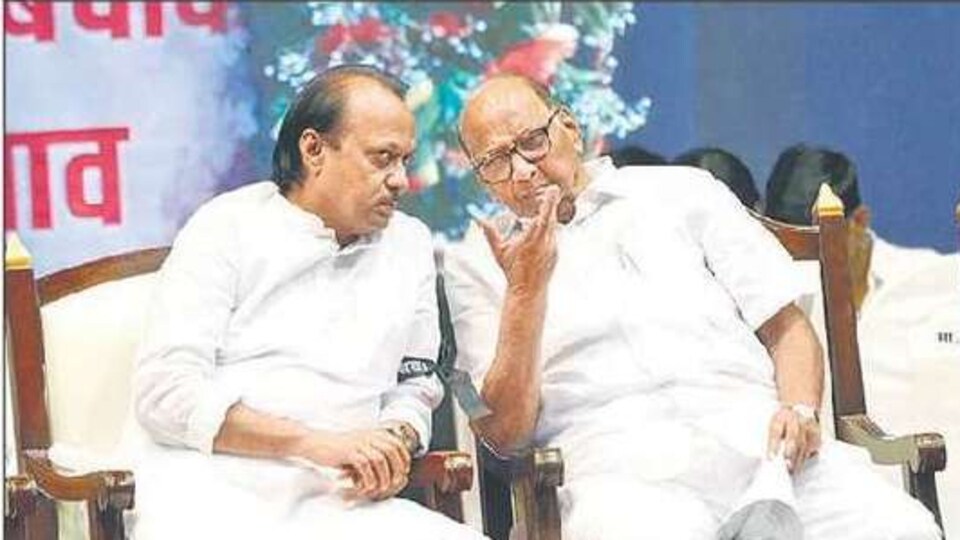
The NCP, founded by Sharad Pawar in 1999, split into two factions in 2023. The party name and its clock symbol went to the faction headed by his nephew Ajit Pawar who joined the BJP and Shiv Sena government in Maharashtra while the Sharad Pawar faction was given the symbol of a man playing the tutari, a musical instrument.
Talks of a merger have been spurred by the 85-year-old Sharad Pawar’s retreat from active politics in recent months. This month’s civic polls in Maharashtra in which both factions of the NCP performed poorly, were the first time in 60 years when Sharad Pawar did not address a single election meeting. At least three senior leaders close to Pawar have told HT that the octogenarian will not be seeking another term after his Rajya Sabha tenure ends on April 2, although his daughter Supriya Sule has said there has been no decision on this. Should that happen, it will bring to a formal close one of the longest and most illustrious political careers in India.
It will also be a blow for the INDIA bloc of opposition parties, of which the NCP (SP) is part. Most leaders who spoke to HT were of the view that the merged NCP would continue to be part of the ruling Mahayuti alliance in the state, and, therefore, also be part of the NDA at the Centre. Sule said there’s been no talk of a merger or of her party aligning with the BJP . “They [Ajit Pawar-led NCP] have not proposed anything, and neither have we.”
But there’s no denying that the two factions have been shaken by the results of the municipal polls which are a blow to the Pawar brand.
Pawar joined the youth Congress as an 18-year-old in 1958, won his first legislative election in 1967 while still in his 20s, and, in 1978, at the age of 38 became Maharashtra’s youngest chief minister. Over a career spanning nearly seven decades in public life, he served three terms as the state’s chief minister and helmed ministries such as defence and agriculture in the union cabinet.
As talk of him taking a backseat has gained currency, so has speculation over a merger. After experimenting with joint panels in select municipal councils such as Kagal and Chandgad in western Maharashtra in December 2025, the two NCP factions extended their cooperation to the Pune Municipal Corporation and Pimpri Chinchwad Municipal Corporation elections. With NCP (SP) candidates choosing to contest zilla parishad and panchayat samiti polls in February on the Ajit Pawar-led NCP’s symbol, the collaboration appears to be deepening.
Both camps have publicly maintained that these arrangements are driven by “local-level compulsions” and pressure from grassroots workers. Privately, however, leaders from both sides concede that the coordination is part of a larger political recalibration underway in the Pawar family and the party.
In a recent interview Ajit Pawar gave to Marathi news channel, the deputy chief minister said party workers from both sides are in favour of the reunion and that the friction within the Pawar family has been resolved. “The workers of both parties want to unite. The two NCPs are together now in alliance. All tensions in our family have ended,” he said. On January 17, a day after results when Ajit Pawar visited Sharad Pawar at his Govindbaug residence in Pune, he told the media that as a family the uncle and nephew had never separated.
A senior NCP leader told HT last fortnight that a merger was “99% certain”, adding that the residual uncertainty stemmed from resistance among certain party leaders worried about their own political future. “They are uncomfortable because they see this (merger) as joining hands with the BJP,” said the leader, asking not to be named.
That unease is particularly visible among leaders like Jitendra Awhad, and a few others who have built their politics around an uncompromising anti-BJP stance. They fear that a reunion would blur ideological lines and weaken their credibility with core supporters, said another leader from the NCP. Yet, electoral realities have not been kind to either faction since the 2023 split.
In the 2024 Lok Sabha elections, Sharad Pawar’s NCP (SP) won eight of the 10 seats it contested as part of the MVA, but Ajit Pawar-led NCP, despite being in power at the Centre and state, failed to translate administrative control into a significant parliamentary tally.
The assembly elections that followed however produced different results. Ajit Pawar retained his grip over state-level power through his role as deputy chief minister and his proximity to the BJP leadership; the NCP won 41 of the 53 seats it contested. The NCP (SP), meanwhile, struggled to convert sympathy and legacy into seats, underlining the constraints of operating without organisational control and state machinery. It won a mere 10 of the 88 seats contested.
January’s municipal election results were especially uninspiring for NCP (SP) which failed to win a single seat in 14 municipal corporations triggering concern and introspection within the party. Compounding the setback was Pawar’s absence from the campaign trail. While party leaders such as Supriya Sule and Rohit Pawar initially argued that Sharad Pawar traditionally did not campaign in civic elections, records show otherwise.
This time, not only Pawar but several other senior leaders were also conspicuous by their absence. Sule largely restricted herself to parliamentary work in Delhi and joined canvassing in the last leg just addressing a few meetings. Jayant Patil did not step out of Sangli, his hometown, while Jitendra Awhad campaigned selectively in Thane. The lack of coordinated campaigning fed into speculation that the party itself was uncertain about the road ahead.
Those close to Pawar say his reduced public presence is not merely tactical but also personal. Over the past few months, the length of his speeches has noticeably shrunk, lasting barely minutes.In November 2024, while introducing the newest entrant from the family — his grand-nephew Yugendra Pawar, then 32 — Sharad Pawar openly hinted at retirement from parliamentary politics. “I am not in power. I have already contested 14 elections. How many more shall I contest?” he asked a gathering in Baramati. “The new generation should be given the opportunity. You never let me go home; you made me win in all elections, but I have to stop somewhere.” That statement, in hindsight, appears to have been the first public signal of an impending transition.
Within this changing scenario, the roles of Sule and Ajit Pawar have become more sharply defined. Sule, as a four-time MP, has increasingly focused on national-level politics, parliamentary interventions and Opposition coordination in Delhi. Her critics within the party argue that this has come at the cost of organisation building in Maharashtra, while her supporters say she has positioned herself as a national face beyond state politics.
Ajit Pawar, on the other hand, has consolidated his hold over state administration. As deputy chief minister, he controls key departments and has re-established himself as a decisive power Centre in Maharashtra.
His aides believe a merger would only formalise what already exists in practice. “Ajit Pawar already runs the state’s politics for the party. The sooner the merger happens, the smoother the transition will be,” said a senior leader close to him. Another leader close to him said, “a merger will increase his bargaining power within the Mahayuti alliance. With NCP (SP)’s eight MPs coming into the fold, the overall tally will go up to ten, while in the state assembly, the two NCPs will have 51 lawmakers.”
At the first meeting in Baramati after the January 16 results leaders from both factions underscored a pragmatic acceptance that their continued division only weakens the Pawar legacy. For Sharad Pawar, the merger may be less about power and more about closure. Leaders close to him said that once he steps away from parliamentary politics, resistance within his faction could soften, allowing the reunion to proceed without his personal involvement in day-to-day politics.
The Pawar dynasty has seen internal shifts before. It was Sharad Pawar who handed over the Baramati assembly seat to Ajit Pawar in the late 1980s, even as the family remained a dominant force in the region. Interestingly, Sharad Pawar himself was not the first in the family to contest elections — that distinction belongs to his elder brother Vasantrao.
Whether the current moment marks the beginning of Sharad Pawar’s political winter or it is simply another phase of strategic repositioning remains to be seen. But with NCP (SP) candidates embracing the ‘clock’ symbol, and Pawar’s own public signals growing clearer, Maharashtra’s politics appears to be entering a post-Sharad Pawar phase — one where his influence may persist even as his active presence recedes.
A senior BJP leader told HT, somewhat admiringly: “Sharad Pawar has always believed in impeccable timing. If he exits parliamentary politics now and allows the party to reunite, it will be his final act of realpolitik.”


