E-Paper



‘No rationale’: Meitei, Kuki groups refuse to participate in peace process
Clashes between the Kukis and Meiteis first erupted on May 3 during a protest against a court-ordered tweak to the state’s reservation matrix.

 Prefer HTon Google


A peace committee constituted by the Centre to broker amity between the warring Meitei and Kuki communities in Manipur run into rough weather on Monday after prominent civil society organisations from both sides refused to be a part of the process.
Also read: Kuki group reiterates demand for peace in Manipur, condemns including CM N Biren Singh in panel
Kuki Inpi, the apex body of Kuki tribes in Manipur, objected to the inclusion of its president Ajang Khongsai, in the peace committee and said it was done without prior consultation and information.
“Kuki Inpi Manipur senses no rationale to pursue for peace solely with individuals who have engineered the ethnic cleansing against our peace,” Kuki Inpi said in a statement, accusing chief minister N Biren Singh, who is a Meitei, of orchestrating communal attacks.
On the other side, the Coordinating Committee on Manipur Integrity (COCOMI), a conglomerate of five civil society groups from Meitei-dominated Imphal Valley, also refused to be part of the process, saying that its convener Jeetendra Ningomba was included as a member without his consent.
“COCOMI will not take part in the peace committee unless our demand for controlling narco-terrorism aggression (by Kuki groups) is met. There should be some normalcy and violence should end for peace committee to function,” Ningomba told journalists in Imphal.
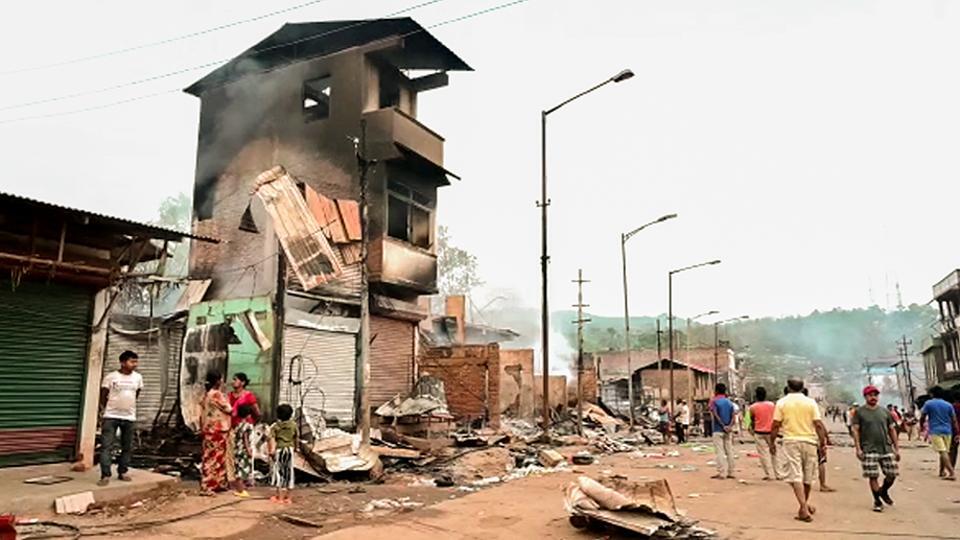
The developments came even as one more person was shot dead in Churachandpur, pushing the toll in the ethnic clashes that broke out five weeks ago to 106. Since May 3, Manipur has been roiled by ethnic clashes that have claimed at least 106 lives, injured more than 300 people, displaced nearly 40,000, and damaged close to 2,000 houses.
On Saturday, the Centre constituted the peace committee headed by governor Anasuiya Uikey, and also comprising chief minister N Biren Singh, ministers, lawmakers and leaders from various parties, former civil servants, educationists, litterateurs, artists, social workers and representatives of different ethnic groups. The peace panel was first announced by Union home minister Amit Shah as part of a raft of measures to tamp down tensions on June 1.
But almost immediately, the peace process ran into trouble. On Sunday, the Indigenous Tribal Leaders Forum (ITLF) -- a conglomerate of Kuki groups in Churachandpur district – said that while they wanted peace, they couldn’t overlook attacks by Meitei groups on Kuki settlements.
“ITLF strongly reiterates the need for normalcy to prevail before the constitution of any peace committee in the region,” a statement by the group said, stressing that President’s Rule should be imposed in the state. ITLF also blamed chief minister Singh for the escalation in violence and condemned his inclusion in the peace panel.
The standoff over the peace committee is yet another reminder that despite some easing of tensions, anger and distrust continued to simmer and drive wedges between various communities. Therefore, the government must urgently consider confidence-building measures to bridge the trust deficit between communities, while dispassionately prosecuting all elements trying to ratchet up violence and hatred.
The committee is mandated to facilitate peace among various ethnic groups and negotiate between the communities. “The committee should strengthen social cohesiveness, mutual understanding and facilitate cordial communication between various ethnic groups,” a government statement stated.
On Monday, Uikey visited relief camps in Churachandpur district and met those displaced in the ongoing violence. She offered support on behalf of the state government for those affected and urged all to work for peace. Later in the day, Singh announced in Imphal plans to build around 4,000 prefabricated houses to accommodate the displaced people.
“The houses, which will have two bedrooms, one washroom, a common kitchen and common dining hall, could be assembled within 15 days once the necessary construction materials are arrived in the state.” he said.
Assam chief minister Himanta Biswa Sarma -- who visited Manipur on Saturday and held talks with Singh, lawmakers and several Meitei groups -- met representatives of Kuki militant groups who are signatories of the suspension of operation (SoO) agreement with Centre and Manipur government.
Sarma, who is also convenor of North East Democratic Alliance (NEDA) -- a Bharatiya Janata Party-led platform of regional parties of the Northeast, met two representatives each of Kuki National Organisation (KNO) and United Peoples’ Front (UPF) -- the two umbrella organisations of the 25 Kuki militant groups who signed the SoO deal on Sunday at Guwahati.
“Sarma told us that Meitei groups in Imphal have agreed to broker a peace deal. We also reiterated our commitment to peace unless we are attacked first. He informed that there would be more deployment of security personnel in Manipur in the next few days to put an end to violence. Once that happens, we will withdraw our volunteers from the ground,” Seilen Haokip, KNO spokesperson, said.
Also read: After three days of fragile peace, fresh attack hits Manipur
Clashes between the Kukis and Meiteis first erupted on May 3 during a protest against a court-ordered tweak to the state’s reservation matrix, granting scheduled tribe (ST) status to the latter. Violence quickly engulfed the state where ethnic fault lines run deep, displacing tens of thousands of people who fled burning homes and neighbourhoods into jungles, often across state borders.The authorities clamped a curfew and suspended internet, pumping in additional security forces to force a break in the spiraling clashes. Internet is still not back in the state.