On August 15, 1988, soon after the Prime Minister’s customary speech from the ramparts of the Red Fort in New Delhi, Doordarshan, then the sole TV channel in India, ran an advertisement promoting national integration. It was more music video than ad film, with music composed by Bhimsen Joshi and arranged by Louis Banks. The video was produced by Suresh Mullick, the creative head of Ogilvy and Mather (also the man who, made Mozart’s 25th Symphony a recognisable tune in India by using it as the background music for a Titan watches ad), and the lyrics of the song, Mile Sur Mere Tumara (Our tunes merge), were written by an account manager in the agency’s Bombay office.
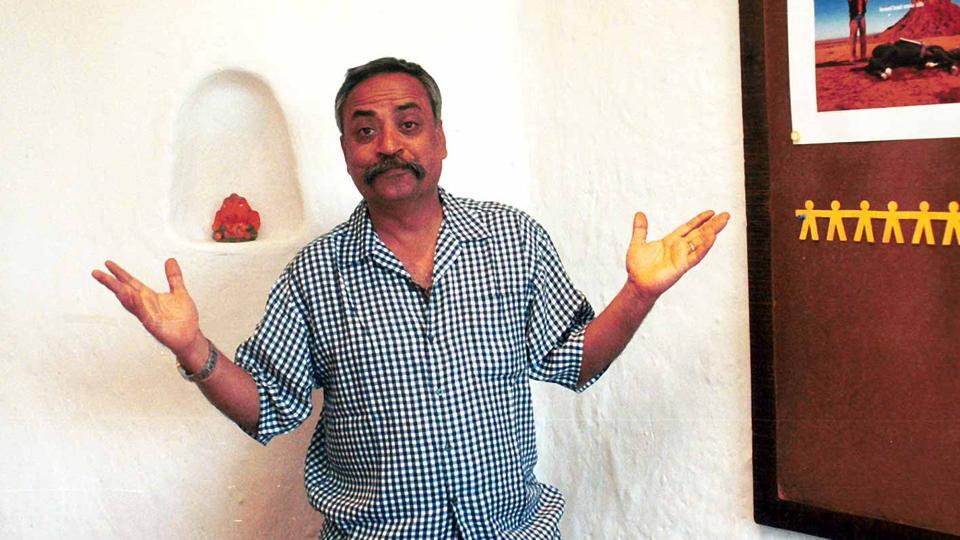
Piyush Pandey in a photo from 2002. (Girish Srivastav/HT Archive)
The same year, the man moved to the agency’s creative department; by 1991, he was creative director; and by 1994, national creative director. His name was Piyush Pandey, and before he joined O&M in 1982, he had been a professional cricketer (representing Rajasthan in the Ranji Trophy; he was a wicket-keeper/batsman) and tea-taster. He studied history at St Stephens College, Delhi.
In 2004, Pandey was made executive chairman of Ogilvy India, and in 2019, he was named the agency’s worldwide creative chief. He transitioned to the role of an advisor to the agency in 2024 and remained on the Ogilvy Worldwide Creative Council. But what that steep career graph does not highlight is how Pandey, who passed on to that great billboard in the sky on Friday morning, changed Indian advertising.
He did this by making it Indian.
Not that others had not done so in the past -- Alyque Padamsee did it famously with the value-conscious Lalitaji for Surf (Lintas) in the 1980s -- and not that Ogilvy under Pandey steered clear of the Western sensibility that permeated advertising back then (if not in themes, then definitely in execution) as evident in the Vodafone pug or the Dairy Milk dancer; only no one did it as consistently, and as well, as he did.
By doing so, he created an Indian idiom for advertising that has now become the norm. Given that, it shouldn’t surprise anyone that he coined the most successful tagline for an Indian brand, in recent memory if not for ever, “Abki Baar Modi Sarkar” (This time, it will be Modi’s government), for the Bharatiya Janata Party’s campaign in the 2014 national election that saw it winning the first single-party majority this country had seen in 30 years.
The news of his death spread a pall of gloom on the ad world and tributes from friends, colleagues, political leaders and admirers poured in on social media. In his condolence message, Prime Minister Narendra Modi said on X that Piyush Pandey “made a monumental contribution to the world of advertising and communication. I will fondly cherish our interactions over the years.”
In her post, also on X, finance minister Nirmala Sitharaman called him a titan and legend of Indian advertising who “transformed communication by bringing everyday idioms, earthy humour and genuine warmth into it.”
Among consumer brands, Pandey is best known for his highly popular and culturally contextual work on brands such as Asian Paints (Har Ghar Kuchh Kehta Hai; Every house says something), Pidilite’s quirky campaigns for Fevicol ka mazboot jod (the strong bond of Fevicol), and Cadbury Dairy Milk’s “Kucch Khaas Hai Hum Sabhi Mein (There’s something special in all of us). Understandably, the translations lack the cadence of the originals.
And behind the words was an understanding that few possessed -- of “culture, sub-culture, emotion, expression”, as Sanjay Sarma, who runs a boutique branding agency wrote on LinkedIn. “He made colloquial cool.”
Manish Bhatt, founder and director of Scarecrow M&C Saatchi, who worked with Ogilvy for three years recalled the way Pandey inspired confidence among his team members. “His analysis of our creatives was insightful and appreciative. He did not belittle any recognition – even the smallest awards were appreciated,” Bhatt said. “He joined advertising when brand building used to happen through the print media but his rise coincided with the rise of television advertising. His brand communication celebrated Indianness in advertising,” Bhatt said.
He added that the support of the then Ogilvy chairman Ranjan Kapur, the stellar creative colleagues and the role of his brother Prasoon Pandey who brought his ideas to life in ad films cannot be overlooked in the success of Piyush Pandey. “But eventually it was his leadership qualities, his chemistry with the clients and his ability to sell and execute his ideas that made him the revered figure he was in the ad industry,” Bhatt said.
Rajiv Rao, former national creative director at Ogilvy, who worked with the agency for 18 years, said while Ogilvy attracted creative talent, it was Piyush Pandey who gave them the creative confidence and freedom to think big. Rao, who switched to filmmaking in 2017, worked on the Vodafone Zoozoos, the pug campaign and the award-winning ‘Second-hand Smoke Kills” campaign at Ogilvy.
In his tribute, poet and lyricist Prasoon Joshi, chairman of McCann Asia Pacific, said that Pandey “made work feel like life itself. He was a man for whom emotion was strategy, and, simplicity craft.” He said that Pandey “made a generation of us believe that you could be yourself — speak in your own language, bring your whole story, your whole self — and still connect with everyone. That you didn’t have to wear borrowed sophistication to belong.”
Sudhanshu Vats, managing director at Pidilite, said Pandey’s work “didn’t just build brands; it shaped culture.”
“From the early beginnings of Fevicol “Dum Lagake Haisha” campaign to winning the most reputed Cannes Gold for the Fevicol Bus advertisement in early 2000s and most recently giving a very cultural touch to Fevicol Marol Naka (including the recently opened Aqualine) station, Piyush’s creativity transcended boundaries to set new trends and always raised the bar,” said Vats.
Pandey was non-executive director on the board of Pidilite, the makers of Fevicol and Fevikwik.
“At Pidilite, Piyush was more than a creative partner; he was a dear friend and a cherished part of our journey. His passing is a deeply personal loss for all of us,” added Vats.
With him at the helm of advertising agency Ogilvy became one of the most awarded creative agencies in the country and Pandey was credited with putting Indian advertising on the world map. He was the first Asian to chair the Cannes jury in 2004. He was awarded the Lifetime Achievement Award by the Advertising Agencies Association of India in 2010 and the Lifetime Achievement Award by Clio followed in 2012. He had been a mentor at The Berlin School of Creative Leadership for several years. Pandey was awarded the Padma Shri in 2016 by the President of India. In 2018, Piyush Pandey, along with his brother ad filmmaker Prasoon, WAS awarded the Lion of St Mark at the International Festival of Creativity at Cannes.
In 2024, he was honoured with the ADFEST Lotus Legend Hall of Fame and the same year, he received the prestigious Legend Award from the London International Awards (LIA). In its citation LIA described Piyush Pandey as Indian advertising’s greatest master and its most humble student. “He is the man whose ideas have shaped the way an entire generation of Indians have led their lives, built, painted and furnished their homes, enjoyed their chocolates, bought their vehicles, connected with their loved ones, chosen their vacations, voted for their governments, bought their watches, saved their money, done their laundry, sipped their tea, fought illnesses, pandemics and taken pride in their nation.”
Pandey created several impactful social campaigns-- including his many years of work with the UNICEF and the Government of India to make India polio-free. India was declared a polio-free country in 2014. He was keen to do this work because he firmly believed that advertising could drive social change. After all, it was Mile Sur..., another social campaign, that really started his advertising journey.
Get the latest India News, breaking headlines and real-time updates from across the country. Stay informed about politics, government policies, crime, weather and major national developments.
Home/India News/Piyush Pandey: Trailblazer Who Rewrote Ad Grammar With Wit, Local Tropes And A Hindi Heart

 E-Paper