
 E-Paper



PM Modi meets 'Muktijoddhas' of 1971 Bangladesh Liberation War
Modi is visiting Bangladesh on his first trip to a foreign country since the outbreak of the coronavirus.

 Prefer HTon Google


Prime Minister Narendra Modi on Friday met Bangladeshi political and community leaders in Dhaka, including representatives of minorities and 'Muktijoddhas', the fighters of the 1971 Bangladesh Liberation War.
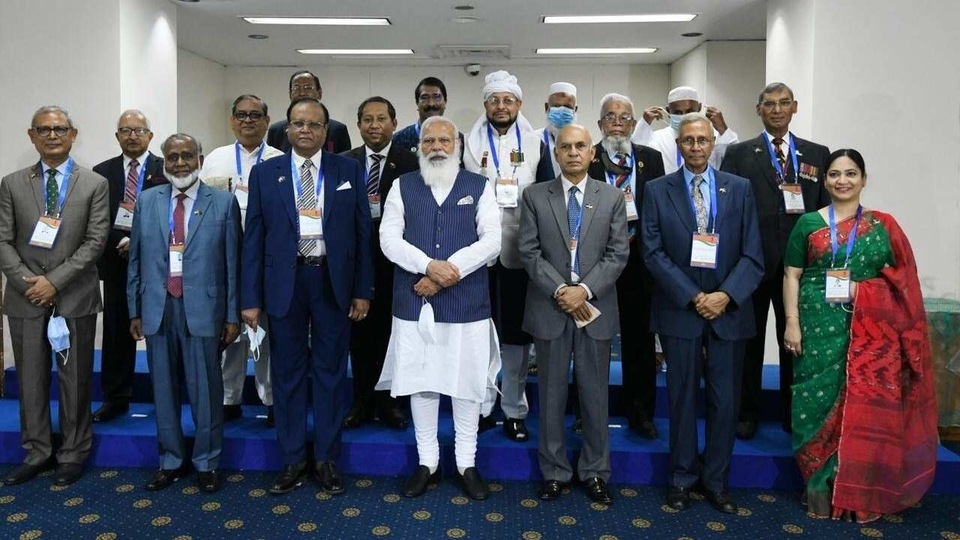
The Prime Minister is on a two-day visit to Dhaka, where he is slated to attend the celebrations of the golden jubilee of Bangladesh's independence, the birth centenary of ‘Bangabandhu’ Sheikh Mujibur Rahman, and hold talks with his counterpart Sheikh Hasina.
The fact that Modi met the country's freedom fighters, so named after 'Muktijuddho' (literally, "the fight for freedom"), sends a strong message of India-Bangladesh solidarity, which has its roots in the subcontinent's history.
On March 25, 50 years ago, the Pakistan army led a genocidal crackdown in Dhaka, which had changed the course of the history of the Indian subcontinent. It led to the Liberation War, the division of Pakistan, and the creation of Bangladesh.
India, moved by the plight of millions of war-ravaged Bengali civilians, had initially been providing diplomatic, economic, and military support to Bangladeshi nationalists but later joined the war on December 3, 1971, following a series of preemptive airstrikes by Pakistan. The 'Mukti Bahini' ("liberation army"), the guerilla resistance movement, played a decisive factor in India’s quick victory and the liberation of Bangladesh: The Pakistan army surrendered on December 16, 1971, less than two weeks after the war broke out.
Speaking at an event in Dhaka, Prime Minister remembered the bloodied history which led to India joining Bangladesh in its struggle for independence against Pakistan.
"The pictures of atrocities that the Pakistan Army inflicted on the people here used to distract us. For many days, those pictures didn't let us sleep," ANI quoted Modi as saying.
He added, "I would like to remind brothers and sisters in Bangladesh with pride, being involved in the struggle for independence of Bangladesh was one of the first movements of my life. I must have been 20-22 years old when I and my colleagues did Satyagraha for Bangladesh's freedom."
After the 1971 war, Sheikh Mujib earned the title of 'Bangabandhu' ("friend of Bengal") and India secured a permanent place in the history of Bangladesh's freedom struggle.
With Prime Minister Modi's two-day visit to remember Mujib, the "father of the nation" of Bangladesh, and celebrate the golden jubilee of the 1971 liberation war, the optics puts forth a new frontier for diplomatic ties between the two countries — that India’s relations with Bangladesh have gone way beyond symbolism. It is now part of an integrated vision of the Prime Minister for the development of eastern India, with the help and support of Bangladesh.
Also Read: Delhi-Dhaka ties move beyond symbolism, seek to power growth and connectivity
Modi, who is visiting Bangladesh on his first trip to a foreign country since the outbreak of the coronavirus, was received by the country's Prime Minister Sheikh Hasina at Dhaka's Hazrat Shahjalal International Airport upon his arrival. A salute of 19 guns and a Guard of honour were accorded to Prime Minister Modi at the airport. In a statement, the Union Ministry of External Affairs MEA said that as part of his two-day visit to Bangladesh, Modi met the community leaders, including representatives of minorities in Bangladesh, the 'Mukhtijoddhas', friends of India and youth icons.


