
 E-Paper



PM Modi pays tributes to freedom fighters Tilak, Azad on their birth anniversary
Taking to Twitter, Modi said Bal Gangadhar Tilak was a firm believer in Indian values and ethos, adding his views on education and women empowerment continued to motivate people.


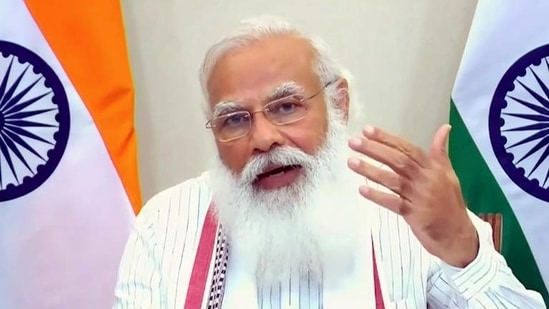
Prime Minister Narendra Modi on Friday paid tributes to freedom fighters Bal Gangadhar Tilak and Chandra Shekhar Azad on their birth anniversary and recalled their contributions towards India’s freedom struggle.
Taking to Twitter, Modi said Bal Gangadhar Tilak was a firm believer in Indian values and ethos, adding his views on education and women empowerment continued to motivate people. “I bow to the great Lokmanya Tilak on his Jayanti. His thoughts and principles are more relevant than ever before in the present circumstances, when 130 crore Indians have decided to build an Aatmanirbhar Bharat that is economically prosperous and socially progressive,” he wrote on the microblogging site.
Bal Gangadhar Tilak, a teacher, independence activist and social thinker, was the first leader of India’s independence movement. Regarded as the “Maker of Modern India” by Mahatma Gandhi and “The father of the Indian unrest” by the British, Tilak was one of the strongest advocates of Swaraj or self-rule and is seen as the first political leader who appreciated the importance of identity issues. One of his most famous quotes is “Swarajya is my birthright and I shall have it!”.
While paying tributes to the revolutionary Chandra Shekhar Azad, Prime Minister Modi said he was a futuristic thinker and dreamt of a strong and just India. “Remembering the valiant son of Bharat Mata, the remarkable Chandra Shekhar Azad on his Jayanti. During the prime of his youth he immersed himself in freeing India from the clutches of imperialism. He was also a futuristic thinker, and dreamt of a strong and just India,” PM Modi tweeted.
Born in 1906, Chandra Shekhar Azad, was a part of Mahatma Gandhi’s non-cooperation movement. Associated with a string of revolutionary incidents to target the colonial British regime, he vowed never to be captured by the police and remain “azad” (free). In 1931, Azad died at a young age of 24 as he shot himself after being surrounded by the police in Uttar Pradesh's Allahabad, now known as Prayagraj.


