E-Paper



PM Modi spotlights defence, student achievements and environment in Mann Ki Baat
In the 136th episode of the radio programme, aired on Kargil Vijay Diwas, Modi began by paying tribute to soldiers who fought in the 1999 Kargil War

 Prefer HTon Google


Prime Minister Narendra Modi on Sunday used his monthly Mann Ki Baat address to highlight India’s growing defence capabilities, the achievements of Indian students in international science Olympiads, and community-led environmental conservation efforts, while urging citizens to support indigenous products, plant trees and participate in the Har Ghar Tiranga campaign ahead of Independence Day.
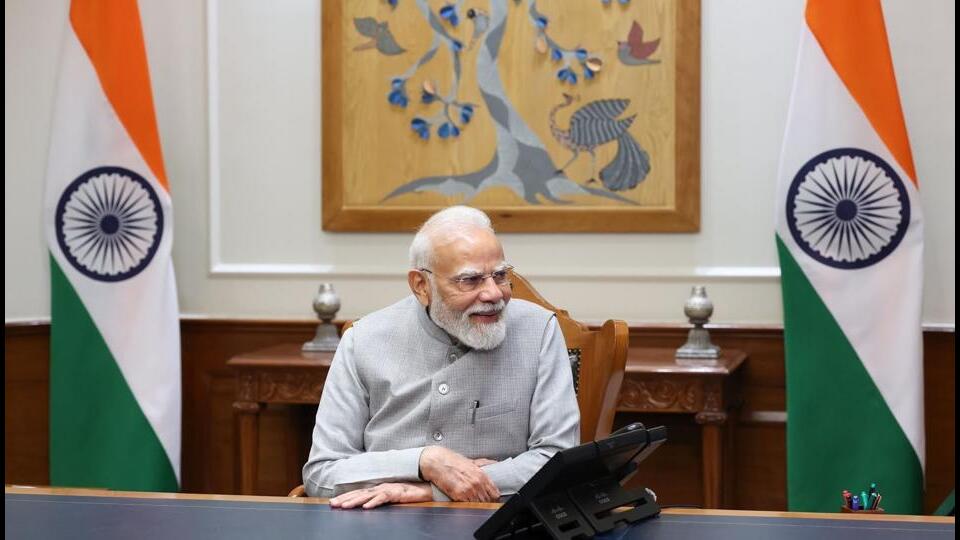
In the 136th episode of the radio programme, aired on Kargil Vijay Diwas, Modi began by paying tribute to soldiers who fought in the 1999 Kargil War and said the country was not only honouring their sacrifices but also strengthening its military capabilities through indigenous technology.
Referring to the induction of INS Mahendragiri into the Indian Navy, successful tests of the Pinaka long-range guided rocket and the Kusha missile system by the Defence Research and Development Organisation (DRDO), Modi said India was steadily advancing towards self-reliance in defence.
“Whether it is defence production, defence exports or cooperation with friendly nations, India is continuously scaling new heights,” he said, adding that agreements related to BrahMos and Astra missiles signed during his recent visit to Indonesia reflected growing global confidence in Indian defence technology.
Turning to education and science, Modi congratulated Indian students for their performance at international Olympiads, calling it a matter of national pride.
Referring to the four International Olympiads held this month—in Paris (Physics), Dubai (Chemistry), Quezon City, the Philippines (Biology) and Shanghai (Mathematics)—Modi noted that India topped the physics Olympiad with all five participants winning gold medals, achieved its best-ever performance in chemistry with all students securing gold, won medals for all participants in biology, including one gold, and bagged two gold and four silver medals in mathematics.
“I am immensely proud of the nation’s youth power. It is heartening to see the culture of Olympiads and Hackathons steadily growing in India,” Modi said, expressing confidence that more students would participate in such competitions.
PM Modi also hailed the successful launch of Vikram-1, India’s first privately developed rocket, describing it as evidence of the opportunities created after the space sector was opened to private participation. Vikram-1 is built by Skyroot Aerospace and successfully launched on July 18, from Sriharikota.
“For a long time, our space sector remained closed to the private sector... today the world is witnessing the results,” he said, crediting young innovators for the milestone.
Recalling that former President APJ Abdul Kalam’s death anniversary falls on Monday and Guru Purnima will be celebrated later this week, PM Modi described Kalam as a teacher at heart and paid tribute to educators across the country for shaping future generations.
Environment and conservation formed another major theme of the address.
Reviewing the ongoing Catch the Rain campaign, Modi said communities across the country were reviving ponds, wells and stepwells, desilting water bodies and improving groundwater recharge through public participation.
He cited examples from Madhya Pradesh, Maharashtra, Andhra Pradesh, Chhattisgarh and Odisha, where local bodies and residents had undertaken rainwater conservation works. “Every drop saved today serves as the greatest asset for future generations,” he said.
Modi also highlighted the ‘Ek Ped Maa Ke Naam’ campaign, pointing to the plantation of more than 350,000 saplings within an hour in Ahmedabad by over 25,000 people, an effort that has entered the Guinness Book of World Records. He also noted that Uttar Pradesh planted more than 350 million saplings in a single day earlier this month.
Modi urged people to associate important milestones in their lives with planting trees, saying it would leave behind a legacy of greenery and clean air.
He also spoke about the return of the Indian Grey Hornbill to Gujarat’s Gir forests after nearly six decades, describing it as the outcome of sustained conservation efforts and calling the bird a “farmer of the forest” because of its role in dispersing seeds.
PM also showcased several grassroots initiatives promoting sustainability and local enterprise, including the revival of Kashmir’s traditional Vagu mats, herbal tea produced by a women’s self-help group in Uttar Pradesh, and benches made from recycled single-use plastic in Bihar under a waste-to-wealth initiative.
Ahead of National Handloom Day on August 7, Modi appealed to citizens to support handloom, khadi and handicraft products, saying they preserve India’s cultural heritage while creating livelihoods for artisans.
He concluded the address by urging citizens to enthusiastically participate in the Har Ghar Tiranga campaign ahead of Independence Day and invited suggestions for this year’s celebrations through the MyGov platform.