
 E-Paper



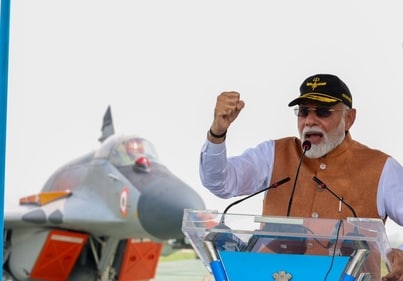
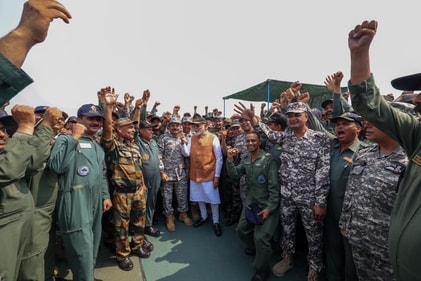
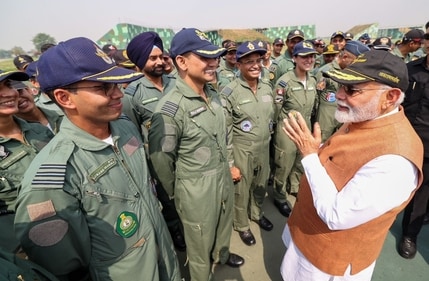
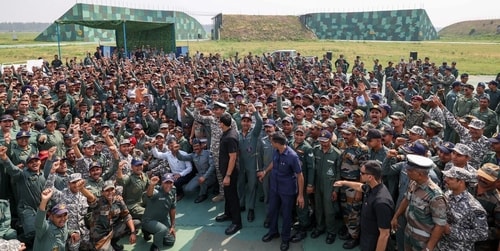
Pics: PM Modi meets 'brave air warriors, soldiers' at Punjab's Adampur air base
The Indian Air Force personnel at the Adampur air base briefed Prime Minister Narendra Modi on the prevailing situation.

 Prefer HTon Google


A day after his address to the nation on Operation Sindoor, Prime Minister Narendra Modi early on Tuesday morning visited the Adampur air base in Punjab and interacted with the soldiers there.
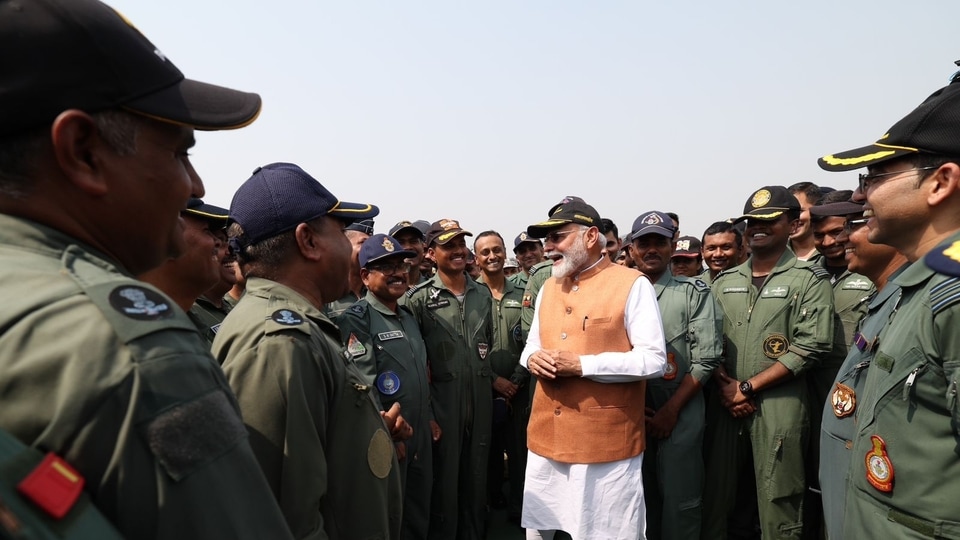
The Indian Air Force personnel also briefed the prime minister on the prevailing situation.
Follow India Pakistan news LIVE updates
Taking to his X handle, PM Modi wrote, "Earlier this morning, I went to AFS Adampur and met our brave air warriors and soldiers. It was a very special experience to be with those who epitomise courage, determination and fearlessness."
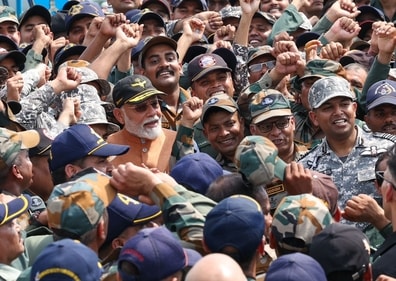
He added, “India is eternally grateful to our armed forces for everything they do for our nation.”
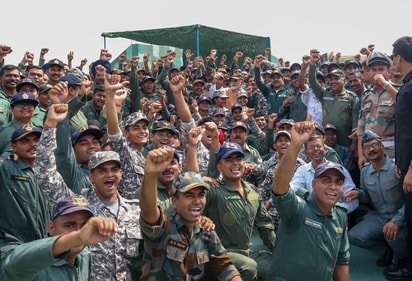
PM Modi's visit to the Adampur air base gains significance in the backdrop of the location having been one of the targets attacked by Pakistani troops.
Wing Commander Vyomika Singh, during one of the press briefings on Operation Sindoor, had said that air intrusions and several harassment attacks were attempted from Srinagar to Naliya in Gujarat at more than 26 locations.

“Indian armed forces successfully neutralized these threats and the majority of the vectors. However, limited damage was sustained to equipment and personnel at IAF stations in Udhampur, Pathankot, Adampur, and Bhuj,” Singh said.
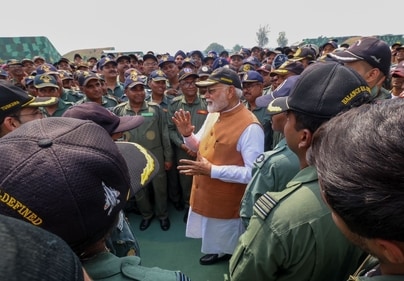
In his first address to the nation since the May 7 operation, PM Modi said, "I salute the valiant forces of India, the armed forces, our intelligence agencies, and our scientists." He lauded the "immense courage" the soldiers displayed to achieve the objectives of Operation Sindoor.
With this operation, the prime minister said, every terrorist now knows the price of wiping off the vermilion (sindoor) from the forehead of the nation's daughters and sisters.
His remarks came in the backdrop of the ceasefire understanding reached between India and Pakistan on May 10, following four days of intense cross-border firing and shelling. The directors general of military operations of both the countries once again spoke on Monday evening and discussed the upholding of the cessation of all military actions against each other, with a key condition of not firing even a single shot.
PM Modi, however, in his address to the nation, clarified that India had only paused retaliation against the terrorist and military bases of Pakistan, and not ended it.
He took note that it was the DGMO of Pakistan who reached out to his Indian counterpart, requesting a ceasefire.
“When Pakistan urged and ensured that they would not act, then India also thought about it ... I will repeat ... we have only so far paused our retaliatory action against the terrorist and military bases of Pakistan... in the coming days, we will test every step of Pakistan to see what role it has adopted,” PM said.
Further asserting his stance on terrorism, the prime minister said, “Terror or talk can't go together, terror and trade cannot go hand-in-hand… water and blood also cannot flow together.”
He said that in order to survive, Pakistan will have to eliminate its terror infrastructure and added that any talks with Islamabad would happen only over PoK.
PM Modi affirmed that with Operation Sindoor, India has redefined the fight against terror, setting a new benchmark and establishing a new normal.
Operation Sindoor
On May 7, the Indian armed forces carried out precision targets and took down nine terror infrastructure in Pakistan and Pakistan-occupied Kashmir (PoK) under Operation Sindoor. This military action was taken as a response to the April 22 Pahalgam terror attack that killed 26 people, mostly tourists.
Under Operation Sindoor, terror headquarters of the banned Jaish-e-Mohammed, Lashkar-e-Taiba, and Hizbul Mujahideen were targeted. Among the sites struck by the armed forces were the Markaz Subhan Allah at Bahawalpur, Sarjal at Tehra Kalan, Markaz Abbas in Kotli, and Syedna Bilal camp in Muzaffarabad, all linked to the banned Jaish-e-Mohammed.
Of the nine targets, four were located in Pakistan and five in Pakistan-occupied-Kashmir.


