
 E-Paper



Delhi's air quality turns ‘severe’ again; AQI at 420
Delhi pollution: The AQI in Anand Vihar was recorded as 457; the AQI in Ashok Vihar was 455; Chandni Chowk's AQI was 439 and RK Puram recorded an AQI of 421.

 Prefer HTon Google


Delhi's air quality turned severe again on Saturday as the city logged an AQI of 420. Out of 38 monitoring stations in the National Capital, nine recorded the city's air quality in the 'severe plus' category with AQI exceeding 450. Nineteen other stations recorded 'severe' air quality with AQI levels between 400 and 450.
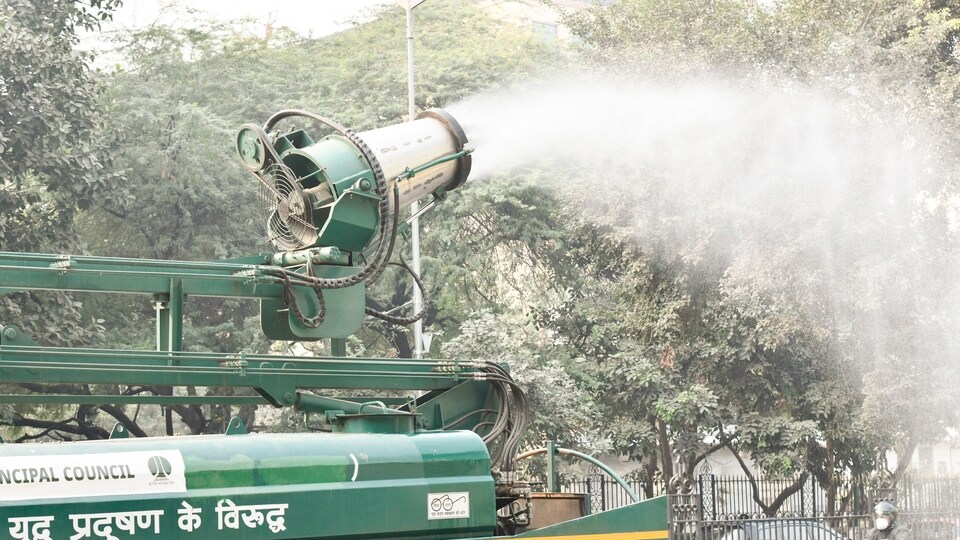
The AQI in Anand Vihar was recorded at 457; the AQI in Ashok Vihar was 455; Chandni Chowk's AQI was 439 and RK Puram recorded an AQI of 421.
An AQI between 0-50 is considered good, 51-100 is satisfactory, 101-200 is moderate, 201-300 is poor, 301-400 is very poor and 401-500 is severe.
The National Capital has been logging hazardous air quality for over 20 days. According to the Central Pollution Control Board, Delhi's AQI was 371, which was in the very poor category.
Also read: Delhi air pollution: Supreme Court flags GRAP-4 lapses, seeks report on heavy vehicles' entry
On Friday, the Supreme Court expressed displeasure over the poor implementation of GRAP-4 restrictions, especially those related to the entry of trucks. It ordered the authorities to continue the GRAP-4 restrictions until November 25, when it would decide whether the restrictions can be discontinued.
Meanwhile, Delhi's environment minister, Gopal Rai, said he wrote letters to Union environment minister Bhupender Yadav four times, requesting him to consider cloud seeding to mitigate pollution in the National Capital.
Delhi's minimum temperature today was 11.4 degrees Celsius. The humidity level was 97 per cent at 8.30 am. The maximum temperature is expected to settle at 25 degrees Celsius.
The Central Pollution Control Board has said the feasibility of cloud seeding as an emergency measure to battle winter pollution in northern India will be limited, citing insufficient moisture and reliance on pre-existing clouds, an RTI query revealed on Friday.
"As per IIT Kanpur (proponent), the mandatory requirement of successful cloud seeding is the availability of appropriate clouds with enough moisture content (clouds having 50 per cent or higher moisture content).
"In northern India, winter clouds are often influenced by Western Disturbances, and the moisture content in the air remains low, limiting the scope of successful operations," the CPCB stated in its reply.
With inputs from PTI, ANI


