...
...
Next Story

Pollution this summer worst in four years; experts say dry spell to blame

The study, carried out using Central Pollution Control Board (CPCB) data collated on the NCAP Tracker, analysed Delhi and nine other cities that breached limits to see the summer trends.

Updated on: Jul 7, 2022, 13:23:37 IST
Advertisement

The Capital saw the worst summer pollution since at least 2019 this year, with each of the four months from March to June recording pollutant levels higher than the prescribed national safe limits, research by Climate Trends, an organisation that works on climate and environment, has found.
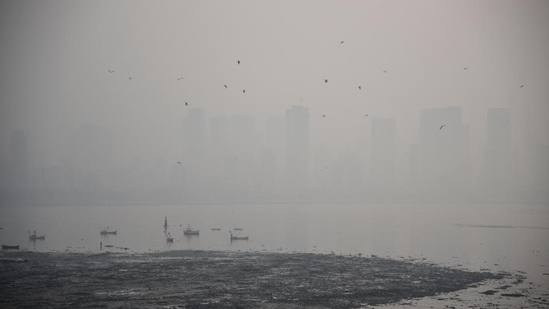
PREMIUMPollution this summer worst in four years; experts say dry spell to blame (HT PHOTO)
Pollution this summer worst in four years; experts say dry spell to blame (HT PHOTO)

The study, carried out using Central Pollution Control Board (CPCB) data collated on the NCAP Tracker, analysed Delhi and nine other cities that breached limits to see the summer trends.

It found that

The figures for the summer of 2020, when a nationwide lockdown was in place to combat the pandemic, are not available, while in 2019, a pre-Covid year, the average PM2.5 level during the summer was 79.5ug/m3, while the average PM10 was 218.3ug/m3 -- both figures lower than the readings for this year.

While CPCB’s limits for PM2.5, PM10 and NO2 are 40ug/m3, 60ug/m3 and 40ug/m3 respectively, the World Health Organization’s (WHO) safe limits are even more stringent, at 5ug/m3, 15ug/m3 and 10ug/m3, respectively.

The calendar heat map, another feature of the NCAP Tracker, which gives the average PM2.5 and PM10 levels for each day, showed that several cities had continuous streaks denoting highly polluted days.

In April 2022, Delhi did not have a single day when PM2.5 met the CPCB’s 24-hour safe limit of 60ug/m3, the analysis said.

Also read: Study shows alarmingly high pollution level in Dahanu eco-fragile area

“Several continuous days of high air pollution is far more damaging to human health than a few days of very high peak pollution. As can be seen from the Delhi data, the entire second week of April reported levels above 100ug/m3,” said Ronak Sutaria, Co-Founder and CEO, Respirer Living Sciences.

In terms of NO2, which is generally generated by vehicles, power plants and industrial emissions, Delhi’s average for the four months was 41.58ug/m3, with a peak of 51.28ug/m3 in April.

“Extremely hot weather combined with winds has led to the re-suspension of coarse particles -- a fact that is seen in the high PM10 values across most cities. The rising temperatures during the heatwave have also pushed up the demand for air conditioning resulting in higher coal consumption and this is reflected in higher PM2.5 levels,” said prof SN Tripathi, steering committee member of NCAP.

The Capital saw the worst summer pollution since at least 2019 this year, with each of the four months from March to June recording pollutant levels higher than the prescribed national safe limits, research by Climate Trends, an organisation that works on climate and environment, has found.

PREMIUMPollution this summer worst in four years; experts say dry spell to blame (HT PHOTO)
Pollution this summer worst in four years; experts say dry spell to blame (HT PHOTO)

The study, carried out using Central Pollution Control Board (CPCB) data collated on the NCAP Tracker, analysed Delhi and nine other cities that breached limits to see the summer trends.

It found that Delhi failed to meet the annual safe standards of PM2.5 and PM10 (fine particulate matter of diameters less than 2.5 and 10 microns) in any of the four months. The average PM2.5 level was 86.59ug/m3, over two times the annual national limit of 40ug/m3, while the average PM10 level was 249.9ug/m3, over four times the national safe limit of 60ug/m3, the study found.

Besides Delhi, the other cities that were analysed include Agra, Bengaluru, Chandigarh, Chennai, Kolkata, Jodhpur, Mumbai, Lucknow and Patna. Aside from PM2.5 and PM10 levels, the study also looked at NO2 (nitrogen dioxide) levels for the months of March, April, May and June.

Also read: Pimpri-Chinchwad police book booming bikers to curb noise pollution

While the India Meteorological Department (IMD) considers June as a monsoon month, it is mostly dry in several parts of the country and was included in the analysis, researchers said.

The average PM2.5 level in March was 98.98ug/m3, which rose to 105.19ug/m3 in April, decreasing to 81.48ug/m3 in May and further to 60.73ug/m3 in June.

The average PM10 level, largely comprising dust, was even higher at 231.4ug/m3 in March, 291.12 ug/m3 in April, 246.51 ug/m3 in May and 230.74 ug/m3 in June.

In comparison, last summer (2021), when Delhi saw a partial impact of lockdown towards the end of April and May, the average PM 2.5 over the four months was 72.79ug/m3, while the average PM10 was 194.47ug/m3.

The figures for the summer of 2020, when a nationwide lockdown was in place to combat the pandemic, are not available, while in 2019, a pre-Covid year, the average PM2.5 level during the summer was 79.5ug/m3, while the average PM10 was 218.3ug/m3 -- both figures lower than the readings for this year.

While CPCB’s limits for PM2.5, PM10 and NO2 are 40ug/m3, 60ug/m3 and 40ug/m3 respectively, the World Health Organization’s (WHO) safe limits are even more stringent, at 5ug/m3, 15ug/m3 and 10ug/m3, respectively.

The calendar heat map, another feature of the NCAP Tracker, which gives the average PM2.5 and PM10 levels for each day, showed that several cities had continuous streaks denoting highly polluted days.

In April 2022, Delhi did not have a single day when PM2.5 met the CPCB’s 24-hour safe limit of 60ug/m3, the analysis said.

Also read: Study shows alarmingly high pollution level in Dahanu eco-fragile area

“Several continuous days of high air pollution is far more damaging to human health than a few days of very high peak pollution. As can be seen from the Delhi data, the entire second week of April reported levels above 100ug/m3,” said Ronak Sutaria, Co-Founder and CEO, Respirer Living Sciences.

In terms of NO2, which is generally generated by vehicles, power plants and industrial emissions, Delhi’s average for the four months was 41.58ug/m3, with a peak of 51.28ug/m3 in April.

“Extremely hot weather combined with winds has led to the re-suspension of coarse particles -- a fact that is seen in the high PM10 values across most cities. The rising temperatures during the heatwave have also pushed up the demand for air conditioning resulting in higher coal consumption and this is reflected in higher PM2.5 levels,” said prof SN Tripathi, steering committee member of NCAP.

All Access.
One Subscription.

Get 360° coverage—from daily headlines
to 100 year archives.

E-Paper
Full
Archives
Full Access to
HT App & Website
Games
 
ABOUT THE AUTHOR
Jasjeev Gandhiok

Jasjeev Gandhiok is an Assistant Editor with Hindustan Times, where he covers environment, climate change, the clean energy transition and wildlife at the National Bureau. Gandhiok has over a decade of experience in journalism and is based in Delhi. He has reported extensively on Delhi and the National Capital Region (NCR). This includes the region's air pollution woes, a polluted Yamuna and on urban wildlife still thriving in the region. He joined HT in October 2021. Prior to that, he had five-year stint at The Times of India in Delhi, where he also covered Delhi, with a focus on environment and wildlife. Gandhiok has covered some recent events around the Capital too, ranging from the farmers' protests, the northeast Delhi riots and the CAA-NRC protests, reporting from the ground on all of these. He also travels across the country to report on how environment and climate change impact everyday life, while also writing on endangered species. His reports in 2019 on toxic leachate from Delhi's landfills led to the National Green Tribunal (NGT) taking suo motu cognisance and ultimately asking the state government to start bio-mining to flatten and remove all three landfills in the capital. He also closely tracks the implementation of government policies on climate, renewable energy and environmental protection. His focus remains on impactful, public-interest journalism which explains how environmental decisions affect people's everyday lives.

Get the latest India News, breaking headlines and real-time updates from across the country. Stay informed about politics, government policies, crime, weather major national developments and Karnataka Bandh LIVE.
SHARE THIS ARTICLE ON
Hindustantimes wants to start sending you push notifications. Click allow to subscribe