
 E-Paper



Printing of ₹2,000 note stops, currency still valid
The cut in circulation does not mean the ₹2,000 notes will become invalid. In all likelihood, the denomination will be gradually phased out.

 Prefer HTon Google


India has stopped printing ₹2,000 notes in a bid to slowly reduce their circulation, a highly placed government source told ThePrint.
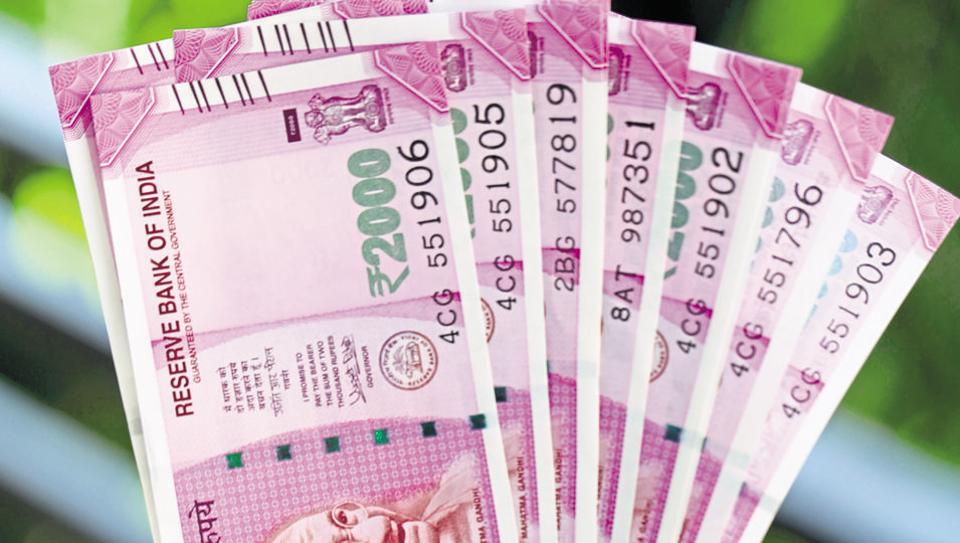
The cut in circulation does not mean the ₹2,000 notes will become invalid. In all likelihood, the denomination will be gradually phased out.The decision comes on the back of suspicion in the Modi government that the high-denomination banknote was being used for hoarding, tax evasion and money laundering.
The RBI, India’s central bank and currency-issuing agency, did not respond to an email from ThePrint seeking comment. This report will be updated when it responds.The ₹2,000 note was introduced in November 2016, after the government demonetised ₹1,000 and ₹500 denominations as part of an exercise pitched as a crackdown on black money. At that time, to counter the massive cash shortage, the government flooded the country with new ₹2,000 notes.
As of March 2018, the total value of the currency in circulation was ₹18.03 lakh crore, of which ₹6.73 lakh crore, or 37 per cent, was in ₹2,000 notes, and ₹7.73 lakh crore, approximately 43 per cent, in ₹500 notes. The remaining was in the lower denominations.
When the ₹2,000 note was introduced, the Narendra Modi government was criticised for bringing out a note of such a high denomination considering it had cancelled the ₹1,000 note.
Opposition parties had argued that the ₹2,000 note would further help money launderers and tax evaders, and backfire on one of the government’s stated aims for demonetisation — checking tax evasion and money laundering.
These fears seemed to have come true last April when many Indian cities reported a massive cash shortage.
The government suspected cash hoarding ahead of state elections, as well as stocking of money by people in the aftermath of the PNB-Nirav Modi bank fraud. The income tax department also reported massive seizures of ₹2,000 notes during this period.
The critics included bankers, with Uday Kotak, the managing director of Kotak Mahindra Bank, questioning the government’s move to bring in ₹2,000 notes while phasing out ₹1,000 notes.
The squeeze in the circulation of the ₹2,000 notes started some time back. The RBI’s annual report, released in August 2018, showed that only 7.8 crore notes of the ₹2,000 denomination were added in 2017-18, taking the total number of bills in circulation to 336.3 crore as of March 2018. In 2016-17, 328.5 crore ₹2,000 notes were in circulation.
The share of the ₹2,000 notes in the total currency in circulation has come down as well: In March 2018, it was recorded at 37.3 per cent, a fall of nearly 13 percentage points from 50.2 per cent as of March 2017. In contrast, the printing and circulation of the new ₹500 note has been stepped up. India added 958.7 crore ₹500 notes in 2017-18, with 588.2 crore notes in circulation the previous year. The share of the ₹500 notes in the total currency in circulation has increased too, from 22.5 per cent in March 2017 to 42.9 per cent in March 2018.


