
 E-Paper



Prospects and challenges of Tamil Nadu education policy
A key component of the TNSEP–School Education 2025 is the decision to make Tamil language compulsory across all school boards including CBSE, ICSE and the State Board until Class 10

 Prefer HTon Google


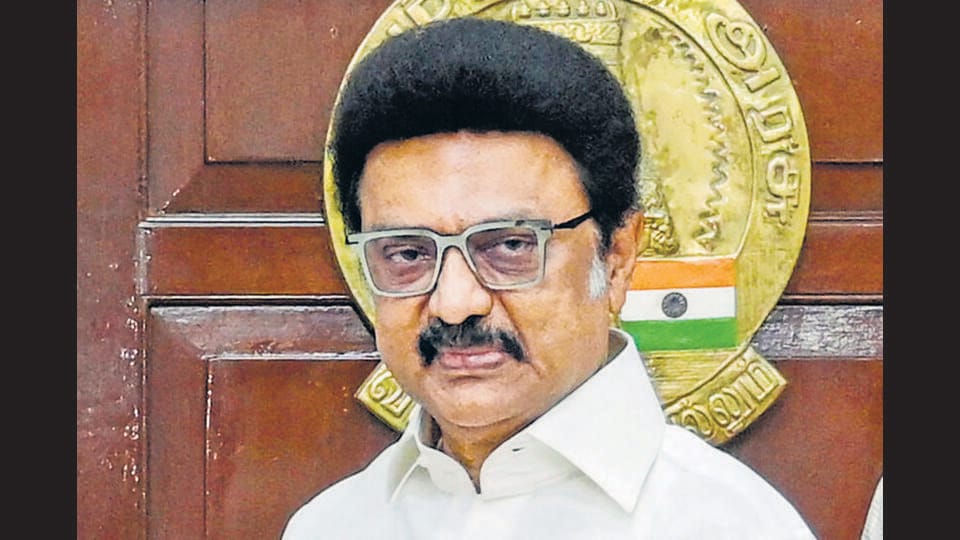
Tamil Nadu chief minister MK Stalin released the Tamil Nadu State Education Policy – School Education on August 8, 2025 reiterating the state’s two-language policy of teaching only Tamil and English and the longstanding demand towards restoration of education under the State List. Stalin described it as “a vision document for the future” tailored to the state’s “unique character” to build an inclusive, equitable, resilient, and future-ready school education system that nurtures every child’s potential, ensures holistic development, upholds social justice and empowers the children with futuristic technical skills and values rooted in the state rich cultural heritage. The policy is based on the recommendations of the 14-member committee led by Justice D Murugesan, former chief justice of the Delhi high court. The formation of this committee was announced by the government of Tamil Nadu in April 2022.
The core challenge of “Basic Literacy and Numeracy” (BLN) with inclusive approach to the Ennum Ezhuthum Mission (2022-2025) of the TNSEP-School Education 2025 needs to be seen in context of the overall status of school education in the State and the existing ground realities as a comparative study of the vision and reality.
The most basic learning requirement of reading, writing, and arithmetic skills at the foundational level needs to be addressed seriously. The Annual Status of Education Research (ASER) report of 2022 indicates that close to 60% of the students at the national level research in Class V could not read a Class II level text and the report of 2023 reveals that 25 per cent of children in the age group of 14-18 years could not read a Class-II level text fluently in their native/regional language. This study also revealed that 40% of the children in the similar age group stated as above could not read sentences in English and the learning outcomes in foundational numeracy skills like subtraction and division is equally poor.
The problem of teacher vacancies remains unaddressed for over a decade and half in Tamil Nadu and the policy should address this crisis at the policy implementation stage given the current status of several thousands of state government schools run with a single or two teachers and in most cases with the support of temporary contract staff.
A key component of the TNSEP–School Education 2025 is the decision to make Tamil language compulsory across all school boards including CBSE, ICSE and the State Board until Class 10.
The decision of the government to retain the board exams only for Classes 10 and 12, and not for Class 11 based on the rationale that Class 11 should be converted as a preparatory and transitional year with a focus on enrichment of subject knowledge, skill development, and academic readiness through continuous, competency-based internal assessment system in a stress-free environment is a policy with mixed opportunities and challenges.
The Tamil Nadu government should review the “no-detention” policy for Classes 1-8 by retaining the “no-detention” policy from Class I to Class V and introducing a fair, open and inclusive evaluation mechanism (examination system) for the Classes 6-8 in full appreciation of the diverse learning challenges, abilities, conditions and environment of the children. All evaluation methods and examination models are not punitive or penalizing as the policy suggests. The successful implementation of the Basic Literacy and Numeracy (BLN) plan and language education are intrinsically linked to teacher motivation, teaching methodology and continuous evaluation system. This also requires more comprehensive teacher training and continuous teacher education/evaluation which is largely absent under the current school education system.
The policy reiterates the state’s commitment to its two-language policy – Tamil and English – rejecting the three – language formula prescribed by the NEP-2020. The two-language policy of Tamil Nadu is seen as a potential study or model for several states that are keen to review their three-language policy, especially in Karnataka. It is equally important for the state to strengthen the language education system and address discrepancies/challenges in mother tongue education at the primary level and the standardization of English language teaching and the performance/evaluation of Tamil and English as medium of instruction for sciences and social sciences subjects at the state-run government schools for upper primary and middle levels.
The problems of enrolment, attendance and the dropout of children in hill districts and tribal areas are directly related to the dialectic/linguistic difficulties than commonly perceived learning ability challenges as attributed to the tribal children in these areas. This requires encouragement and appointment of teachers from the local tribal community as special measures besides acknowledging the problem of teacher absentees in these areas which is common due to lack of empathy, motivation and identification among the teachers appointed from outside the local/tribal community. The disparities in Gross Enrolment Ratio (GER), dropout rates, learning outcomes among Scheduled Castes, Scheduled Tribes, minority and tribal population needs to be addressed with special focus and area wise attention.
Tamil Nadu is the first state in the country to formally adopt its own comprehensive school education policy signalling the growing movement within the country towards educational autonomy and raising questions about the future course of National Education Policy-2020. Although this move is seen as both political and pedagogical response(s) to the NEP-2020 yet educationists and critics believe there are several pedagogical issues and challenges similar to the NEP-2020. The Tamil Nadu government should revaluate and enhance its current budgetary allocation of 13.7% of the total budget towards education given the futuristic and technological orientation of the education policy itself by allocating 30% of the state budget to education like the Government of Karnataka.
The expenditure(s) on education and Research & Development are, in fact, an investment for the future besides addressing the problems of lack of funding and financial shortages of several current scientific and technical projects. The state should develop a more stable and corpus funding than exposing the state education to the inconsistencies and vulnerabilities of private and corporate funding.
(Prof Ramu Manivannan is a scholar-social activist in areas of education, human rights and sustainable development through an initiative “Multiversity.”)


