The issues relating to rehabilitation of Kashmiri Pandits and Sikhs in Jammu and Kashmir following their exodus in 1990s is “purely in the domain of the executive”, observed the Supreme Court on Friday, as it asked an NGO petitioner to first approach the union government and the union territory administration with its cluster of pleas, which included a probe into the “ethnic cleansing”.
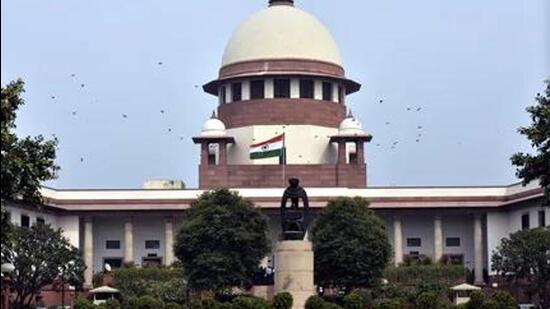
‘It’s purely in the domain of the executive. You approach the government. Why should we interfere?” a bench of justices BR Gavai and CT Ravikumar asked the counsel for NGO ‘We The Citizens’, while refusing to wade into the matter at first instance.
It asked the NGO’s lawyer Barun Sinha whether the petitioner has approached the competent authorities, to which Sinha replied in negative.
The lawyer also agreed to approach the Centre and UT administration.
Also Read: Kashmiri Pandit shot dead, brother injured in J&K, 2nd attack in two days
The bench then proceeded to record in its order that the petitioner has chosen to withdraw the petition and is thus given the liberty to file representations before appropriate authorities.
The petition sought a probe by a Special Investigation Team (SIT) into the targeted killings of Kashmiri Pandits and Sikhs in Jammu and Kashmir between 1990 and 2003, which forced their exodus from the valley. It further prayed for conducting a census of Hindus and Sikhs who were compelled to migrate out of the valley and rehabilitate them again.
{{/usCountry}}The petition sought a probe by a Special Investigation Team (SIT) into the targeted killings of Kashmiri Pandits and Sikhs in Jammu and Kashmir between 1990 and 2003, which forced their exodus from the valley. It further prayed for conducting a census of Hindus and Sikhs who were compelled to migrate out of the valley and rehabilitate them again.
{{/usCountry}}The police and other state machinery, the petition claimed, were so influenced at the relevant time by the leadership of the ruling political parties that no legal action was taken against the perpetrators and masterminds of the religious killings and exodus.
“The Government and State machinery failed to act to protect the life of Hindus and Sikhs and allowed anti-nationals, terrorists and anti-social elements to take control of the whole of Kashmir”, the petition contended, adding a large number of first information reports (FIRs) registered at that time were never taken to their logical conclusion even as it has been over 30 years since the “ethnic cleansing”,
“The dastardly Genocide and Exodus of Kashmiri Hindus and Sikhs which happened in 1989-90 in the Kashmir valley is a glaring example of complete failure of Constitutional Machinery in preventing the genocide and protecting the life, property of the Kashmiri Hindu and Sikh in the Kashmir valley. Therefore, the Fundamental Rights guaranteed under Article 14, 19 & 21 of the Constitution of India were openly violated,” the petition added.
The plea also seeks a direction to declare as null and void the sale of properties, including religious, residential, agricultural, commercial, institutional, educational post exodus in January 1990.
In July 2017, the Supreme Court had turned down a separate plea for an investigation into the “mass murders and genocide of Kashmiri Pandits during 1989-90 and subsequent years” and the “reasons for non-prosecution of FIRs” of the incidents.
The plea by ‘Roots in Kashmir’ had then alleged that 215 first information reports (FIRs) had been lodged relating to the murder of over 700 Kashmiri Pandits and none of the cases have reached a logical conclusion.
The apex court, however, rejected the petition at that time on the ground that more than 27 years had elapsed in the matter and evidence are unlikely to be available.
Later, the review and the curative petitions against the July 2017 dismissal order were also not entertained.