E-Paper



Radiologist didn’t detect missing limb in mom’s ultrasound, told to pay ₹10 lakh
The Jagatsinhpur district consumer disputes redressal commission ruled that the failure of the nursing home run by a radiologist and his wife to report the deformity amounted to gross deficiency in the service provided by them


BHUBANESWAR: A nursing home Odisha that conducted three ultrasonography tests on a pregnant woman has been told by a consumer court to pay ₹10 lakh in compensation for its failure to detect the physical deformities in the foetus.
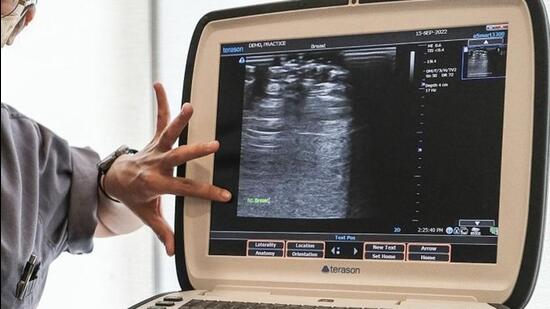
The baby was born in September last year without a left leg and right palm.
The Jagatsinhpur district consumer disputes redressal commission ruled that the failure of the nursing home run by a radiologist and his wife to report the deformity amounted to gross deficiency in the service provided by them.
“Had the woman been informed about the disability of the foetus, then she could have aborted the foetus. It is because of good faith of the woman on the nursing home and their reports that she did not terminate the pregnancy and gave birth to a physical handicapped male child. The radiologist who conducted the ultrasound and issued reports without pointing out the deformity in the foetus, not once but thrice, could have pointed out. Giving wrong reports amounts to gross deficiency,” the consumer court said in its ex-parte order of October 18. The nursing home hadn’t responded to its notices.
Presiding officer PK Padhi ordered the nursing home to deposit ₹10 lakh in the name of the baby in a bank, pay ₹50,000 to the baby’s 24-year-old mother, Bandana Das and her husband Manoranjan Chuli and ₹4,000 more to cover the cost of litigation.
The radiologist has been given 45 days to deposit the money.
According to the complaint by the child’s parents, Bandana Das underwent three ultrasound tests in different trimesters at the L&P nursing home in Rahama area of Jagatsinhpur between December 2020 and September 2021. The radiologist, Pratap Keshari Das, did not detect any deformity and she went ahead with the delivery on September 11.
“We were devastated when the child was born without limbs,” recalled Manoranjan Chuli.
Chuli said they approached the chief district medical officer who told us that the placenta could have been removed if the disability was detected at an early stage. When the young couple went back to the radiologist, he was abrasive and threatened them.
In October 2021, Bandana Das approached the Jagatsinhpur district consumer court to demand ₹20 lakh in compensation for deficiency in service.
Dr Mrutyunjay Mohapatra, a senior gynaecologist, said any deformity in limbs or organs such as kidneys can be detected if a specific scan called an anomaly scan is done between 18-20 weeks of a woman’s pregnancy. According to the Medical Termination of Pregnancy Act, a foetus can be aborted up to 24 weeks and so in this case the woman should have been asked to abort, Dr Mohapatra added.
Asked, the radiologist, who has been ordered to compensate the couple, told HT that he did not conduct the anomaly scan during the second trimester as there was no such prescription.
Asked, Bandana Das said she wasn’t aware of the nature of the tests prescribed. “I don’t know what the gynaecologist wrote. How I am supposed to know which scans I need to undergo? It is for the doctors to decide. All I know is that I have been a victim of medical negligence,” the young mother said.
HT approached several radiologists for perspective. They said a level 1 scan done during the first trimester of pregnancy is normally meant to check for foetus viability; even though if there is a gross deformity, it can be picked up.
A level 2 scan, or the anomaly scan, that is done closer to 20 weeks is a more detailed scan which is done precisely to pick up congenital defects. It is a detailed test where all kinds of anomalies are scanned for, and if this scan misses gross physical defects, there is a possible liability. It can take up to 30 minutes to perform the scan. In the third trimester, however, the scan should pick the severe defects such as a missing limb.
To be sure, the woman did undergo ultrasound tests in the 7th week of pregnancy (first trimester), 19th week (second trimester) and 33rd week (third trimester) of her pregnancy.
A radiologist at AIIMS Bhubaneswar said the procedures are not codified in India unlike countries such as the UK or the US where each pregnant woman has to undergo such tests.
“It depends on the quality of the machine, the expertise of the radiologist and the rigour that they follow. If one is not observant, they can be missed. Besides, one also needs to check whether the gynaecologist had advised anomaly test,” said the radiologist.
.