
 E-Paper



Rahul Gandhi, EC spar over ‘vote chori’ charge in Bangalore Central Lok Sabha seat
Congress leader say Bangalore Central, which Congress lost to the BJP by a thin margin, saw “fake voters” and “duplicate voting”

 Prefer HTon Google


Congress leader Rahul Gandhi's massive claim in Delhi on Thursday — that the Election Commission “colluded with the BJP to steal elections” — had a central example.
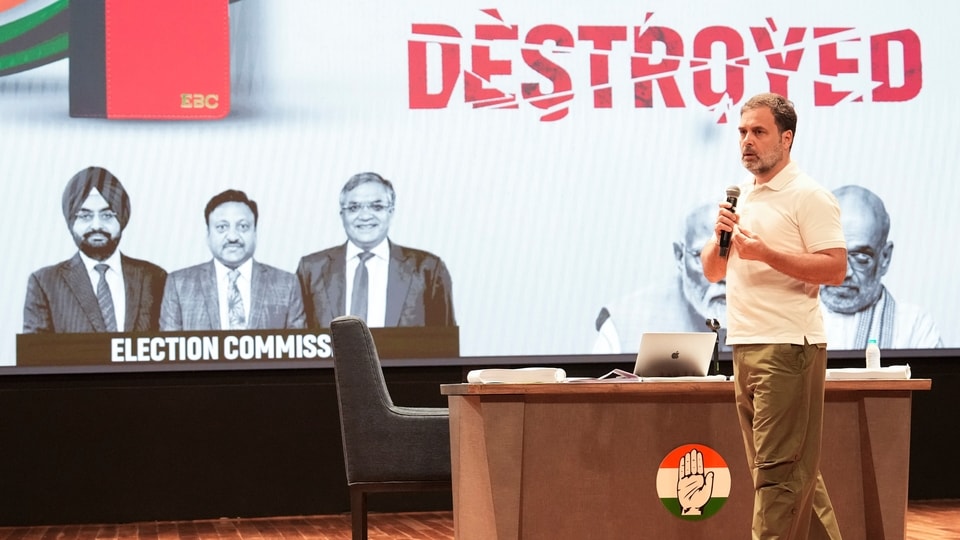
He said the Lok Sabha seat of Bangalore Central, which the Congress lost to the BJP by margin of less than 3 percentage points, had instance of “fake voters” and “duplicate voting”.
The EC hit back at the Leader of Opposition over the Bengaluru claim, and asked him to submit the claimed proofs under oath, to which he responded: “What I say to the people is my word. Take it as an oath. This is their (EC) data, and we are displaying their data.”
Rahul Gandhi made specific claims about Maharashtra and Haryana, too, in his livestreamed presentation to back the claims of large-scale theft or “vote chori”.
What Rahul Gandhi claimed about Bangalore Central result
In Karnataka, the Congress was expecting to win 16 of the 28 seats, but won only nine, Rahul Gandhi said.
“The loss in Bangalore Central raised suspicion, in particular,” he added.
The party lost the seat by 32,707 votes, which was thin when one sees that seat had over 13 lakh votes cast. The winner, BJP's PC Mohan, and the Congress candidate, Mansoor Ali Khan, both got over 6 lakh votes each.
The margin separating them was just 2.58% of the votes.
Rahul Gandhi further zoomed in, and pointed towards one of the eight assembly seats that are part of Bangalore Central Lok Sabha constituency.
Mahdevapura, from where the BJP got a lead of over 1 lakh votes, offset the Congress gains from all other segments, he noted. “It's a huge imbalance,” he said.
'One segment stolen, with it the LS election'
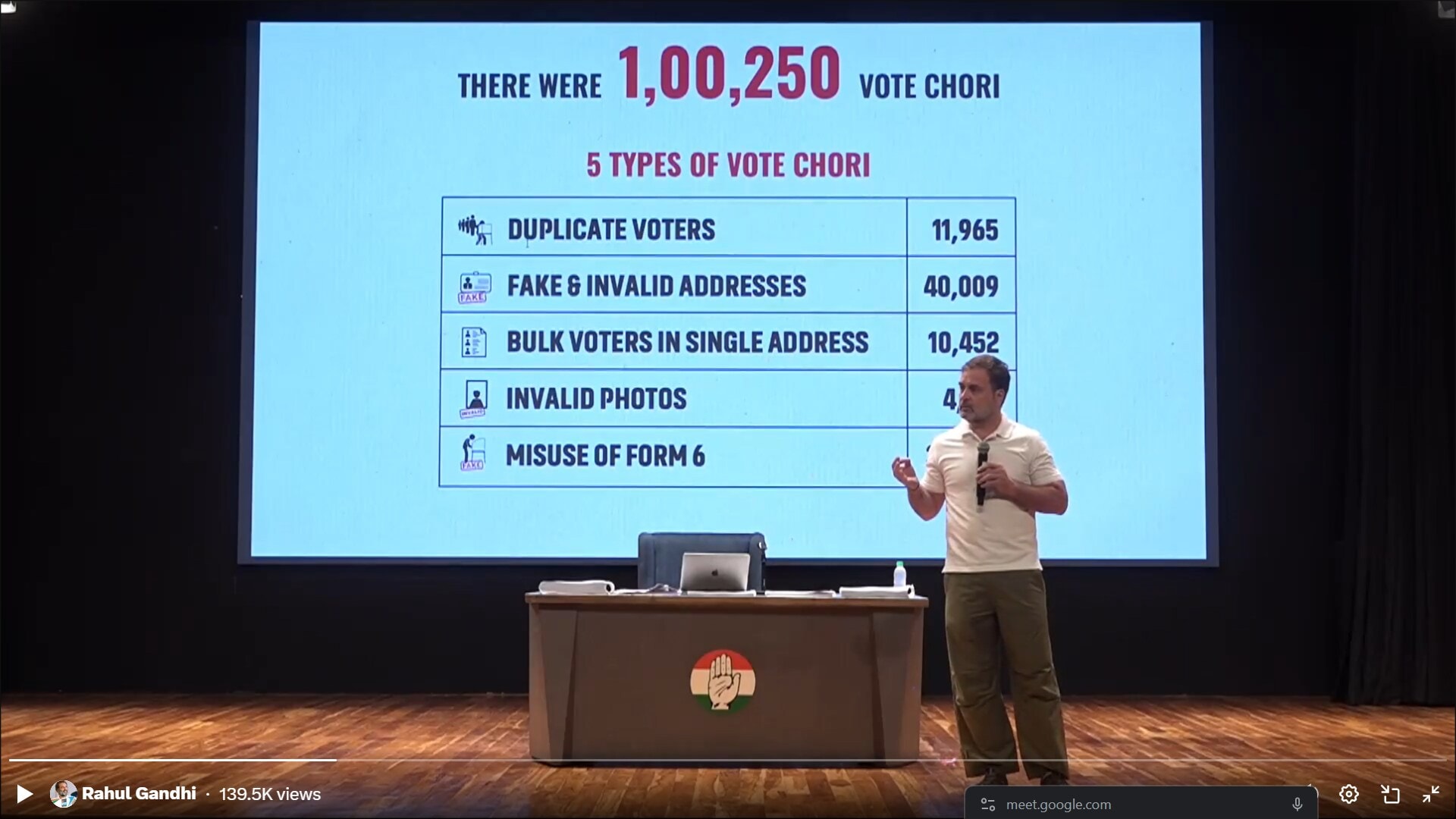
He alleged, “We found that 1,00,250 votes were stolen in Mahadevapura,” citing instances of alleged duplicate voters and misuse of Form 6 that is used for new enrolments.
He said there were fake addresses or bulk numbers of voters at one address, and invalid photos too.
Also read |
He showed voter rolls and what he claimed was an instance of a man being registered at four different polling booths.
He said there were hundreds of such cases.
In another example, he showed the rolls and claimed a man was registered twice in Bangalore Central in Karnataka, and in Maharashtra and Uttar Pradesh as well.
He also showed the records to claim that 68 voters were registered with a beer bar as their address.
His party had physically verified these anomalies by visiting these places, such as the brewery, he said.
What EC said in reply on Karnataka claim
The Karnataka poll chief wrote to Gandhi: “It is understood that during a press conference held today, you had mentioned about the inclusion of ineligible electors and exclusion of eligible electors."
The officer asked Rahul Gandhi to return an enclosed declaration or oath along with the names of electors to initiate necessary proceedings.
Also read | What Karnataka CEO said in letter to Rahul Gandhi
Claims on Haryana, Maharashtra too
Rahul Gandhi spoke about other states too.
About Maharashtra, he said 1 crore new voters appeared between the Lok Sabha elections, in which the Congress and its allies won most of the state's seats, and the Vidhan Sabha election that they lost.
He made similar allegations referring to Haryana.
He said PM Narendra Modi and the BJP, which fell short of majority on its own in the Lok Sabha 2024 polls, would have been out of power “if they lost just another 25 seats”. It was all about management of the results, he said.
"The judiciary needs to get involved in this because the democracy that we love so much does not exist," the former Congress president said.


