
 E-Paper



‘Rail fracture’ caused Suryanagari Express derailment: Officials
The derailment comes days after the Comptroller Audit General (CAG) of India report titled ‘Derailment in Indian Railways’ was tabled in the parliament on December 21 highlighting the major cause of the derailments due to lack of timely maintenance of the tracks. It also specified negligence on the part of zonal railways regarding track monitoring and repairing

 Prefer HTon Google


Rail fracture is the probable cause of the derailment of the Suryanagari Express in which over 20 passengers suffered injuries, officials close to the development said on Tuesday.
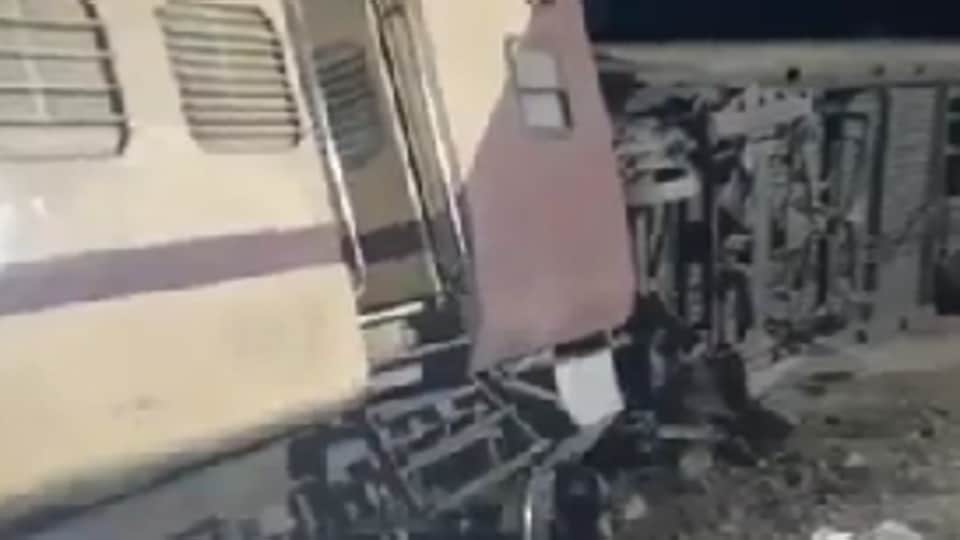
“Preliminary investigations suggest that the reason Suryanagari Express derailed in the wee hours of Monday is due to rail fracture, a condition caused during an extreme cold or heat that causes tension on tracks,” a railways official told HT.
As many as eleven coaches of the Bandra Terminus-Jodhpur Suryanagari Express were impacted after a derailment incident that occurred at 3.37am near Pali (between the Rajkiawas -Bomadra section of the Jodhpur division) in Rajasthan, disrupting half a dozen trains scheduled to pass through the section.
Also Read: 13 coaches of Mumbai-bound Suryanagari Express derail in Rajasthan’s Pali
Former member traffic, Shri Prakash, termed the derailment due to rail fracture ‘a serious matter’ and said precautionary steps should be taken. “Derailment of a passenger train due to rail fracture is a serious matter. Rail fractures are not uncommon during extreme temperatures, but a manual inspection is done daily in the wee hours to inspect the same. If this train was derailed due to the fracture, it implies that the fracture would not have been fresh and hence there is a need to investigate if a mandatory manual inspection was conducted on Sunday night.”
The derailment comes days after the Comptroller Audit General (CAG) of India report titled ‘Derailment in Indian Railways’ was tabled in the parliament on December 21 highlighting the major cause of the derailments due to lack of timely maintenance of the tracks. It also specified negligence on the part of zonal railways regarding track monitoring and repairing.
According to the report, the zonal railways could not adhere to the timeline prescribed by the Railway Board (RB) for a schedule of the procedure for completion of enquiry in 49% of derailment cases.
“The railway administration failed in achieving the important objective of monitoring the preventive action in respect of the recommendations made by the inquiry committees as the same has not been made part of the SIMS (safety information management system), the online real-time reporting system,” the CAG report stated.
The report further mentioned that the audit scrutiny of ultrasonic flaw detection (UFSD) testing of rails and welds revealed that there were shortfalls in testing during the period of four years (2017-2021). Timely testing by the USFD is expected to help in the early detection of vulnerable points and initiating necessary remedial measures, thus reducing the probability of accidents, it read.
According to the report, a total of 422 derailments were attributable to the ‘engineering department’ and the major factor responsible for derailment was related to the ‘maintenance of track’ (171 cases).
“IR may develop a strong monitoring mechanism to ensure timely implementation of maintenance activities by adopting fully mechanized methods of track maintenance and improved technologies,” the report stated.


