
 E-Paper



Rajnath Singh, Gen Rawat to honour epic Rezang La heroes with new memorial
After the humiliation of 1962 war, successive Indian governments under advice from the Indian army chose not to upgrade the border infrastructure along the LAC, lest the Chinese army use it to make inroads into Indian hinterland.

 Prefer HTon Google


Fifty-nine years after Major Shaitan Singh and 98 of his men from the Charlie company of 13 Kumaon Battalion laid their lives in defence of the Chushul-Dungti-Leh axis in Ladakh sector, defence minister Rajnath Singh along with chief of defence staff Gen Bipin Rawat will inaugurate the new memorial on Thursday to honour the heroes of the epic battle of Rezang La, who gave a bloody nose to the aggressive Chinese People's Liberation Army (PLA) in the 1962 war.
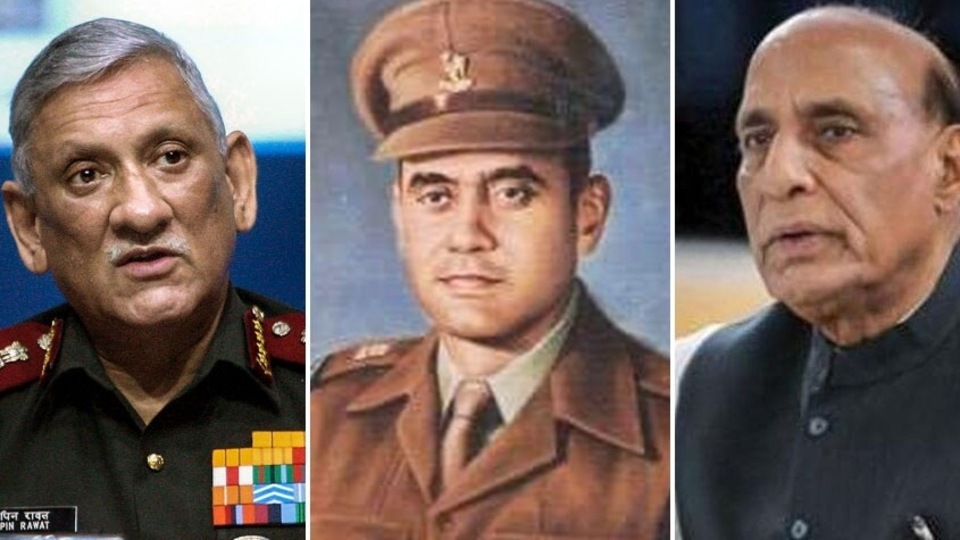
The Shaitan company inflicted so many losses on nearly 400 PLA troops that the Chinese took no prisoners of war at Rezang La on November 18, 1962. The Rezang La battle was fought in freezing temperatures way below zero. Temperatures in Chushul heights are known to touch minus 25 degrees Celsius and more.
While the past governments took their time in recognising the 1962 war heroes and the first formal function was held in 2012 lest it upsets the Chinese, defence minister Rajnath Singh and Gen Rawat will not only inaugurate the revamped war memorial but an auditorium containing the photo gallery to commemorate the battle. Such was the humiliation heaped by the Chinese and their communist influencers that successive Indian governments under the advice of the army chose not to upgrade border infrastructure along the LAC lest the PLA used to it make inroads into Indian hinterland in the worst-case scenario.
According to the official history of the 1962 war, the Chinese attack on the isolated post of 1800 feet Rezang La began at 4am on November 18 with the intention of blocking the road link between Leh and Chushul via Dungti so that the garrison at Chushul was isolated and starved of supplies. The last Indian guns sounded at 10pm on November 18 with only 14 out of 112 ranks surviving to tell the tale. Major Shaitan Singh and his company major first fought with three-inch mortars, then rifles, bayonets and bare hands without any artillery or air support against the marauding Chinese who attacked the post from two sides.
“The fight at Rezang La was hard and bitter… In November 1963, nearly a year after the battle, the dead bodies were recovered by Indian Red Cross. The parties that visited Rezang La saw the place littered with field dressings and blood narks, giving an indication to the heavy losses suffered by the Chinese,” states the official history of war.
After the May 2020 transgressions by the PLA on the north bank of Pangong Tso, the Indian troops again occupied Rezang La after a fierce riposte on the south banks of the icy saltwater lake on theAugust 29-31 offensive. It was this counter-offensive that forced the PLA to disengage from the north banks of Pangong Tso as the Indian troops were threatening the PLA garrison at Moldo. On Thursday, Rezang La and the much-decorated Charlie Company of 13 Kumaon under Param Vir Chakra winner Shaitan Singh will come alive again.


