
 E-Paper



Dhankhar, Kharge spar over presiding officers’ role
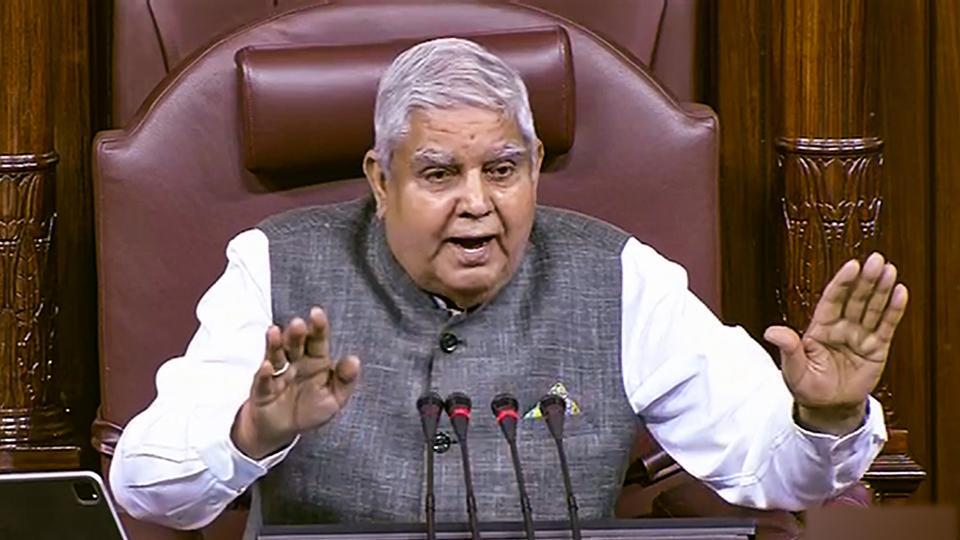
Rajya Sabha chairman Jagdeep Dhankhar held on Wednesday that “there can be no issue or individual beyond the purview of discussion in the Rajya Sabha”.


Dismissing Leader of the Opposition and Congress chief Malllikarjun Kharge’s point of order against Rajya Sabha leader Piyush Goyal over the latter’s remarks on Rahul Gandhi, House chairman Jagdeep Dhankhar held on Wednesday that “there can be no issue or individual beyond the purview of discussion in the Rajya Sabha”.
Hours later, Kharge shot off a letter to Dhankhar reminding him that “all presiding officers in legislatures, and especially the Chairperson, are expected to be fair, even-handed and non-partisan. They cannot display their biases or their loyalty to the ruling party”.
Also read: ‘…a clean chit to China’: Mallikarjun Kharge reacts to Bejing's Arunachal Pradesh move
The BJP’s protests against Gandhi and the Opposition’s demand for a JPC (joint parliamentary committee) probe have led to a near washout of this session.
On March 13, Goyal launched an indirect attack against Gandhi for his alleged comments against Indian democracy and Parliament and said, “In a shameful manner, an Opposition leader in a foreign country talks ‘anap shanap’ (senseless stuff) about Indian democracy... He makes allegations against the Indian judiciary, Indian media, election commission and the Indian Army”.
Kharge objected to Goyal’s comments and raised a point of order that there is a time-honoured tradition that a reference is not made in one House to a member of the other House.
Gandhi, then a Lok Sabha MP, was disqualified on March 24 after his conviction in a criminal defamation case.
Dhankhar, in a detailed statement, cited Rules 238 and 238A that pertain to intimation to the chairman regarding “allegation of a defamatory or incriminatory nature by a Member against any other Rajya Sabha or Lok Sabha MP”. He also said Goyal has authenticated his remarks and added, “Any curtailment or qualification of the constitutional privilege of freedom of expression, of a Member of Parliament in the Rajya Sabha, will seriously compromise and impede blossoming of democratic values.”
In his letter, Kharge maintained that Goyal’s comments on March 13 were “patently defamatory, unfounded and vacuous allegations” against Rahul Gandhi. The Congress chief argued that Goyal not mentioning Rahul Gandhi by name “does not absolve Shri Goyal of the breach of the parliamentary tradition”.
Kharge said Dhankhar’s ruling was “surprising” and added that Dhankhar’s “refusal” to find Goyal’s statements as defamatory has two potential consequences: “Any genuine concerns raised about our democracy by anyone shall be treated as treasonous, anti-India or worse. Imagine the chilling effect that has on a democracy built on the foundation of freedom of speech. That an elected representative of the people of India can be vilified and given no space to defend himself against outlandish, false and even brazen allegations. Neither of these legacies is flattering to this regime or to your decision.”
Also read: V-P Jagdeep Dhankhar sides with Parliament for constitutional evolution
“Finally, I take this opportunity to reiterate what we have said on numerous previous occasions. All presiding officers in legislatures, and especially the Chairperson, are expected to be fair, even-handed and non-partisan. They cannot display their biases or their loyalty to the ruling party,” the Leader of the Opposition added.


